
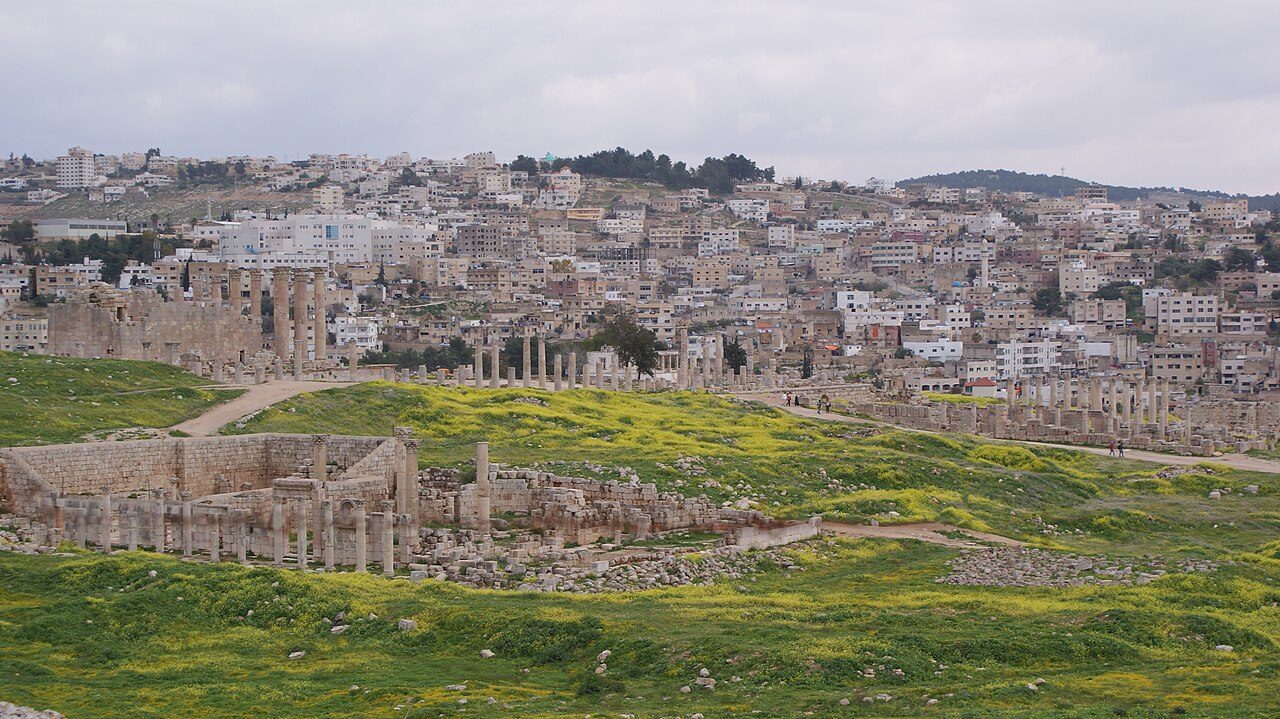
Jerash
Passing beneath the monumental, triple-bayed Arch of Hadrian—erected to honor the Roman emperor’s winter visit in 129–130 CE—you cross into ancient Gerasa, once a jewel of the imperial Decapolis. Centuries of shifting sands shielded its honey-colored limestone from total ruin following the devastating earthquake of 749 CE. The gateway opens toward the rare, asymmetric Oval Plaza, where fifty-six Ionic columns frame an expansive limestone floor that funnels into the Cardo Maximus. Walking down this 800-meter thoroughfare, you can trace the deep grooves worn into the stone by Roman chariot wheels and spot functional sewer grates carved beneath the colonnades two millennia ago. Higher up the hillside, the colossal Temple of Artemis commands the skyline, its surviving twelve-meter Corinthian columns engineered to sway imperceptibly during tremors without collapsing. In the nearby South Theater, built under Emperor Domitian around 90 CE, the acoustics remain impeccably sharp; a soft whisper or dropped coin on the central orchestra floor reverberates clearly to the thirty-second tier of stone seating. Sitting high on these carved limestone benches, travelers feel the dry plateau wind and gaze over a sea of pediments, tetrapylons, and sprawling Byzantine mosaics that capture the sheer architectural muscle of Rome’s eastern frontier.
More in Amman
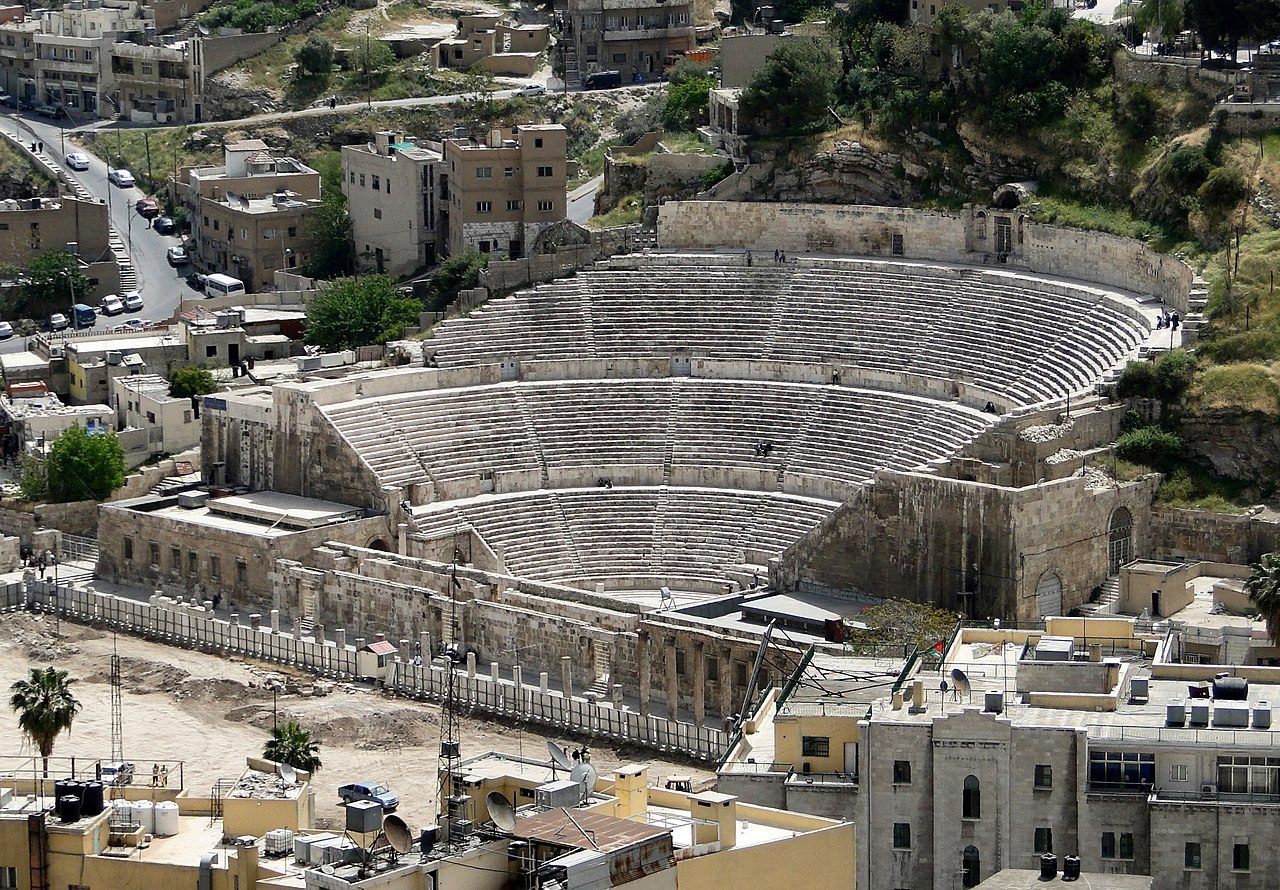
Photo credits (7)
- The original uploader was Freedom's Falcon at Arabic Wikipedia ., CC BY-SA 2.5, via Wikimedia Commons
- Gadora81, CC BY-SA 4.0, via Wikimedia Commons
- Bernard Gagnon, CC BY-SA 4.0, via Wikimedia Commons
- Berthold Werner, CC BY 3.0, via Wikimedia Commons
- David Bjorgen, CC BY 2.5, via Wikimedia Commons
- Ldud at English Wikipedia, Public domain, via Wikimedia Commons
- Berthold Werner, CC BY 3.0, via Wikimedia Commons