
 New added
Topkapi Palace
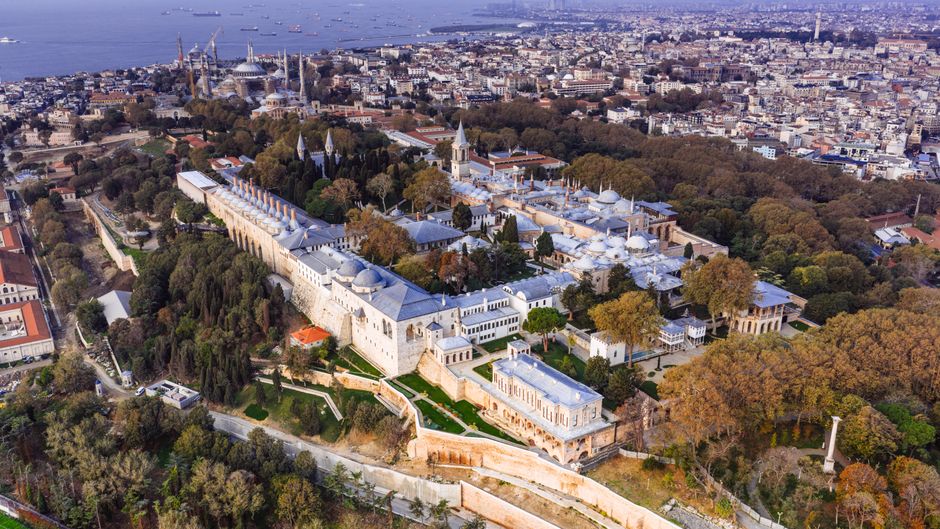
Commissioned by Sultan Mehmed II in 1459 following the conquest of Constantinople, Topkapı Palace served as the political and private nerve center of the Ottoman Empire for nearly four centuries. Rather than a monolithic fortress, the complex unfolds across four terraced courtyards designed in the classical Ottoman vernacular of airy, modular pavilions connected by cloistered walkways and cypress-studded gardens. Visitors navigating the secluded corridors of the Imperial Harem step into an intimate labyrinth of over 400 chambers, where sultans and the Valide Sultan (Queen Mother) once orchestrated dynastic politics beneath gilded cedar ceilings and radiant walls sheathed in tens of thousands of hand-painted, cobalt-and-coral Iznik tiles. Deeper within the palace grounds, the Fourth Courtyard opens onto sweeping promontory vistas where the Golden Horn merges into the Bosphorus. Here stands the domed Baghdad Kiosk, built by Murad IV in 1639, celebrated for its stained-glass windows, mother-of-pearl inlays, and blue-and-white porcelain hearths. In the adjacent Imperial Treasury, travelers encounter legendary relics of imperial conquest, including the 86-carat Spoonmaker’s Diamond and the emerald-hilted Topkapı Dagger. Pausing on the cool marble terrace beneath the gilded bronze dome of the İftariye Pavilion, visitors catch the scent of salty sea air and blooming Judas trees, gazing across the strategic waterway that once carried the sultan's naval fleets across continents.
More in Istanbul
Photo credits (6)
- Moonik, CC BY-SA 3.0, via Wikimedia Commons
- Diego Delso, CC BY-SA 4.0, via Wikimedia Commons
- Diego Delso, CC BY-SA 4.0, via Wikimedia Commons
- Hunanuk, CC0, via Wikimedia Commons
- Robot8A, CC BY-SA 4.0, via Wikimedia Commons
- Tadam, CC0, via Wikimedia Commons