
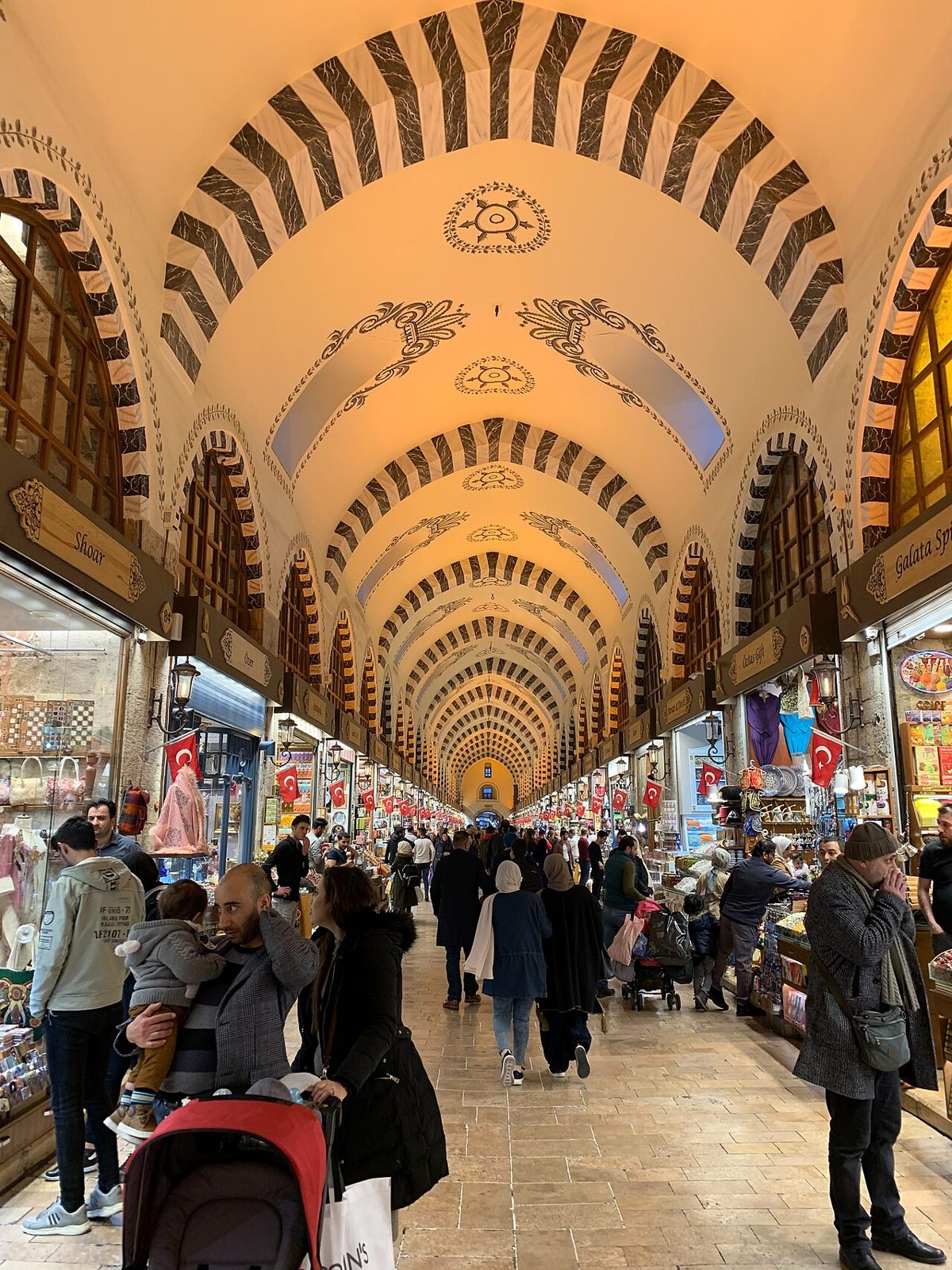
Spice Bazaar
Completed in 1664 under the patronage of Valide Sultan Turhan Hatice, the complex was conceived as a financial endowment for the neighboring Yeni Camii. Designed by imperial court architect Mustafa Ağa, the structure earned its local moniker, *Mısır Çarşısı*, because its initial construction was funded by customs taxes levied on goods from Ottoman Egypt. The classical Ottoman edifice features an L-shaped layout consisting of two intersecting corridors beneath lofty cross-vaulted ceilings. Built with alternating courses of red brick and cut limestone, the bazaar encompasses eighty-eight vaulted interior shop chambers accessed through six monumental arched gateways, including the historic Haseki Gate. Passing beneath the stone entrance portals, visitors are instantly enveloped in a fragrant cloud of ground sumac, fenugreek, and crushed Urfa peppers. Vivid mounds of crimson saffron, cured citrus peels, and dried Damask rosebuds rise in precise, kaleidoscopic pyramids along open-fronted stalls, flanked by dense tiers of pistachio-studded lokum and dripping wild honeycomb. Suspended mosaic lanterns cast a warm glow across the polished stone avenues, where the rhythmic chime of brass weighing scales and merchant offers of apple tea provide an immediate, tactile connection to the maritime trade routes that have anchored Eminönü for centuries.
More in Istanbul
Photo credits (5)
- Robot8A, CC BY-SA 4.0, via Wikimedia Commons
- Moonik, CC BY-SA 3.0, via Wikimedia Commons
- Diego Delso, CC BY-SA 4.0, via Wikimedia Commons
- Diego Delso, CC BY-SA 4.0, via Wikimedia Commons
- Hunanuk, CC0, via Wikimedia Commons