
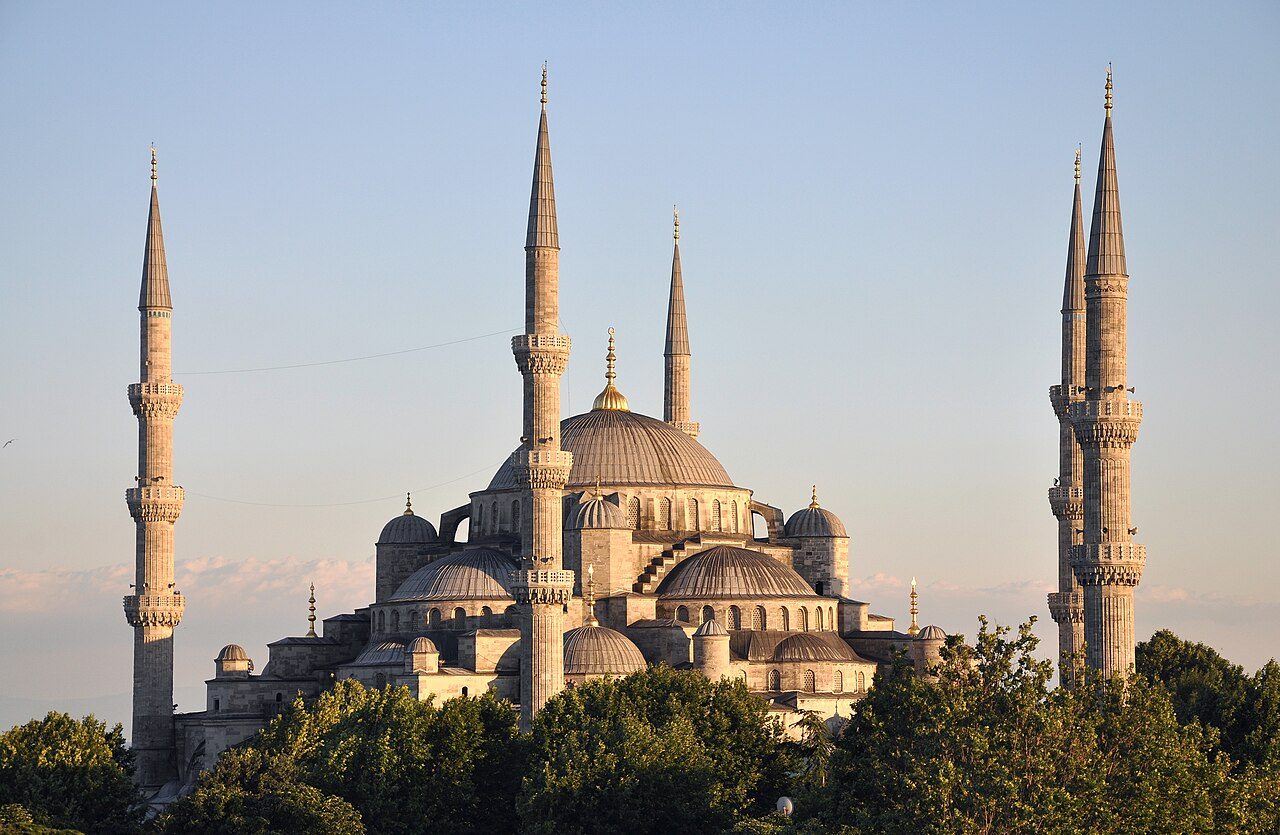
Sultan Ahmed Mosque
Commissioned in 1609 by Sultan Ahmed I to assert imperial authority, the Sultan Ahmed Mosque arose under the direction of royal architect Sedefkâr Mehmed Ağa, a pupil of the legendary Mimar Sinan. Completed in 1616, this pinnacle of Classical Ottoman architecture deliberately mirrors and rivals the Byzantine grandeur of the neighboring Hagia Sophia. Its exterior presents a rhythmic cascade of descending half-domes framed by six slender, pencil-shaped minarets—a structural rarity that initially sparked controversy across the Islamic world for rivaling the holy precinct of Mecca. Entering through the monumental marble courtyard, travelers pass beneath elaborate stalactite-carved muqarnas portals into an imperial sanctuary designed to inspire absolute awe. Stepping barefoot onto the plush, crimson carpets, visitors are immediately immersed in the luminous atmosphere that earned the site its popular moniker, the Blue Mosque. High above four massive fluted piers—aptly dubbed "elephant feet"—the grand central dome hovers fifty-four meters in the air, illuminated by daylight filtering through more than two hundred stained-glass windows. Over twenty thousand handmade İznik ceramic tiles line the upper galleries, radiating intricate floral patterns dominated by cobalt, turquoise, and jade-green glazes displaying over fifty distinct tulip motifs. Suspended low from the vaulted ceiling, wrought-iron chandeliers cast a gentle, golden glow, enveloping travelers in the hushed acoustic resonance and timeless spiritual reverence of old Istanbul.
More in Istanbul

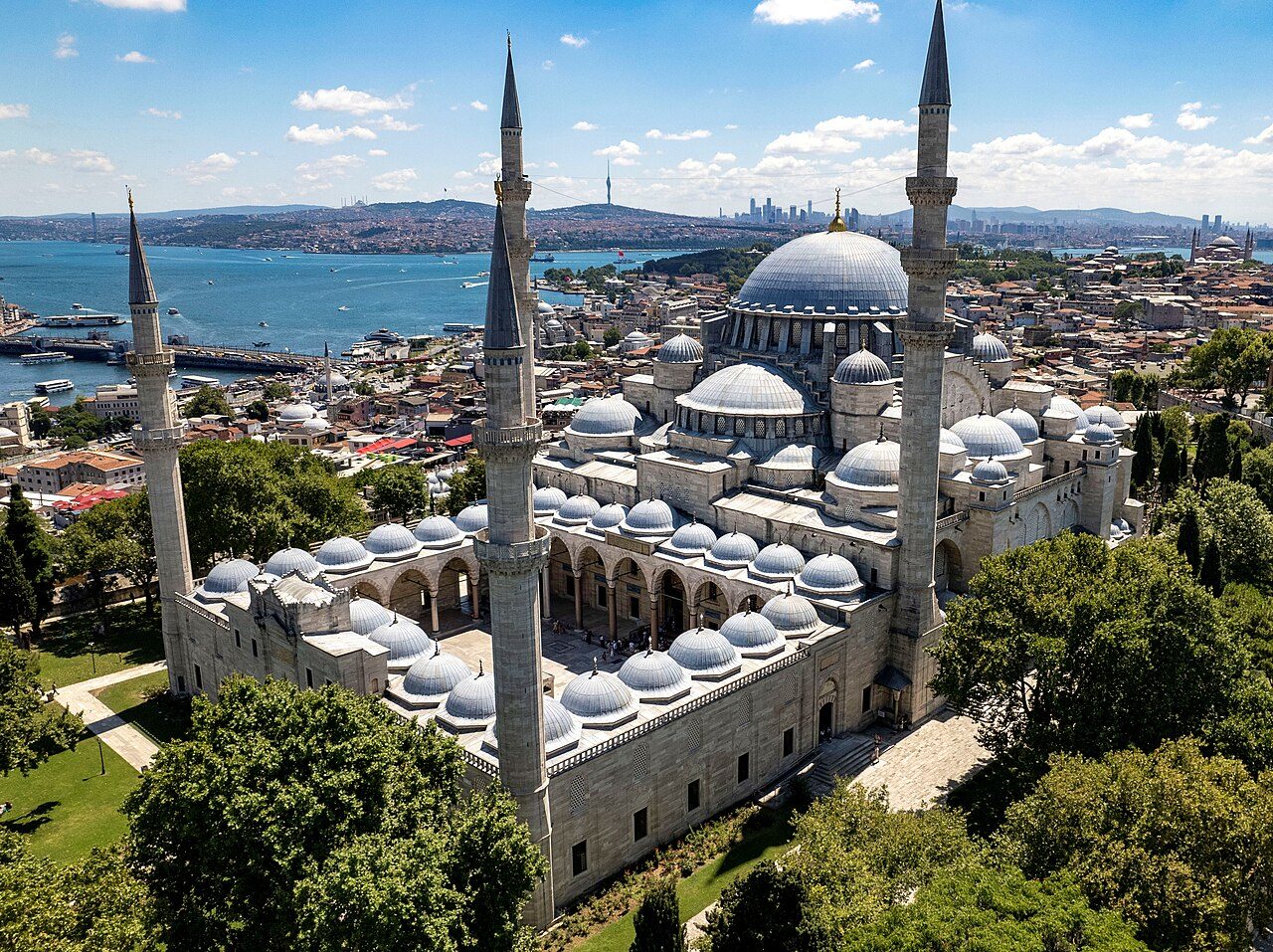
Photo credits (5)
- Moonik, CC BY-SA 3.0, via Wikimedia Commons
- Diego Delso, CC BY-SA 4.0, via Wikimedia Commons
- Diego Delso, CC BY-SA 4.0, via Wikimedia Commons
- Hunanuk, CC0, via Wikimedia Commons
- Robot8A, CC BY-SA 4.0, via Wikimedia Commons