
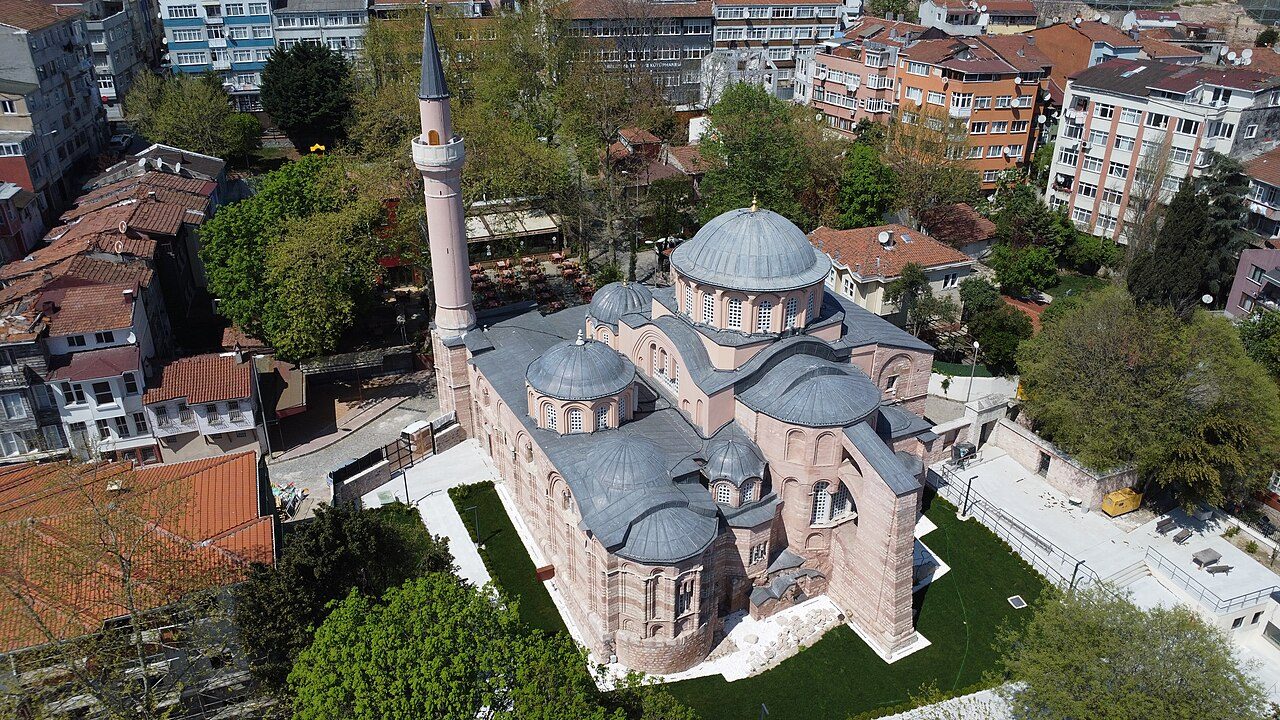
Chora Church
Tucked beneath Istanbul’s ancient Theodosian Walls, the Church of the Holy Saviour in Chora preserves the twilight brilliance of the Byzantine Empire. Though its monastic foundations trace back to the fourth century, the structure standing today represents the pinnacle of the Palaiologan Renaissance, funded between 1315 and 1321 by the imperial statesman and scholar Theodore Metochites. Intimately scaled compared to the monumental Hagia Sophia, Chora’s asymmetric brick architecture unfolds through an outer and inner narthex, a central naos, and a southern mortuary chapel known as the *parekklesion*, designed to shepherd souls into the afterlife through breathtaking visual theology. Stepping across the threshold, visitors enter a shadowed sanctuary ignited by shimmering gold tesserae and expressive fourteenth-century tempera. Overhead, fluted domes display intricate mosaic cycles detailing the Apocryphal childhood of the Virgin Mary and the ministry of Christ, marked by emotional realism and fluid drapery. The sensory climax awaits in the vaulted apse of the *parekklesion*, where eyes are drawn upward to the masterpiece fresco of the *Anastasis*—the Harrowing of Hell. Standing beneath this monumental scene, one feels the visceral energy of a white-robed Christ hauling Adam and Eve bodily from their sarcophagi over the shattered gates of the underworld, surrounded by swirling lapis lazuli and dramatic biblical drama that refuses to fade.
More in Istanbul
Photo credits (5)
- Tadam, CC0, via Wikimedia Commons
- Moonik, CC BY-SA 3.0, via Wikimedia Commons
- Diego Delso, CC BY-SA 4.0, via Wikimedia Commons
- Diego Delso, CC BY-SA 4.0, via Wikimedia Commons
- Hunanuk, CC0, via Wikimedia Commons