
 New added
Hagia Sophia
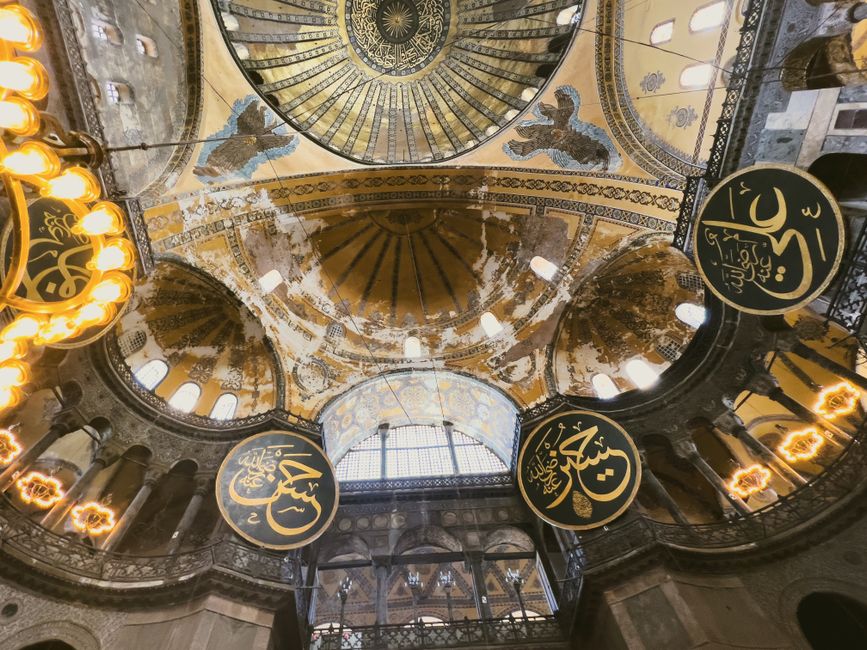
Commissioned by Byzantine Emperor Justinian I and consecrated in 537 CE, Hagia Sophia redefined Late Antique architecture through the audacious engineering of Isidore of Miletus and Anthemius of Tralles. For over nine centuries the spiritual heart of the Byzantine Empire, the basilica underwent a dramatic metamorphosis following Sultan Mehmed II’s conquest of Constantinople in 1453, which integrated Islamic heritage into its fabric. The structure's exterior bristles with immense stone buttresses and four soaring Ottoman minarets, all anchoring a colossal central dome that spans over thirty-one meters in diameter, an unprecedented feat that seemed to contemporaries to hang by a golden chain from heaven. Stepping through the towering Imperial Gate, visitors enter a cavernous sanctuary where amber light cascades from forty arched windows ringing the dome's rim. The atmosphere carries a reverent stillness, cooled by expanses of green Thessalian and grey Proconnesian marble underfoot. Gazing upward, the eyes navigate a breathtaking collision of epochs: radiant ninth-century golden mosaics of Christ Pantocrator and the Virgin Mary coexist alongside monumental, nineteenth-century calligraphic medallions inscribed with the names of Allah, the Prophet Muhammad, and the first caliphs. Standing beneath the dizzying vertical sweep of the nave, travelers encounter the tangible weight of fifteen centuries of empire, prayer, and political upheaval echoing through the immense, shadowed hall.
More in Istanbul
Photo credits (5)
- Moonik, CC BY-SA 3.0, via Wikimedia Commons
- Diego Delso, CC BY-SA 4.0, via Wikimedia Commons
- Diego Delso, CC BY-SA 4.0, via Wikimedia Commons
- Hunanuk, CC0, via Wikimedia Commons
- Robot8A, CC BY-SA 4.0, via Wikimedia Commons