
Nizwa
Nizwa rests in a wide oasis basin at the foot of the jagged Hajar Mountains, deep within the interior Ad Dakhiliyah region. Walking its streets feels distinctly grounded in desert tradition, where mudbrick lanes wind beneath dense canopies of date palms and the faint scent of burning frankincense drifts from open doorways. The city served as the national capital during the sixth and seventh centuries, retaining a scholarly dignity shaped by centuries as a center of trade and Islamic learning. The skyline is anchored by Nizwa Fort, completed in 1668 by Imam Sultan bin Saif al-Yarubi to repel invaders, notable for its colossal circular gun tower and defensive murder holes. Directly adjacent lies the walled quarter of Al Aqr, where restored clay dwellings and carved wooden doors trace centuries of residential heritage. Just outside the immediate center runs Falaj Daris, a UNESCO-inscribed irrigation channel dating back over a millennium, which still diverts mountain water to nourish community gardens of lime and banana trees. Daily life revolves around the stone-arched souq, where merchants scoop out warm, saffron-scented halwa and display stacks of sticky Khalas dates. On Friday mornings, trade peaks during the traditional livestock market, when local farmers and Bedouin traders parade goats and cattle around an open ring to barter over bids. Plan to visit the animal market by seven in the morning between November and March, when the desert air remains cool. The historic core is compact enough to explore entirely on foot.
Read more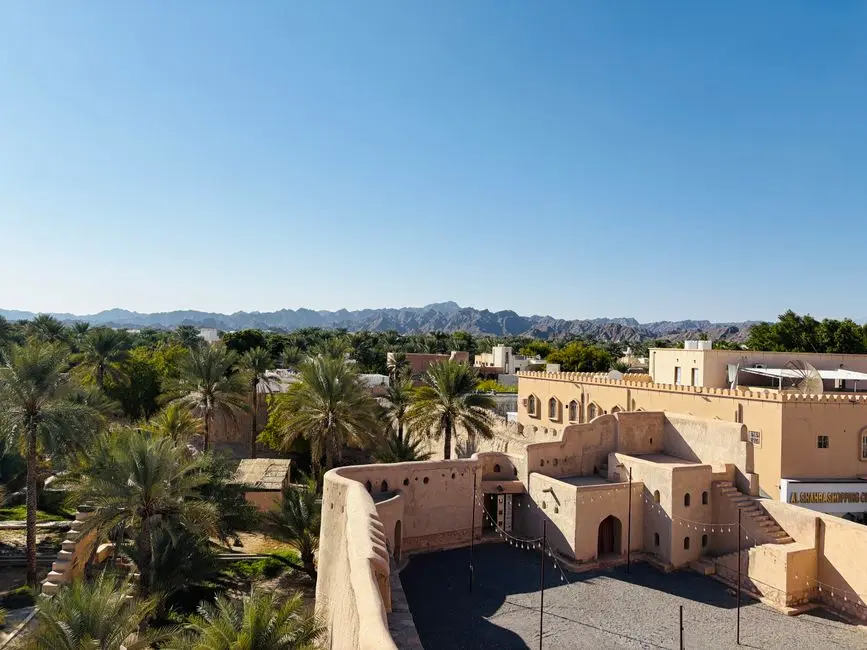
What to see in Nizwa
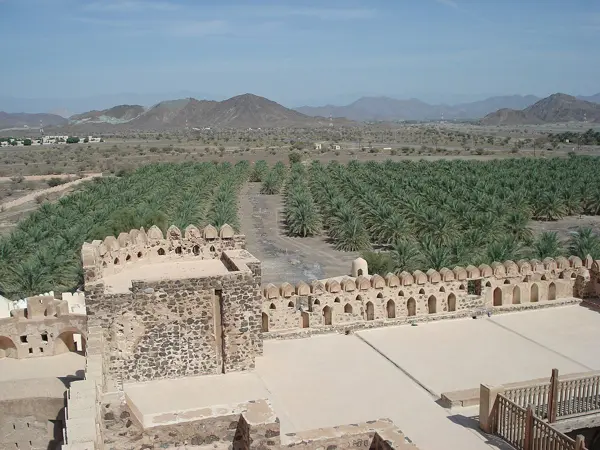
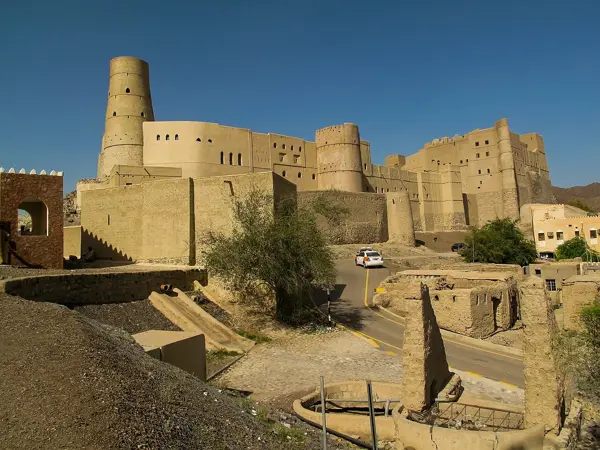
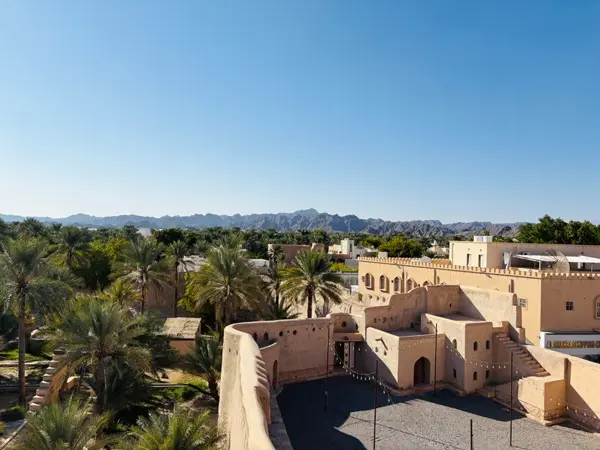
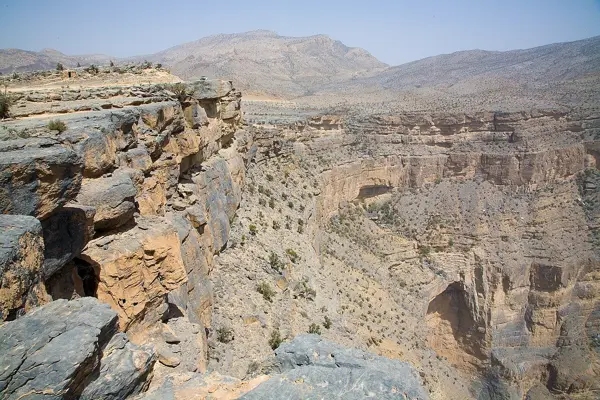
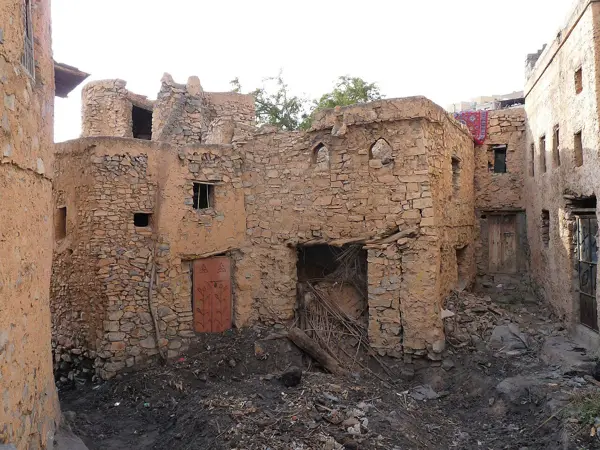
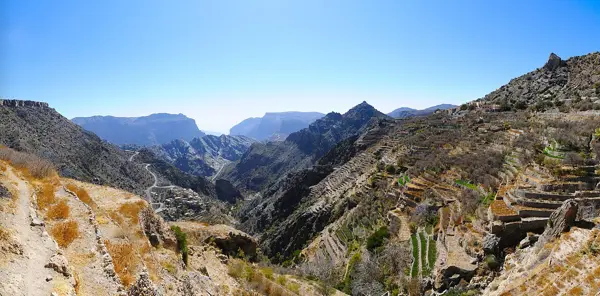
Photo credits (5)
- Unknown author, CC BY-SA 3.0, via Wikimedia Commons
- Francisco Anzola, CC BY 2.0, via Wikimedia Commons
- Andries Oudshoorn, CC BY-SA 2.0, via Wikimedia Commons
- Ji-Elle, CC BY-SA 3.0, via Wikimedia Commons
- Philipp Weigell, CC BY 3.0, via Wikimedia Commons