
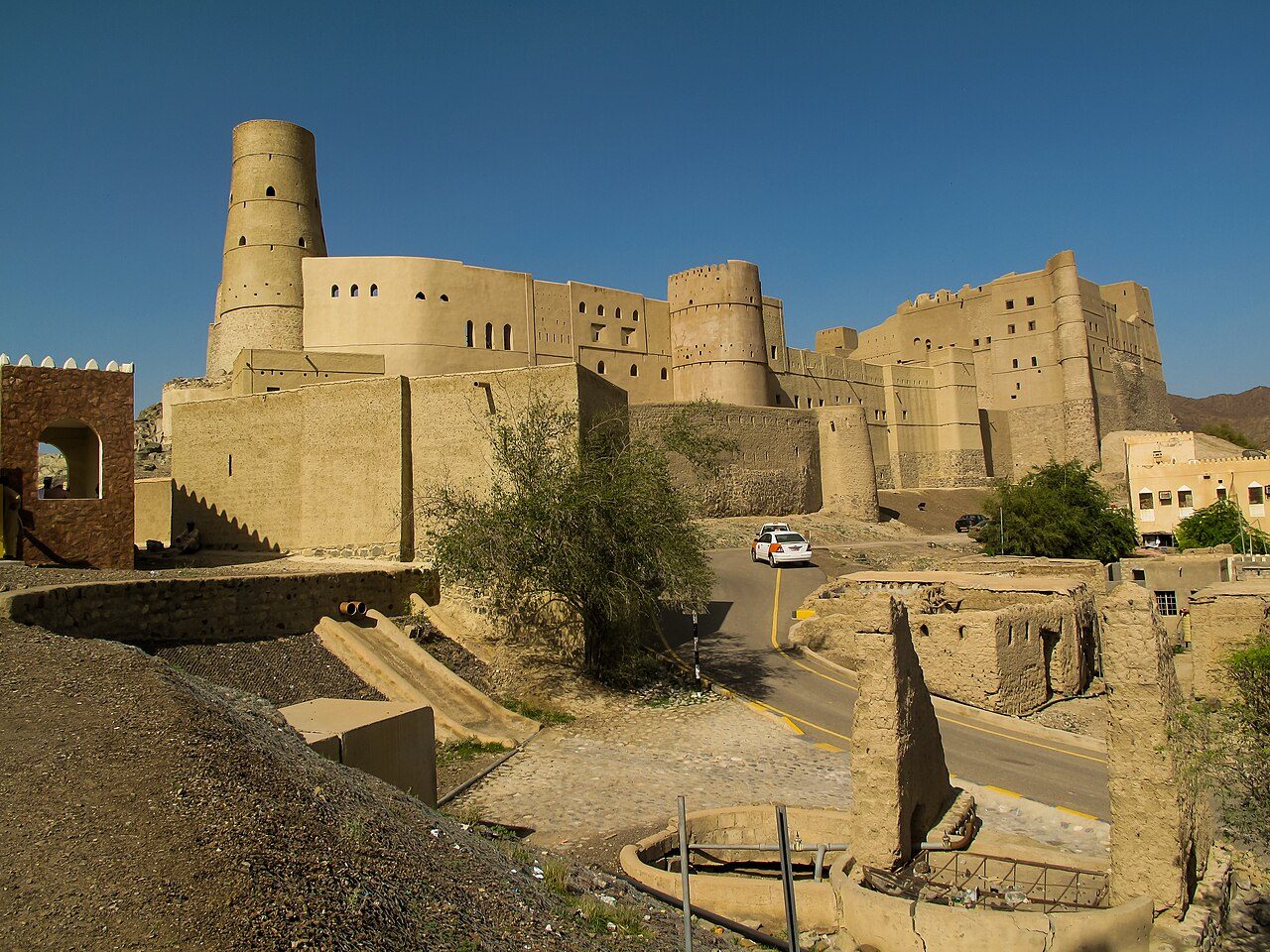
Bahla Fort
Rising organically from the stony plains west of Nizwa, Bahla Fort stands as a monumental mud-brick testament to the medieval Banu Nabhan dynasty, who controlled the Omani interior between the 12th and 15th centuries. Anchoring a fertile date oasis, this colossal defensive complex—inscribed as Oman’s first UNESCO World Heritage site in 1987—is bound to an astounding 12-kilometer earthen perimeter wall (*sur*) fortified with sentry watchtowers. Constructed from unbaked mud brick, straw, and stone footings, the citadel showcases pre-gunpowder Islamic military engineering. Its defining features include rounded bastions, intricately carved wooden doorways, and the commanding Bait al-Jabal, a multistoried keep designed to withstand prolonged sieges while catching high desert cross-breezes. Stepping across the threshold, travelers navigate a bewildering labyrinth of multi-level corridors, cavernous storehouses, and carved gypsum prayer niches. The immense density of the earthen ramparts provides immediate relief, dropping the searing desert heat to a cool hush scented with sun-cured clay and dry dust. Sunlight cuts through narrow crenellations, casting sharp geometric patterns across traditional *falaj* irrigation channels etched into the stone flooring. As you ascend the twisting stairwells to the highest parapet, the full scale of the stronghold reveals itself: an uninterrupted panorama of emerald date palm canopies, distant Hajar crags, and the clay kilns of Bahla's famed potters, all steeped in centuries of folklore attributing the fort's overnight construction to local *jinn*.
More in Nizwa
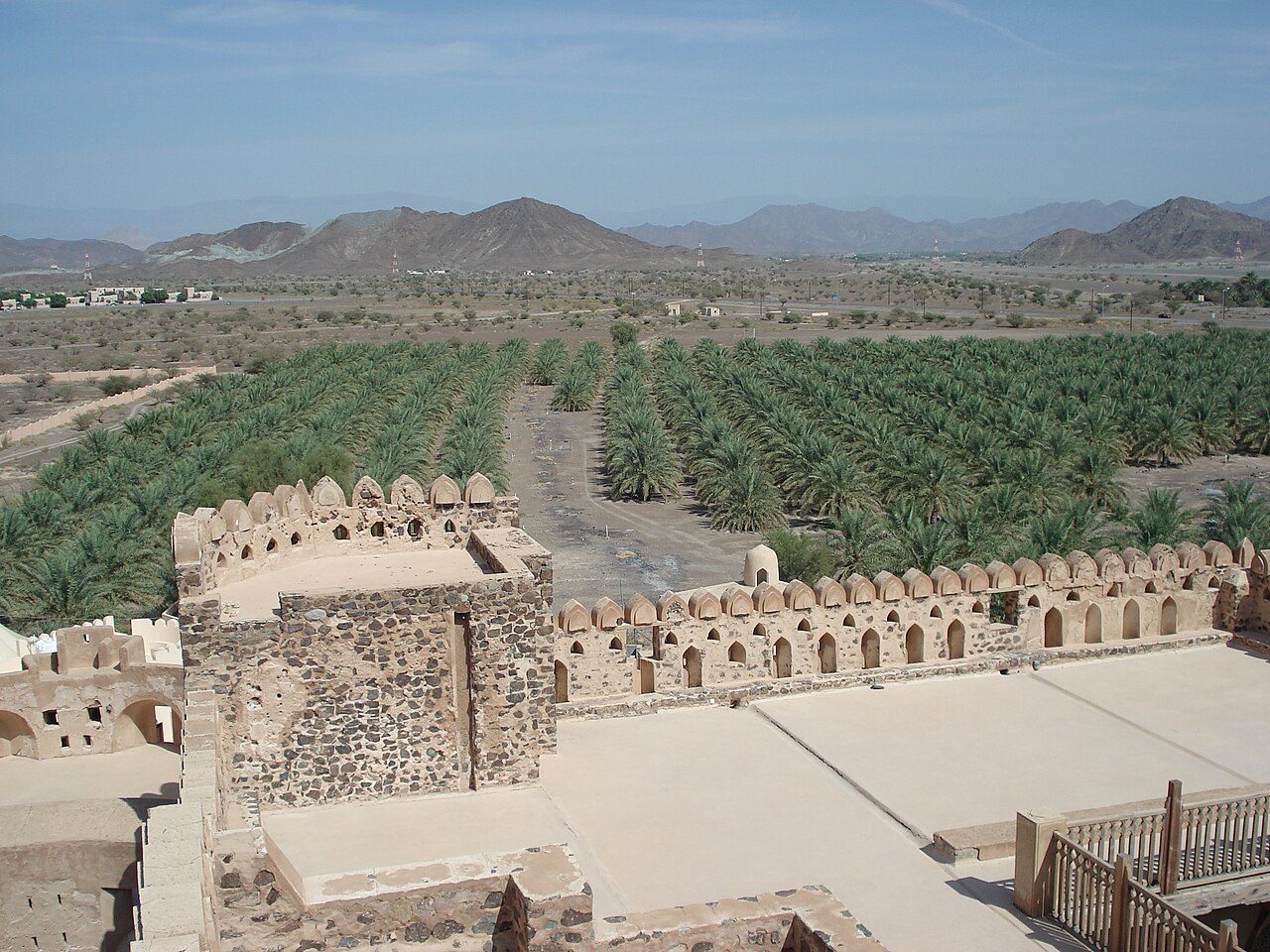
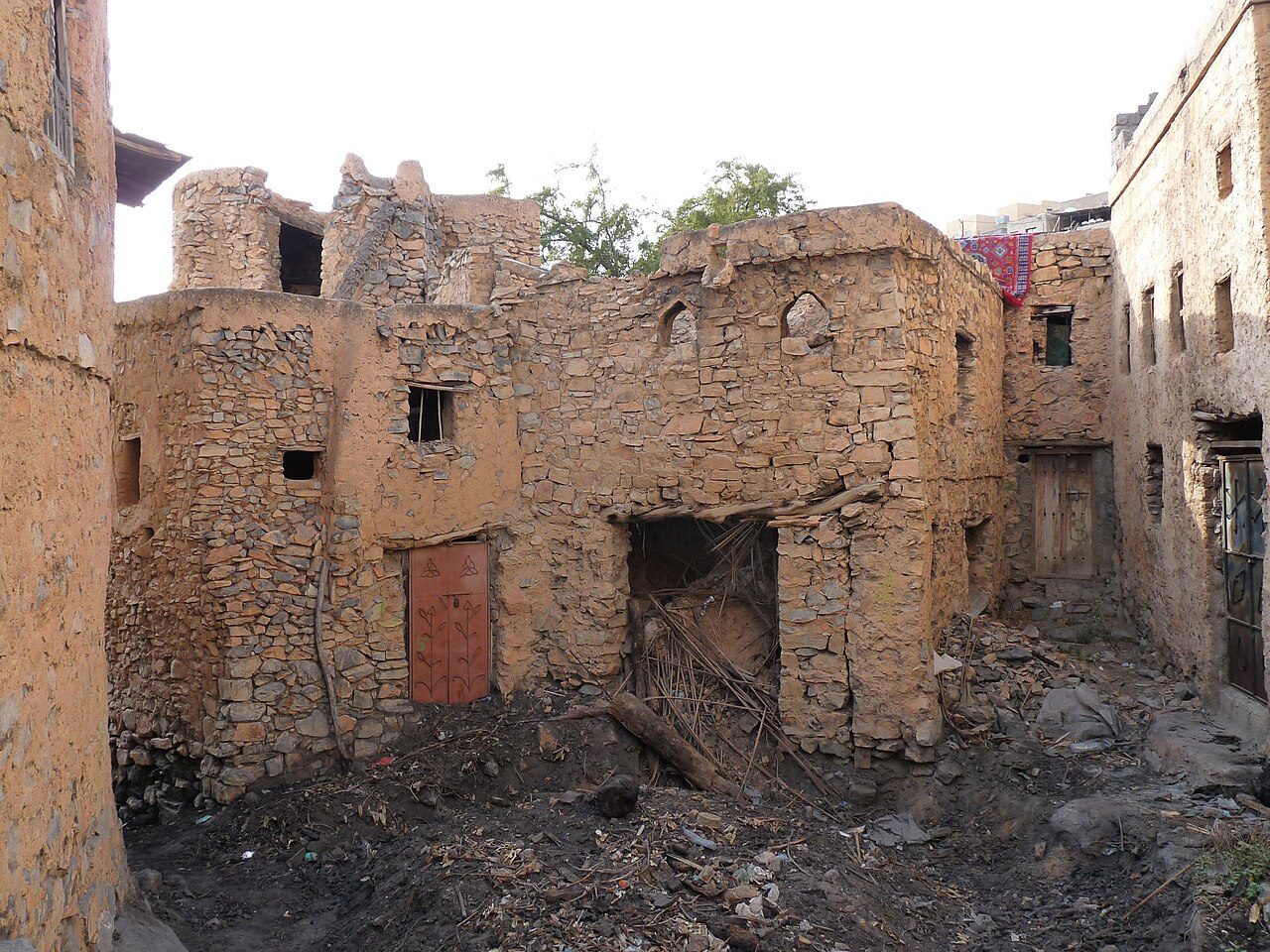
Photo credits (5)
- Francisco Anzola, CC BY 2.0, via Wikimedia Commons
- Unknown author, CC BY-SA 3.0, via Wikimedia Commons
- Andries Oudshoorn, CC BY-SA 2.0, via Wikimedia Commons
- Ji-Elle, CC BY-SA 3.0, via Wikimedia Commons
- Philipp Weigell, CC BY 3.0, via Wikimedia Commons