
Jebel Shams
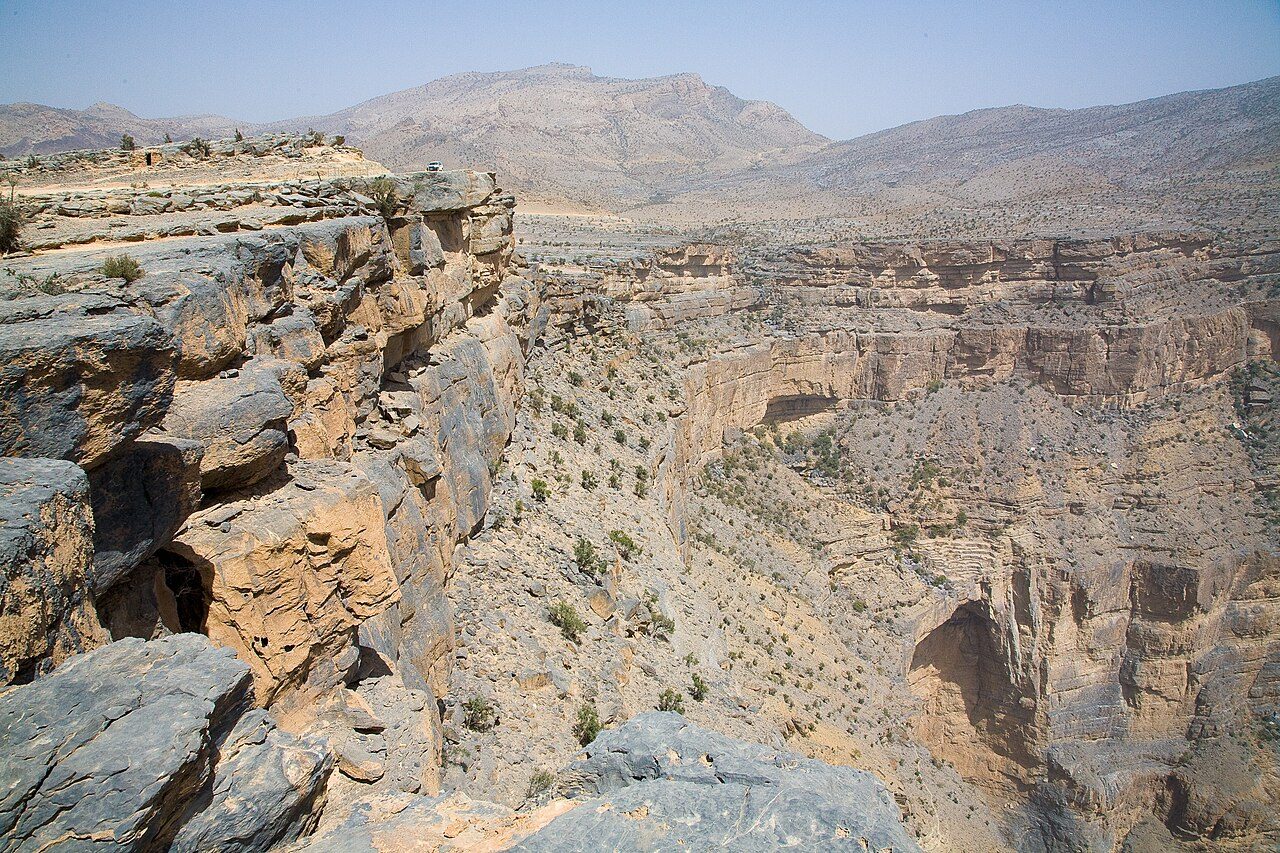
Rising 3,009 meters above sea level within the western Hajar range, Jebel Shams—the "Mountain of the Sun"—claims the distinction of being the first point in Oman to greet dawn. Beneath its wind-scoured summit lies Wadi Ghul, a dramatic limestone chasm forged over Cretaceous millennia that plunges vertically more than 1,000 meters into the abyss. For centuries, this forbidding topography sheltered isolated mountain communities known for weaving distinctive black-and-red goat-wool rugs. Clinging impossibly to a sheer ledge beneath the plateau sits As Sab (Sap Bani Khamis), an abandoned medieval hamlet of drystone dwellings, terraced pomegranate patches, and ancient rock cisterns that sheltered fifteen families until modern infrastructure prompted their relocation in the 1970s. Traversing the rim along the exposed Balcony Walk, hikers experience a sharp, invigorating shift from the arid desert heat below to thin, chilly alpine air scented with wild mountain thyme. The visual spectacle unfolds as a vast, tiered amphitheater of banded limestone strata, painted in stark bands of rust, ochre, and slate gray. Gnarled juniper branches and wild olive trees anchor the cliff edges, framing dizzying drops where Egyptian vultures drift on rising thermals. Standing at the precipice, the sheer vertical drop creates a thrilling sense of vertigo, wrapped in a deep mountain silence broken only by the occasional clatter of loose shale under the hooves of nimble mountain goats.
More in Nizwa
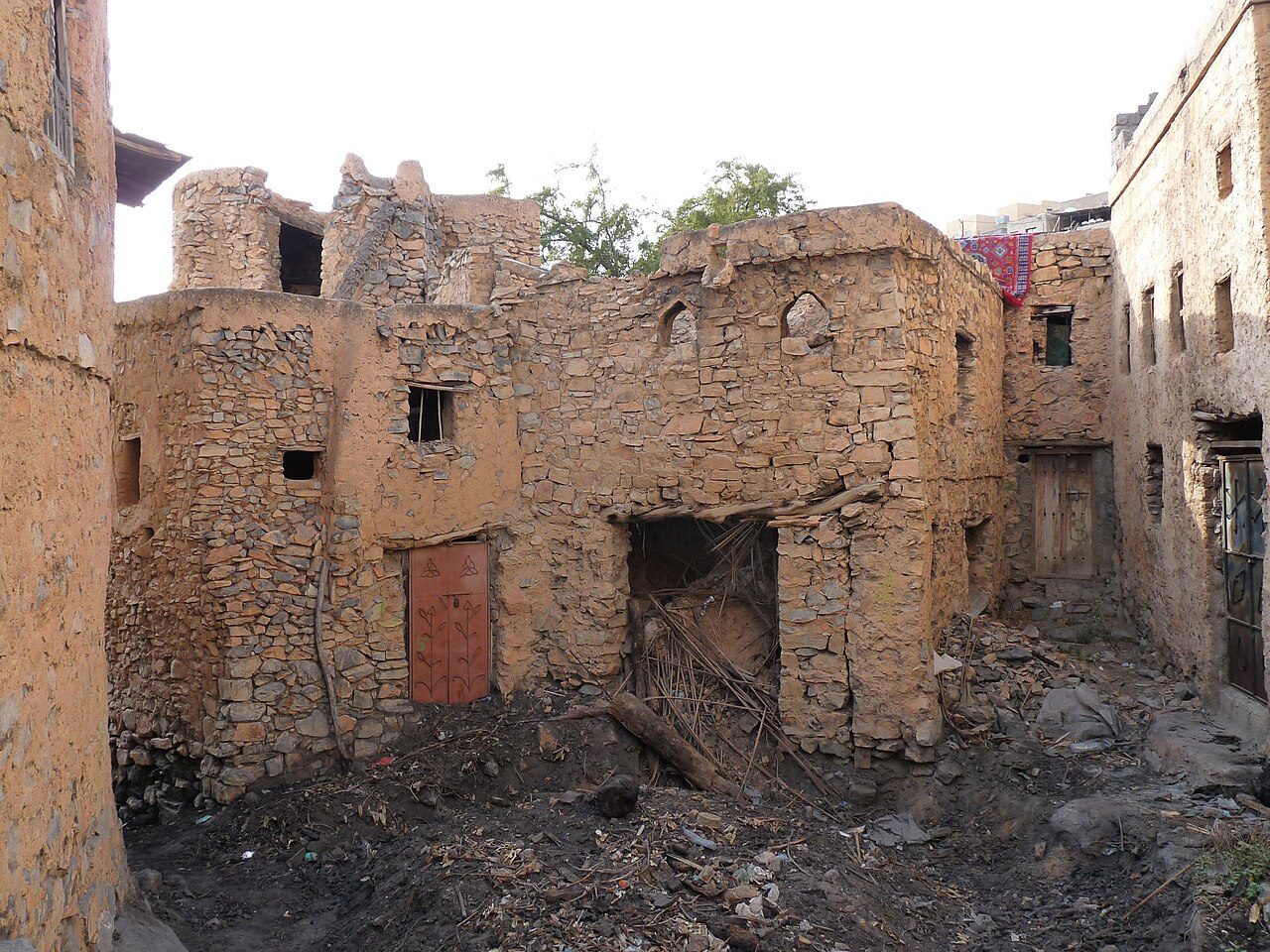
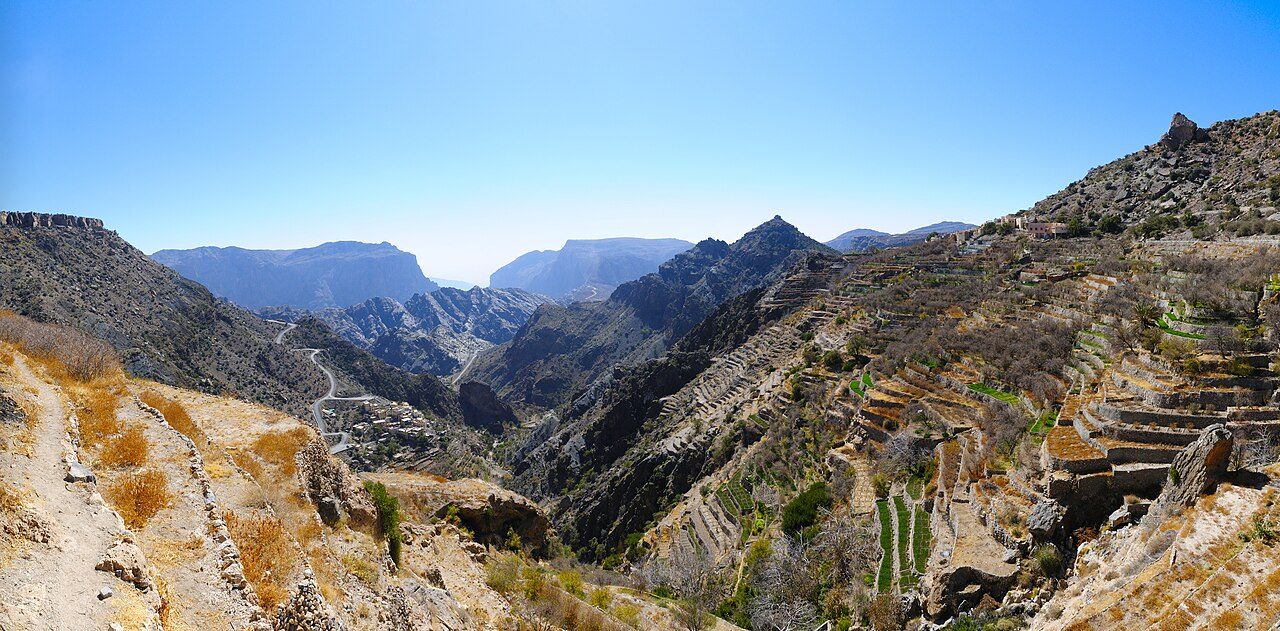
Photo credits (5)
- Andries Oudshoorn, CC BY-SA 2.0, via Wikimedia Commons
- Unknown author, CC BY-SA 3.0, via Wikimedia Commons
- Francisco Anzola, CC BY 2.0, via Wikimedia Commons
- Ji-Elle, CC BY-SA 3.0, via Wikimedia Commons
- Philipp Weigell, CC BY 3.0, via Wikimedia Commons