
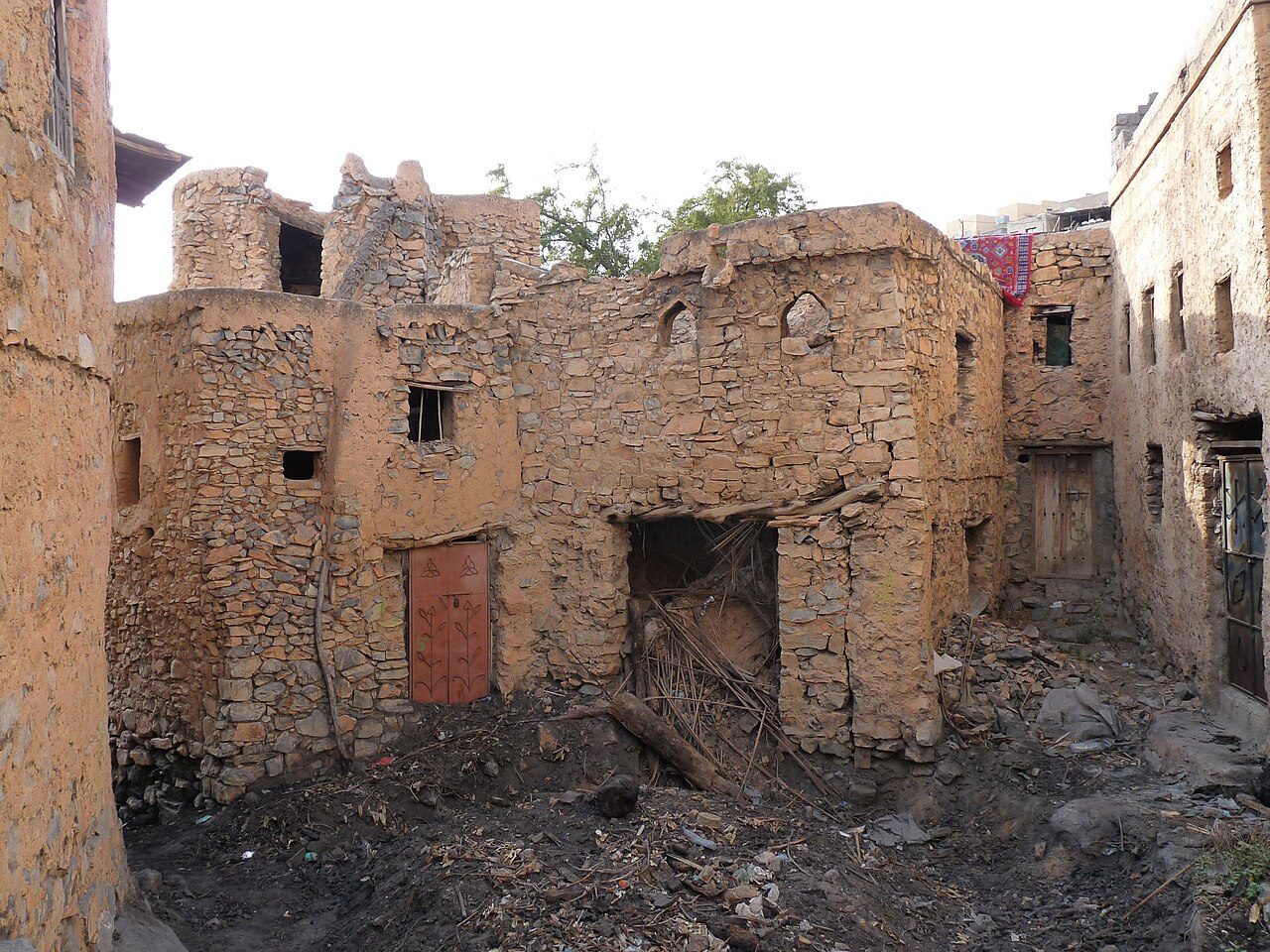
Misfat al Abriyeen
Clinging precipitously to the craggy flanks of Jebel Shams in the highlands northwest of Nizwa, this three-century-old mountain redoubt was engineered by the Al Abri tribe as both a fortified haven and an agricultural triumph. Rather than leveling the treacherous bedrock, builders fused multi-story mudbrick and raw stone houses directly onto massive boulder outcroppings, binding them with traditional *sarouj* mortar and dense date-palm beams. Defensive watchtowers still crown the perimeter, overlooking a dense cascade of ochre-hued dwellings whose fortress-like walls are punctuated by narrow firing slits and heavy wooden doorways carved with geometric rosettes dating to the Yaruba era. Stepping into the settlement’s cool, covered alleyways, visitors are greeted by the constant, rhythmic whisper of the *falaj*—an ingenious, UNESCO-recognized gravity irrigation system chiseled straight through the rock. Clear mountain water courses through stone aqueducts underfoot, meticulously partitioned to nurture dramatic terraced plots of pomegranates, sweet lemons, papayas, and dense date palms that plunge into the wadi below. The atmosphere carries the rich aroma of damp soil, crushed mint, and burning frankincense escaping shuttered windows, drawing walkers along mossy flagstone paths that balance precarious cliff-edge vistas with the deep, shaded tranquility of a living oasis.
More in Nizwa
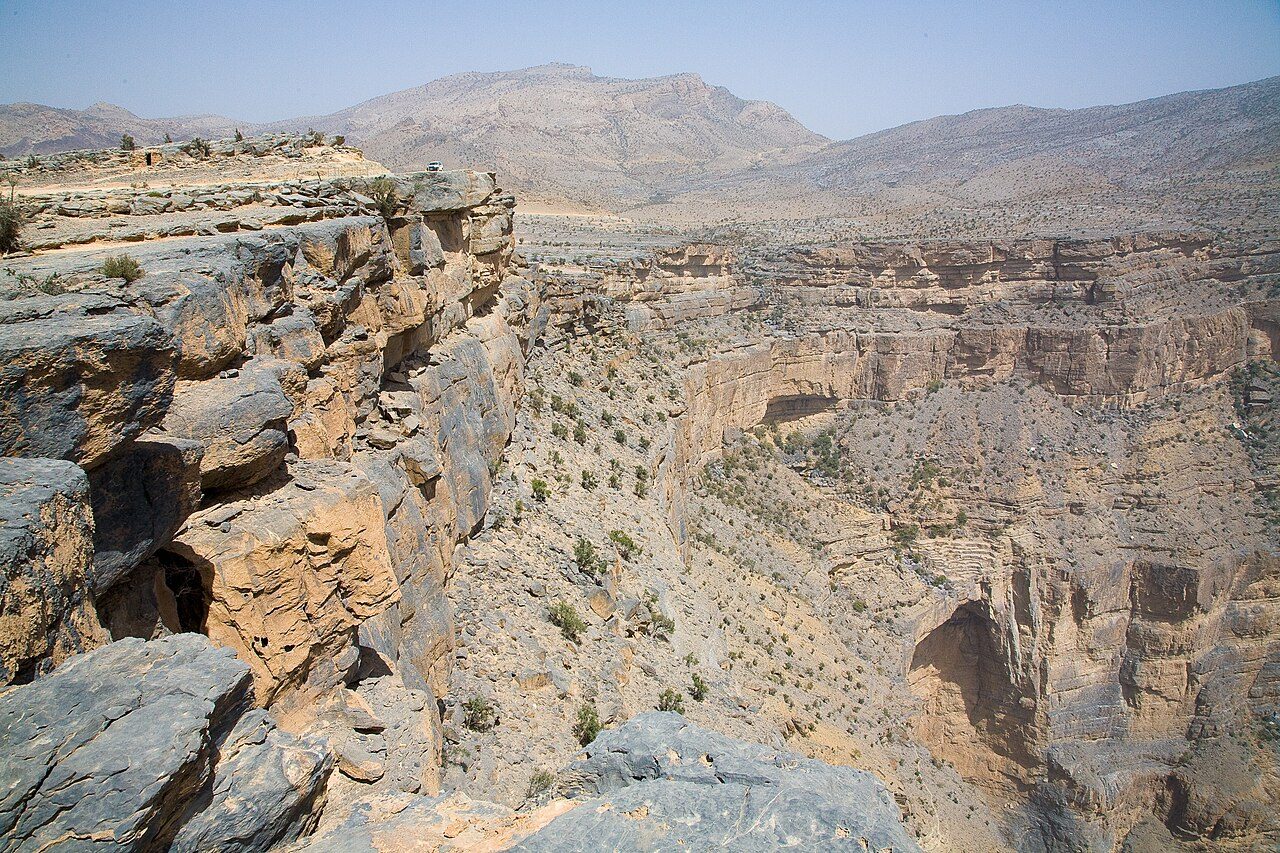
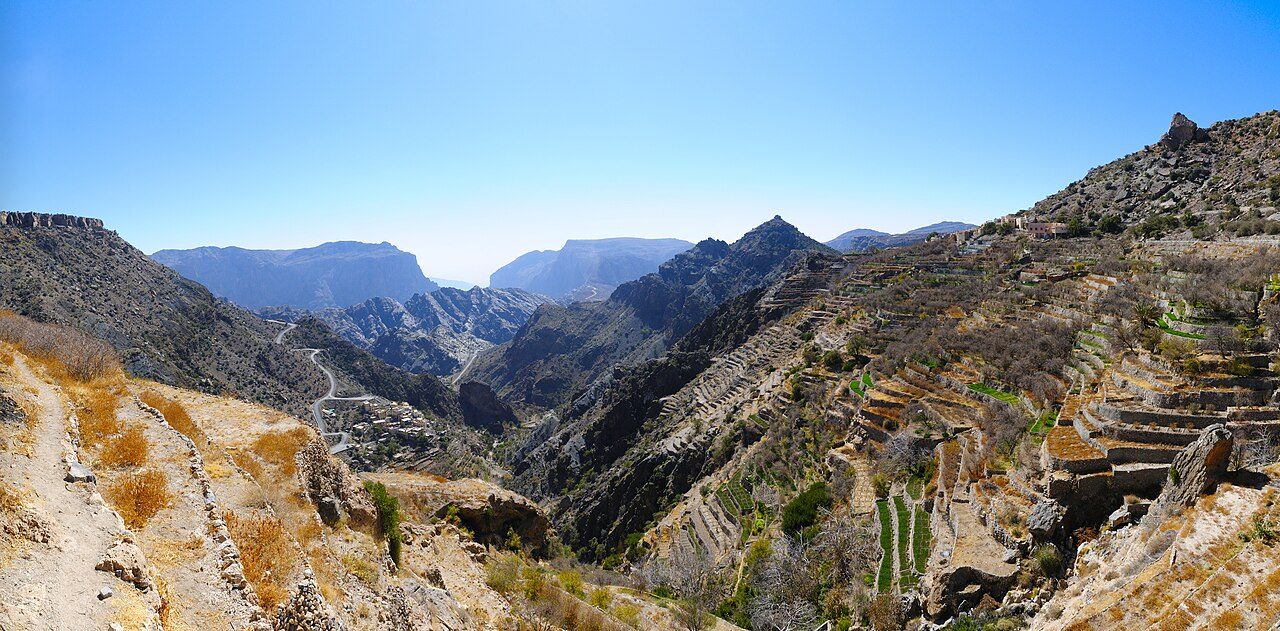
Photo credits (5)
- Ji-Elle, CC BY-SA 3.0, via Wikimedia Commons
- Unknown author, CC BY-SA 3.0, via Wikimedia Commons
- Francisco Anzola, CC BY 2.0, via Wikimedia Commons
- Andries Oudshoorn, CC BY-SA 2.0, via Wikimedia Commons
- Philipp Weigell, CC BY 3.0, via Wikimedia Commons