
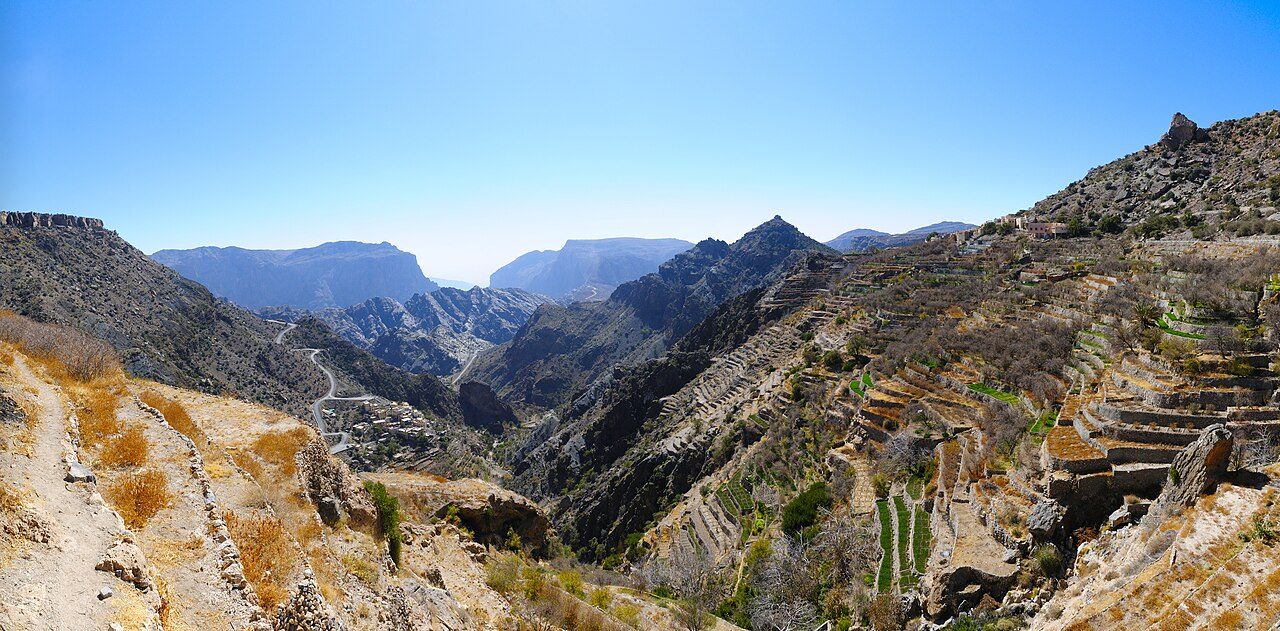
Jebel Akhdar
Rising nearly 3,000 meters above the interior plains near Nizwa, the limestone massif of Jebel Akhdar anchors the central Al Hajar range in rugged seclusion. Historically an impregnable natural fortress, these cliffs served as the battleground for the Jebel Akhdar War (1954–1959), where British SAS regiments aided Sultan Said bin Taimur in routing the insurgent forces of Imam Ghalib al-Hinai. Clinging to the sheer amphitheaters of the Saiq Plateau, centuries-old settlements like Ash Shirayjah and the abandoned mud-and-straw hamlet of Wadi Bani Habib display masterworks of vernacular Omani masonry, fed by ancient, UNESCO-recognized *aflaj* irrigation conduits chiseled straight into the canyon stone. Travelers ascending the steep mountain switchbacks immediately encounter a brisk, sub-Mediterranean microclimate that drops temperatures well below the scorched plains below. In early spring, the vertiginous agricultural terraces flush pink with thousands of blossoming Damask roses. The sweet, heavy scent of floral nectar mingles with burning tamarisk wood as local distillers extract rosewater in earthen ovens blackened by centuries of soot. Walking the narrow stone parapets tracing the rim of the canyon, visitors peer down into sheer drops plunging hundreds of meters, enveloped by the cool shade of walnut trees and the soft, perpetual trickle of mountain springs sustaining green pomegranate orchards against the gray, weathered bedrock.
More in Nizwa
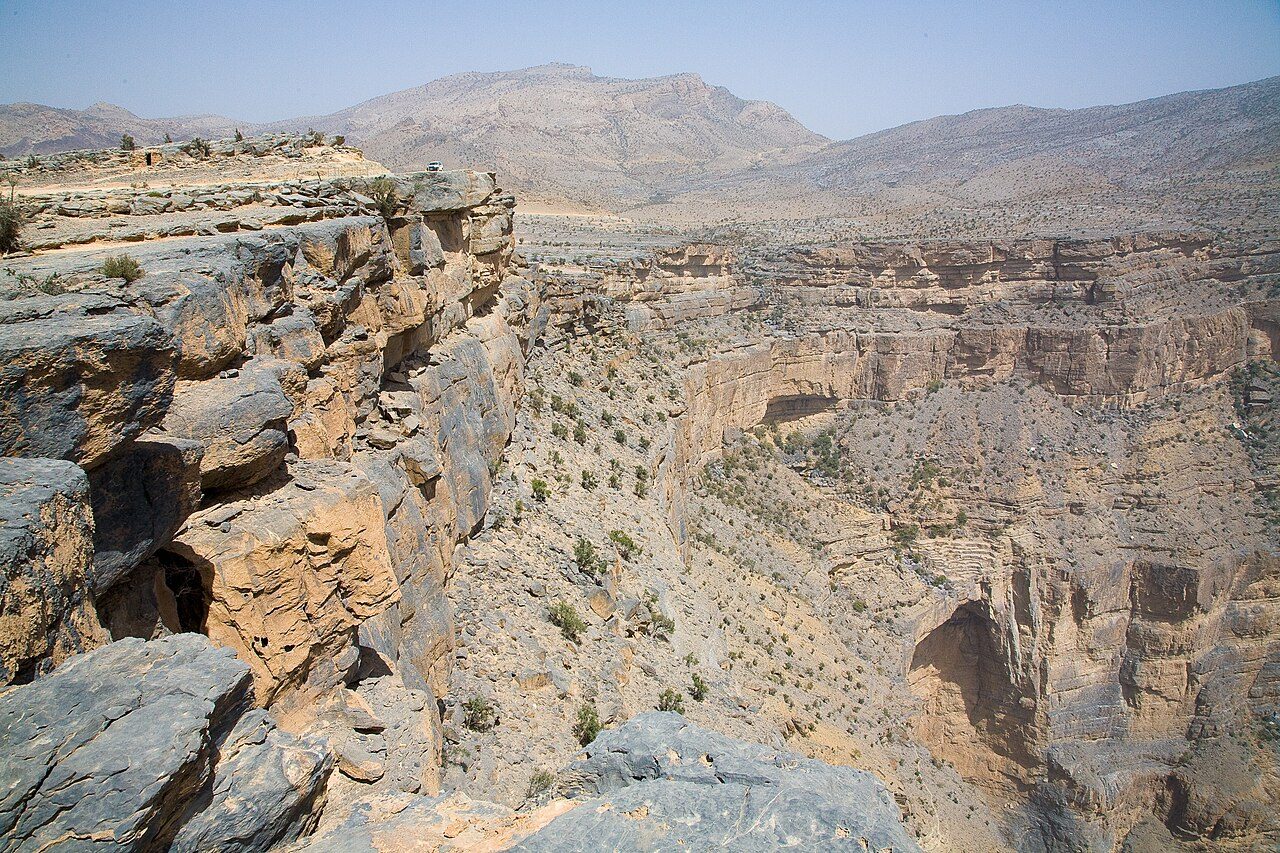
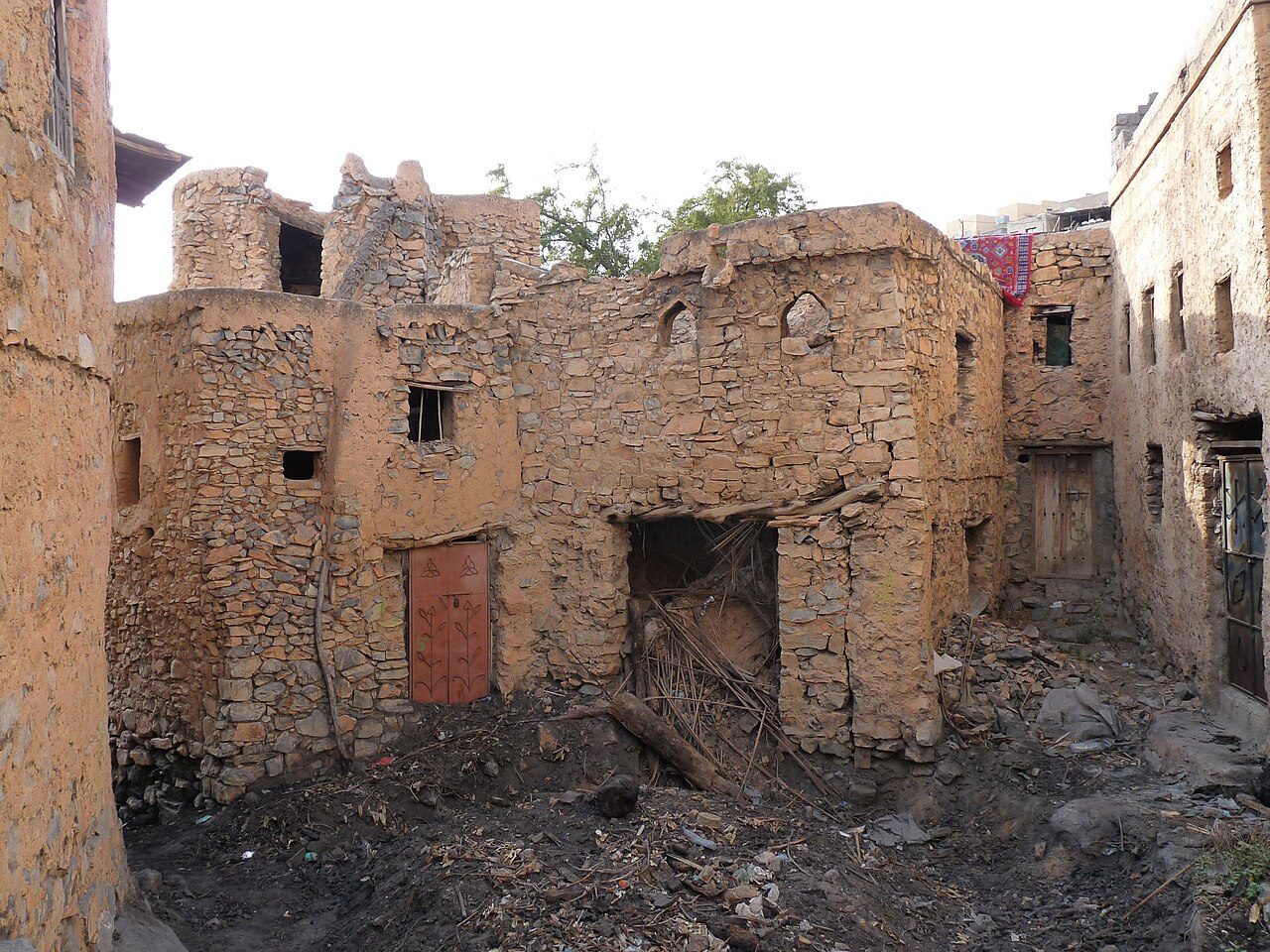
Photo credits (5)
- Philipp Weigell, CC BY 3.0, via Wikimedia Commons
- Unknown author, CC BY-SA 3.0, via Wikimedia Commons
- Francisco Anzola, CC BY 2.0, via Wikimedia Commons
- Andries Oudshoorn, CC BY-SA 2.0, via Wikimedia Commons
- Ji-Elle, CC BY-SA 3.0, via Wikimedia Commons