Plan your route across Slovenia through alpine valleys, subterranean karst caverns, the capital city, and the Adriatic coast. This practical guide covers essential destinations and travel logistics.
To decide where to go in Slovenia, focus your itinerary on four distinct geographic regions: the historic capital of Ljubljana, the alpine lakes of Upper Carniola, the subterranean caverns of the southwestern Karst, and the Venetian port of Piran. Because forest covers three-fifths of the country and distances remain compact, you can travel from high alpine pastures to the Adriatic Sea in roughly two hours. This geographical diversity allows travelers to experience Central European urban architecture, glacial water basins, deep limestone caves, and coastal olive groves within a single journey.
Ljubljana: The Central Cultural Hub
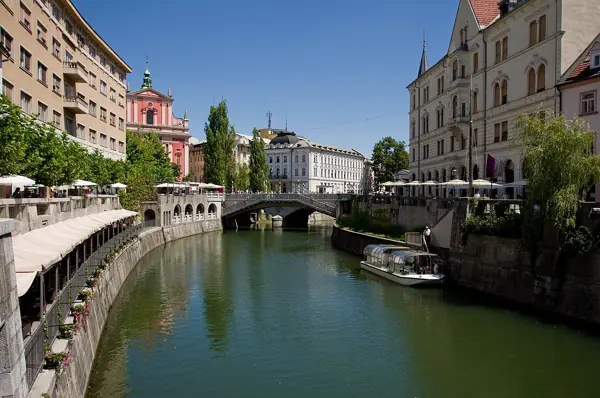
Slovenia's capital functions as an ideal starting base, defined by pedestrianized river corridors, willow-lined banks, and civic works designed by early 20th-century architect Jože Plečnik. Life in the city centers on the Ljubljanica River, where residents gather along stone embankments beneath open café terraces.
At the geographic core of the city sits Preseren Square, paved in pale granite and anchored by the salmon-pink Franciscan Church of the Annunciation. Crossing directly from the square brings you to the Triple Bridge Ljubljana, a historic river crossing where Plečnik flanked an 1842 stone arch bridge with two diagonal pedestrian walkways and stone balustrades. Looking upward, Ljubljana Castle crowns Castle Hill. The fortress assumed its commanding pentagonal footprint during the late 15th century under Habsburg Emperor Frederick III to guard against Ottoman incursions, and today offers broad vantage points over the red-tiled roofs of the historic center.
The Julian Alps: Bled and Lake Bohinj
Northwest of the capital lies Upper Carniola, where the jagged limestone peaks of the Julian Alps frame famous glacial lakes and clear alpine waterways.
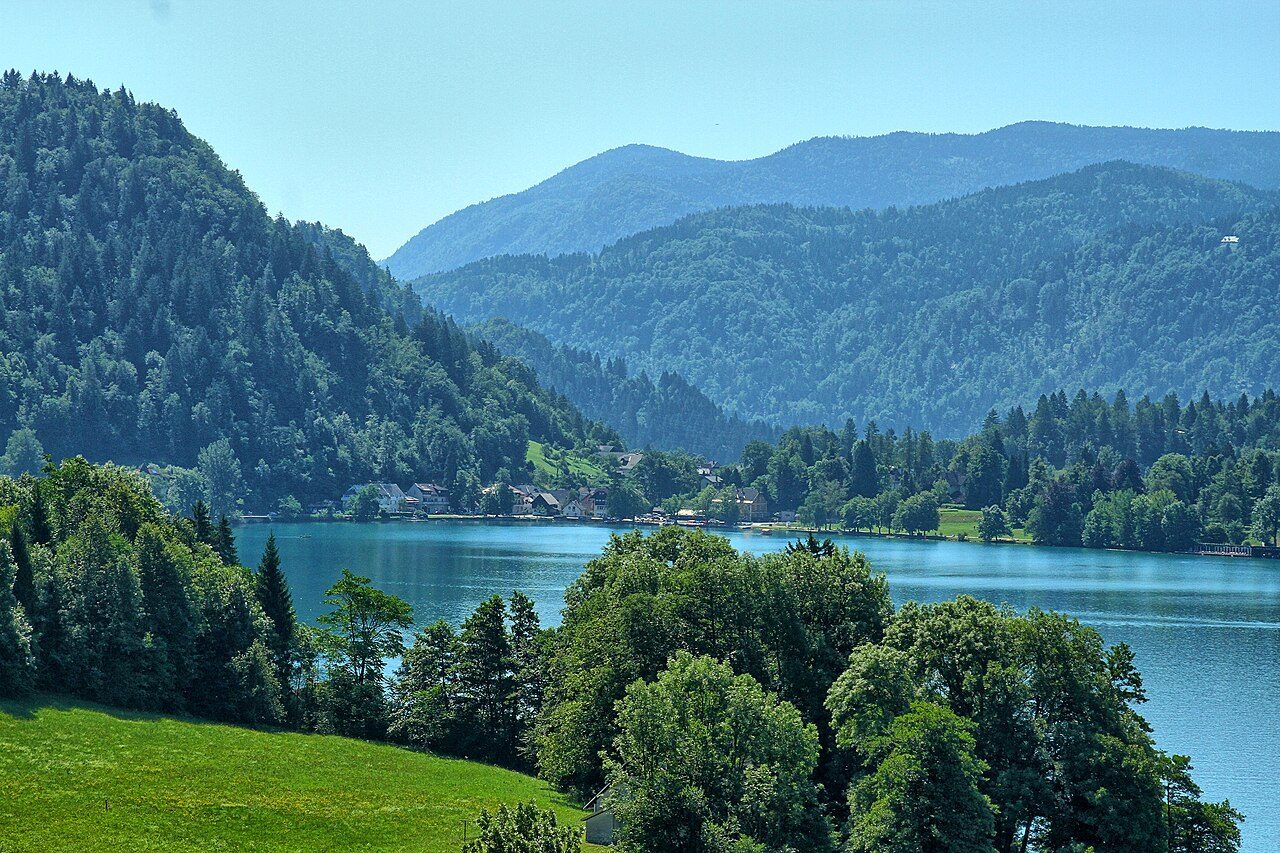
The resort town of Bled centers on Lake Bled, a glacial depression fed by thermal springs. In the middle of the water rests Bled Island, reached by traditional wooden oar-powered boats known as pletnas; once ashore, stone steps lead visitors beneath a dense canopy of chestnuts to the island church. High above the north shore, Bled Castle perches atop a 130-meter sheer limestone cliff, tracing its documented lineage back to 1004 when Holy Roman Emperor Henry II deeded the settlement to the Bishop of Brixen.
Just four kilometers north of town lies Vintgar Gorge, where wooden boardwalks cling to vertical rock faces carved by the Radovna River. If you prefer a wilder alpine setting, continue southwest into the mountains to Lake Bohinj. Bohinj preserves an untamed environment bordered by steep limestone walls, with the medieval Church of Saint John the Baptist guarding its eastern outflow.
The Karst Plateau: Postojna and Škocjan
Heading southwest from Ljubljana brings you onto the Karst plateau, a limestone landscape where water has hollowed out vast underground networks over millennia.
The municipality of Postojna holds two of the country's most celebrated landmarks. Postojna Cave features millions of years of mineral deposits carved by the Pivka River, first documented in detail in 1818 by local lamplighter Luka Čeč. A narrow-gauge underground railway carries passengers into deep chambers filled with stalactites, stalagmites, and native olms. A few kilometers away stands Predjama Castle, an engineering marvel documented as early as 1274 that clings directly to the mouth of a cavern halfway up a 123-meter limestone cliff.
Further south toward Divača, Skocjan Caves preserves the primordial heart of classical Karst geology. The torrential Reka River disappears underground here, roaring beneath a vast subterranean canyon that has drawn human admiration since Bronze Age sacrificial rituals.
The Adriatic Coast: Piran and Primorska
Slovenia's short coastline along the Istrian peninsula presents an entirely different cultural atmosphere, marked by olive groves, salt air, and strong Venetian architectural roots.
The coastal town of Piran extends onto a narrow peninsula jutting into the Adriatic Sea. Its centerpiece is Tartini Square, a wide elliptical plaza paved in pale Istrian marble that served as an inner fishing basin until municipal workers filled it in 1894. Winding stone alleys run uphill from the square between tightly packed Venetian-Gothic townhouses, leading to parish churches and seaside defense walls overlooking the Gulf of Trieste.
Guided Tours and Planning on Tour & Car
Booking a guided service allows you to understand the local history that shaped Slovenia's distinct border cultures, from Habsburg administrative heritage to centuries-old Slavic agrarian traditions.
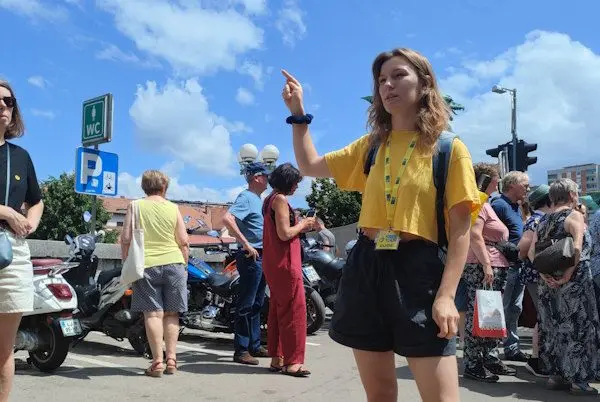
For an in-depth urban orientation, you can book the Classic Ljubljana Walking Tour on Tour & Car for $149 per group. This two-hour private walking tour led by Ljubljana Free Tour explores the historic avenues, bridges, and architectural legacy of the capital. If you plan to travel beyond the capital into alpine villages or the wine-growing hills of eastern Slovenia, you can arrange services directly through vetted local guides on Tour & Car to handle your custom daily sightseeing.
How to Travel Around Slovenia
Slovenia's compact geography makes navigating between regions straightforward. The country's primary highway junction sits right outside Ljubljana, putting most major landmarks within a ninety-minute drive.
- Rental Car or Private Transfer: Driving offers the highest flexibility for reaching trailheads, rural churches, and remote gorges like Lake Bohinj or Škocjan.
- Regional Rail: Trains connect Ljubljana with Maribor, Celje, and Postojna, providing comfortable transit through scenic river valleys.
- Regional Buses: Regular coaches run daily between Ljubljana, Bled, Bohinj, and coastal towns like Piran.
- Walking and Cycling: Ljubljana, Piran, and lake perimeters are intensely pedestrian-friendly, with extensive dedicated cycling routes.
Travel Costs and Budgeting
Travel costs in Slovenia sit near the central European average, generally more moderate than neighboring Austria or Italy. Dining and everyday services remain reasonable outside the busiest summer windows.
On Tour & Car, private group experiences like the Classic Ljubljana Walking Tour are available from $149 for the entire party, providing dedicated guide expertise without per-person ticketing overhead. Budget conscious travelers can save by staying in local farmsteads or guesthouses outside peak summer weeks and buying regional staples at farmers' markets.
Best Time to Visit and Seasonal Events
May through September offers optimal conditions for hiking, lake swimming, and outdoor dining across alpine and coastal valleys. Autumn brings quiet wine harvest celebrations, while winter transforms the Julian Alps into a snowy retreat and fills old town squares with warm seasonal markets.
If you travel in late 2026, consider coordinating your dates around these verified regional events:
- 37th Ljubljana International Film Festival (LIFFe): 11 Nov 2026 - 22 Nov 2026 in Ljubljana.
- 28th Slovenian Wine Festival: 19 Nov 2026 - 20 Nov 2026 in Ljubljana.
- Festive December in Ljubljana: 27 Nov 2026 - 14 Jan 2027 in Ljubljana.
- 23rd Animateka International Animated Film Festival: 30 Nov 2026 - 06 Dec 2026 in Ljubljana.
- Festive Market at Tartini Square: 18 Dec 2026 - 03 Jan 2027 in Piran.
- Christmas Day: 25 Dec 2026 across Slovenia.
- Living Nativity in Postojna Cave: 25 Dec 2026 - 30 Dec 2026 in Postojna.
- Legend of the Sunken Bell: 25 Dec 2026 in Bled.
A Practical 7-Day Route
- Days 1–2: Ljubljana. Explore the banks of the Ljubljanica, wander across the Triple Bridge, tour Ljubljana Castle, and walk through the historic quarters.
- Days 3–4: Bled and Bohinj. Drive to Lake Bled to visit the castle and row out to Bled Island, then spend a quiet afternoon walking the shores of Lake Bohinj.
- Day 5: Karst Caves. Head south to explore the underground railway at Postojna Cave and photograph the cliffside fortifications of Predjama Castle.
- Days 6–7: Coastal Piran. End your trip in Piran enjoying fresh Adriatic seafood, walking the Venetian streets, and relaxing on Tartini Square.