
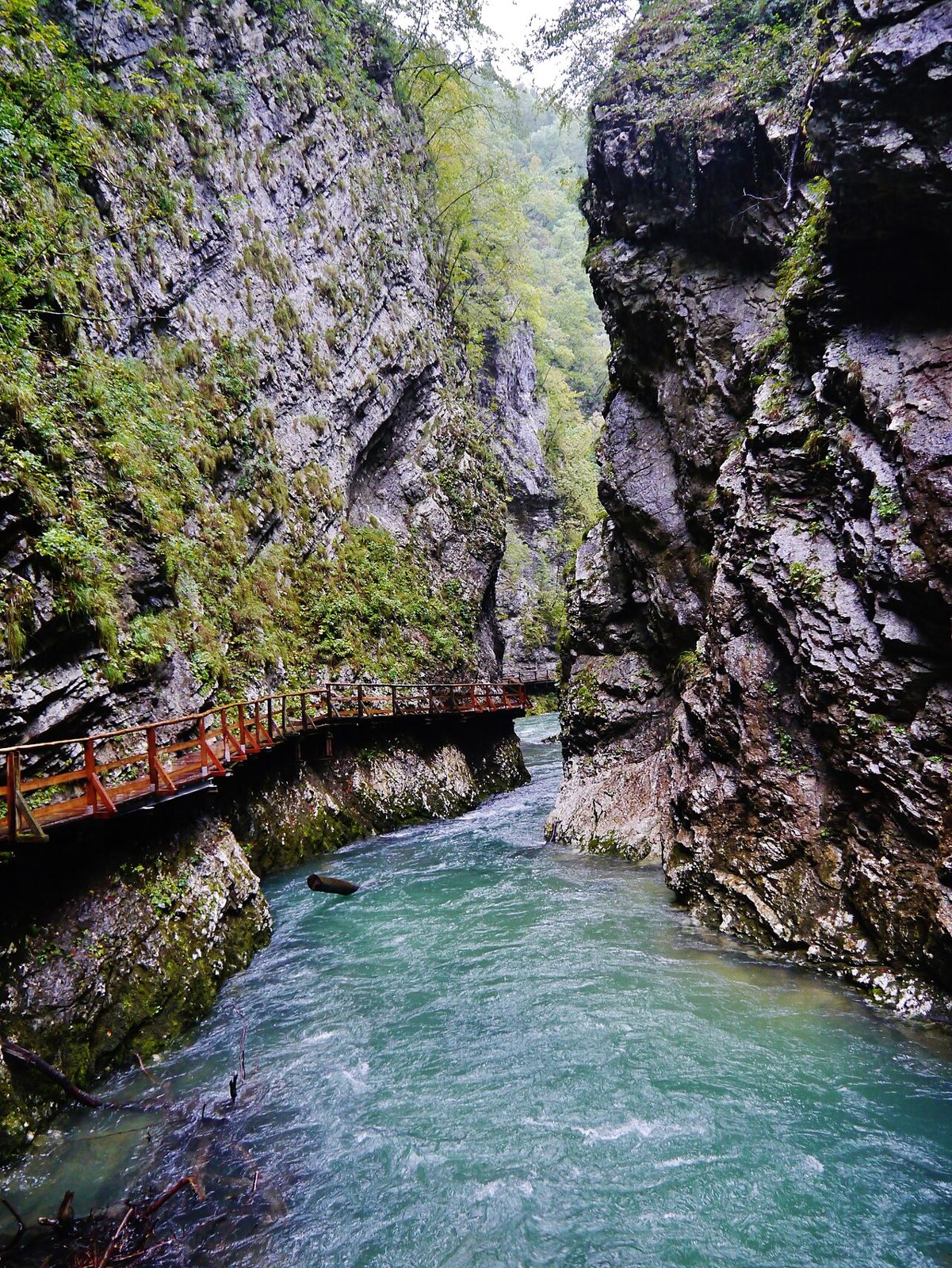
Vintgar Gorge
In 1891, during an unusually dry summer, Gorje’s mayor Jakob Žumer and cartographer Benedikt Lergetporer ventured into what was then an impassable rift carved through the Hom and Boršt hills. Awed by the canyon’s dramatic depth, civic engineers spent two years anchoring timber trestles and suspended galleries directly into vertical limestone faces, officially inaugurating the 1.6-kilometer chasm to the public on August 26, 1893. High above this rushing natural corridor looms an imposing human monument: the single-arch stone Bohinj Railway viaduct, built in 1906, which spans the canyon walls thirty-three meters overhead against a backdrop of dense beech forest. Traversing the narrow Žumer galleries, visitors feel the physical rumble of the Radovna River vibrating through weathered wooden planks underfoot. The air shifts instantly, dropping several degrees as deep canyon shadows replace the open sunlight, scented with damp moss and pulverised stone. Below the walkway, the river churns in startling gradients of glacial jade and electric turquoise, swirling violently through carved bedrock potholes before thundering over the thirteen-meter drop of the Šum Waterfall. At the trail's terminus, cool river spray drenches the timber observation deck, enveloping hikers in a deafening acoustic roar that drowns out everything beyond the gorge's sheer rock walls.
More in Bled
Photo credits (2)
- Zairon, CC BY-SA 4.0, via Wikimedia Commons
- Alain Rouiller, CC BY-SA 2.0, via Wikimedia Commons