
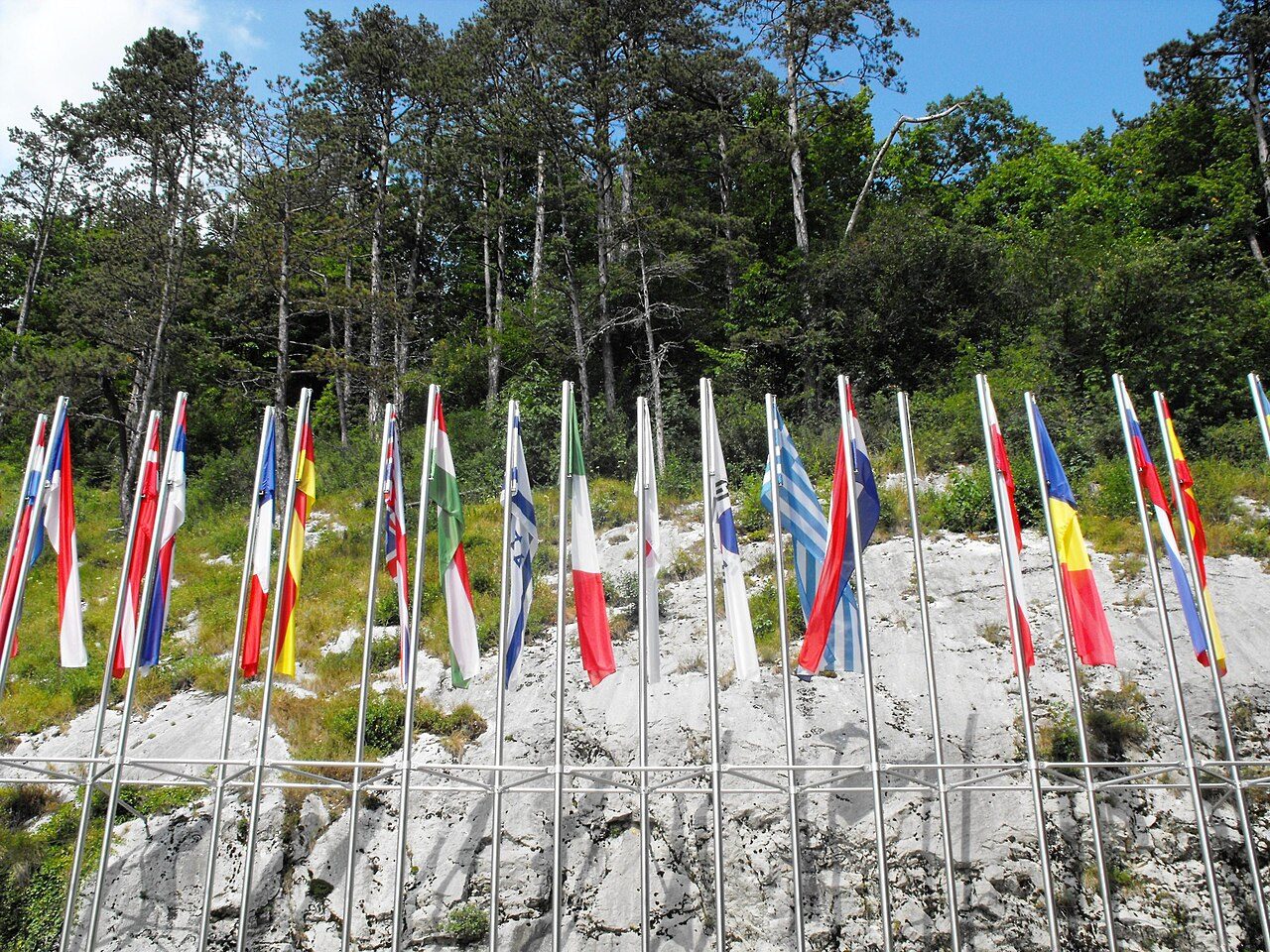
Postojna Cave
Carved over millennia by the Pivka River, this subterranean karst labyrinth unveiled its deepest secrets in 1818, when local lamplighter Luka Čeč stumbled into its inner reaches while preparing for an imperial visit by Austrian Emperor Francis I. Postojna rapidly emerged as the cradle of speleotourism; by 1872, engineers had laid the world’s first underground tourist railway, and in 1884, the grottos received electric lighting—well before the imperial capital of Ljubljana had power lines. The system also birthed modern speleobiology, cataloging endemic subterranean fauna that had baffled naturalists since the Enlightenment. Crossing into the perpetual 10°C (50°F) gloom, visitors board an open-top narrow-gauge train that rattles through shadowy gothic tunnels, brushing beneath ceilings hung with millions of translucent "spaghetti" stalactites. On foot, the path ascends toward the Great Mountain and winds past the five-meter-tall "Brilliant"—a shimmering, snow-white calcite formation that serves as the cave's emblem—before terminating in the immense, 40-meter-high Concert Hall, renowned for its 40-second acoustic reverberation. Within dimmed display vivariums, travelers can observe the elusive *Proteus anguinus*, or olm: a blind, pigmentless aquatic salamander that local folklore once branded as hatchlings of subterranean dragons.
More in Postojna
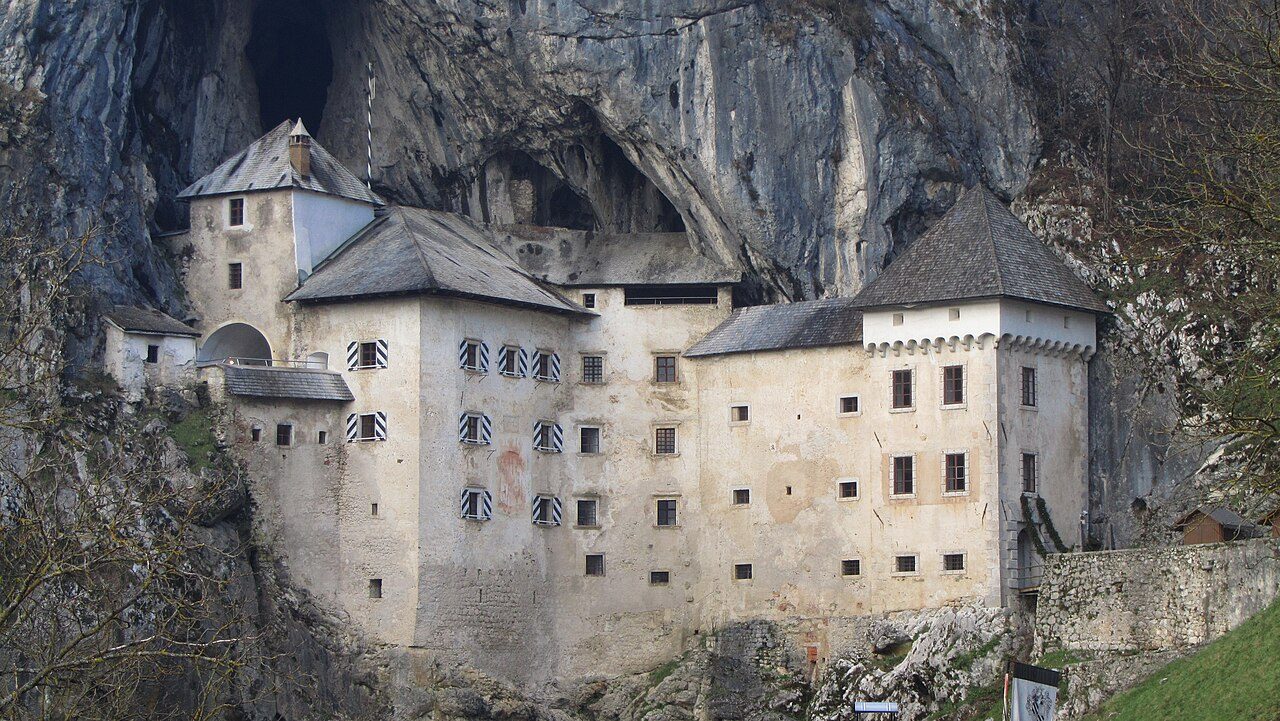
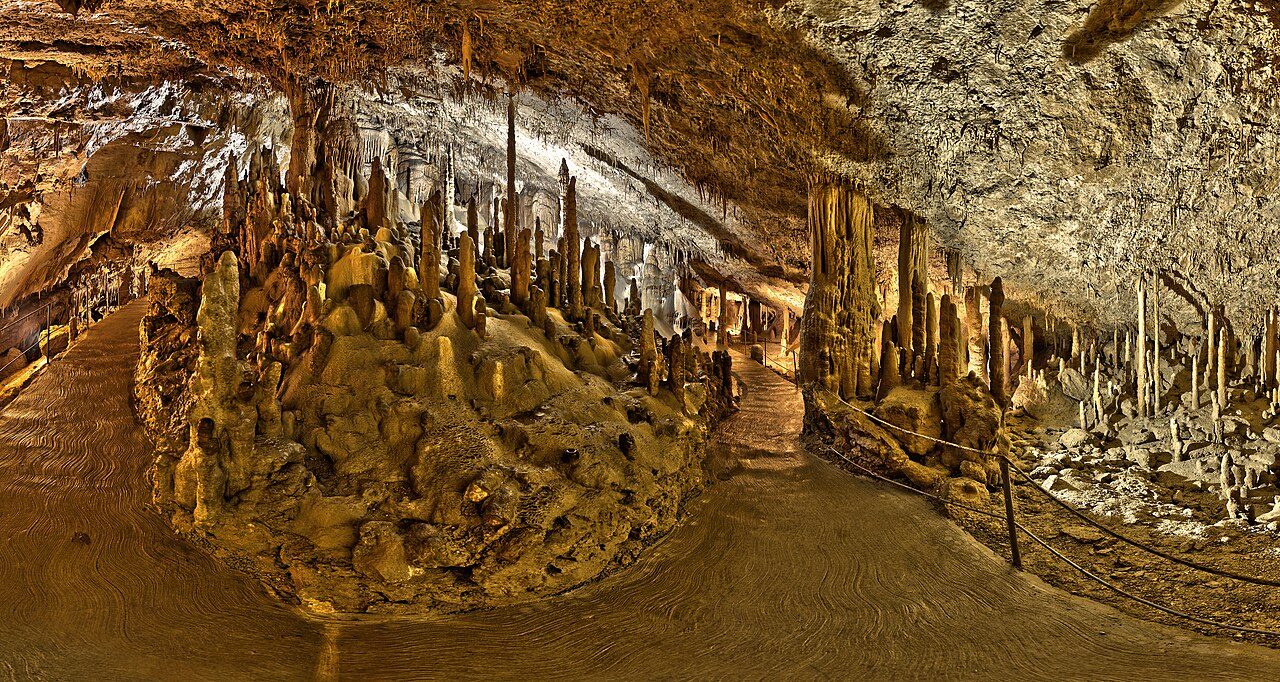
Photo credits (3)
- Leon Yaakov from Tel Aviv, ISRAEL, CC BY 2.0, via Wikimedia Commons
- Mariposa.que.vuela, CC BY-SA 3.0, via Wikimedia Commons
- Lander at Slovenian Wikipedia, CC BY-SA 3.0, via Wikimedia Commons