 New added
Gion District
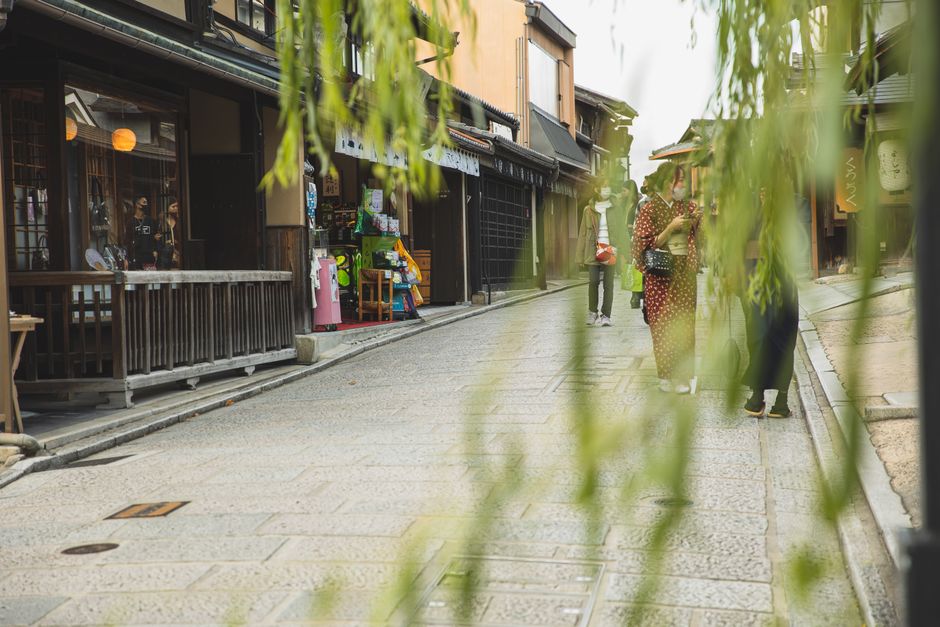
Tracing its origins to the Sengoku and early Edo periods, Gion developed along the eastern banks of the Kamo River to accommodate pilgrims journeying to the eighth-century Yasaka Shrine. Over subsequent centuries, these waystations evolved into Kyoto’s preeminent *hanamachi*, home to the sophisticated entertainment arts of the *karyūkai* ("flower and willow world"). The neighborhood’s physical identity is anchored by preserved *machiya*—traditional wooden townhouses featuring tight cedar lattices (*koshi*) washed in dark, red-ochre *bengara* stain. Along the foundation walls, curved bamboo fences known as *komayose* still stand, originally crafted to deflect mud and grazing carriage wheels from delicate timber facades. At twilight, the stone-paved corridor of Hanami-koji transforms into a corridor of shadows and amber light. Round paper *chochin* lanterns illuminate the dark eaves of centuries-old *ochaya* (exclusive teahouses), while willow boughs drape over the stone bridges of the tranquil Shirakawa Canal. Standing along the flagstones, visitors witness the living rituals of Old Kyoto: the delicate scent of burning incense drifting from behind closed wooden slats, the rustle of heavy silk, and the sharp, hollow clatter of lacquered *okobo* sandals against granite as an apprentice *maiko*, adorned with seasonal floral hairpins and a trailing brocade sash, disappears behind an indigo entrance curtain.