 New added
Kinkaku-ji
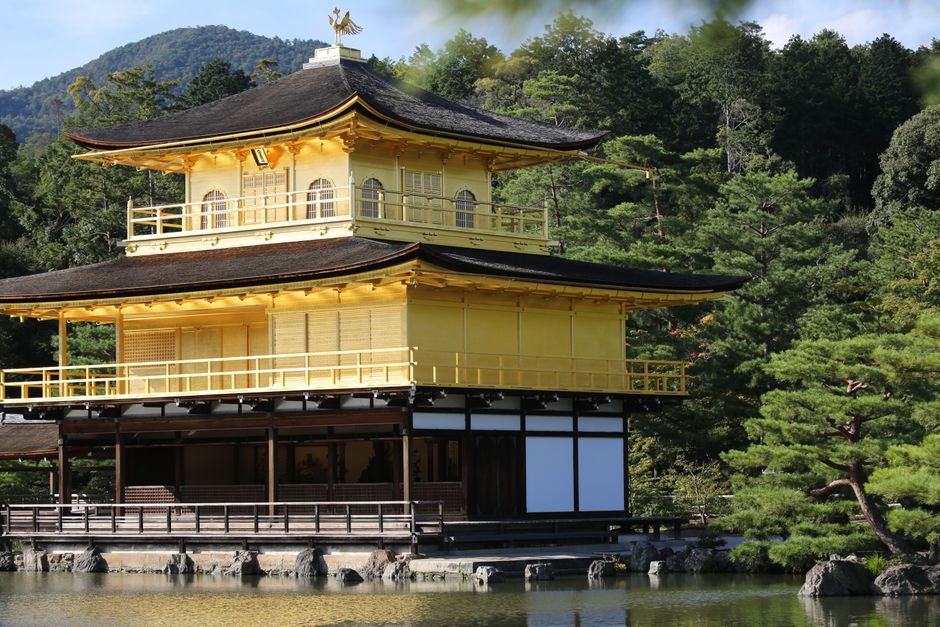
Commissioned in 1397 as a retirement villa for the third Ashikaga shogun, Yoshimitsu, Kinkaku-ji (formally Rokuon-ji) represents the zenith of Muromachi-era Kitayama culture. Rising three tiers above the reflective Kyōko-chi (Mirror Pond), the pavilion seamlessly unifies three distinct architectural styles. The unadorned cedar base invokes the Heian aristocracy's palace-style *shinden-zukuri*; the second tier incorporates the austere residential motifs of the samurai caste (*buke-zukuri*); and the uppermost floor, capped by a gilded bronze phoenix (*hō-ō*), adopts the pointed arches of a Zen hall. Heavily gilded in pure gold leaf to evoke the Pure Land of Amida Buddha, the current structure faithfully honors Yoshimitsu’s original vision following its tragic destruction by arson in 1950. Stepping along the perimeter trail, visitors encounter the pavilion’s incandescent double shimmering across the water, where ten carefully placed rock islets represent the mythical tortoise and crane of Daoist lore. The morning sunlight ignites the upper gilding against the deep, brooding greens of Mount Kinugasa, contrasting opulence with organic austerity. Wandering beneath the canopy of towering cryptomeria and Japanese maples, the faint scent of incense mingles with damp cedar needles underfoot. The gravel path draws travelers upward past natural spring cascades toward the rustic Sekkatei teahouse, shifting the perspective from breath-stealing imperial grandeur to the moss-carpeted, introspective tranquility foundational to Zen practice.