 New added
Fushimi Inari Shrine
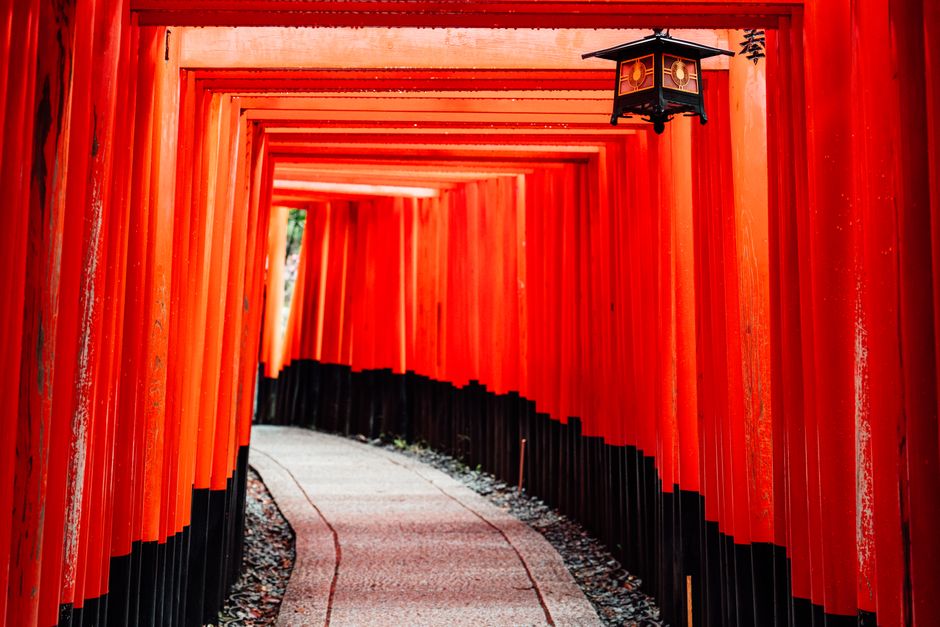
Founded in 711 CE, long before Kyoto became the imperial capital, this sprawling Shinto sanctuary was established by the influential Hata clan to honor Inari, the deity of rice, fertility, and enterprise. Travelers enter past the monumental two-story Romon Gate—a vivid crimson portal commissioned in 1589 by the regent Toyotomi Hideyoshi—guarded by weathered stone *kitsune* (fox messengers) clenching keys to rice granaries and sacred jewels in their jaws. Beyond the main hall (*honden*), which exhibits elaborate curved gables characteristic of Azuchi-Momoyama architecture, the sacred precinct climbs the steep, cedar-blanketed slopes of the 233-meter-tall Mount Inari. Ascending the mountain, hikers become enveloped by the *Senbon Torii*, a winding colonnade of roughly 10,000 closely planted vermilion gates that diffuse forest sunlight into an amber glow. Walking the damp flagstones, visitors breathe in the aroma of mountain moss, cedar needles, and faint sandalwood incense curling from remote *otsuka* (miniature stone altars). As you pass beneath the lacquered crossbeams, looking back reveals sharp black kanji carved into each pillar, cataloging the names of merchants, corporations, and dates of dedication spanning Edo-period guilds to contemporary sponsors. The deeper trails offer a quiet reprieve from the lower crowds, punctuated only by bubbling mountain streams and the heavy silence of the sacred forest.