
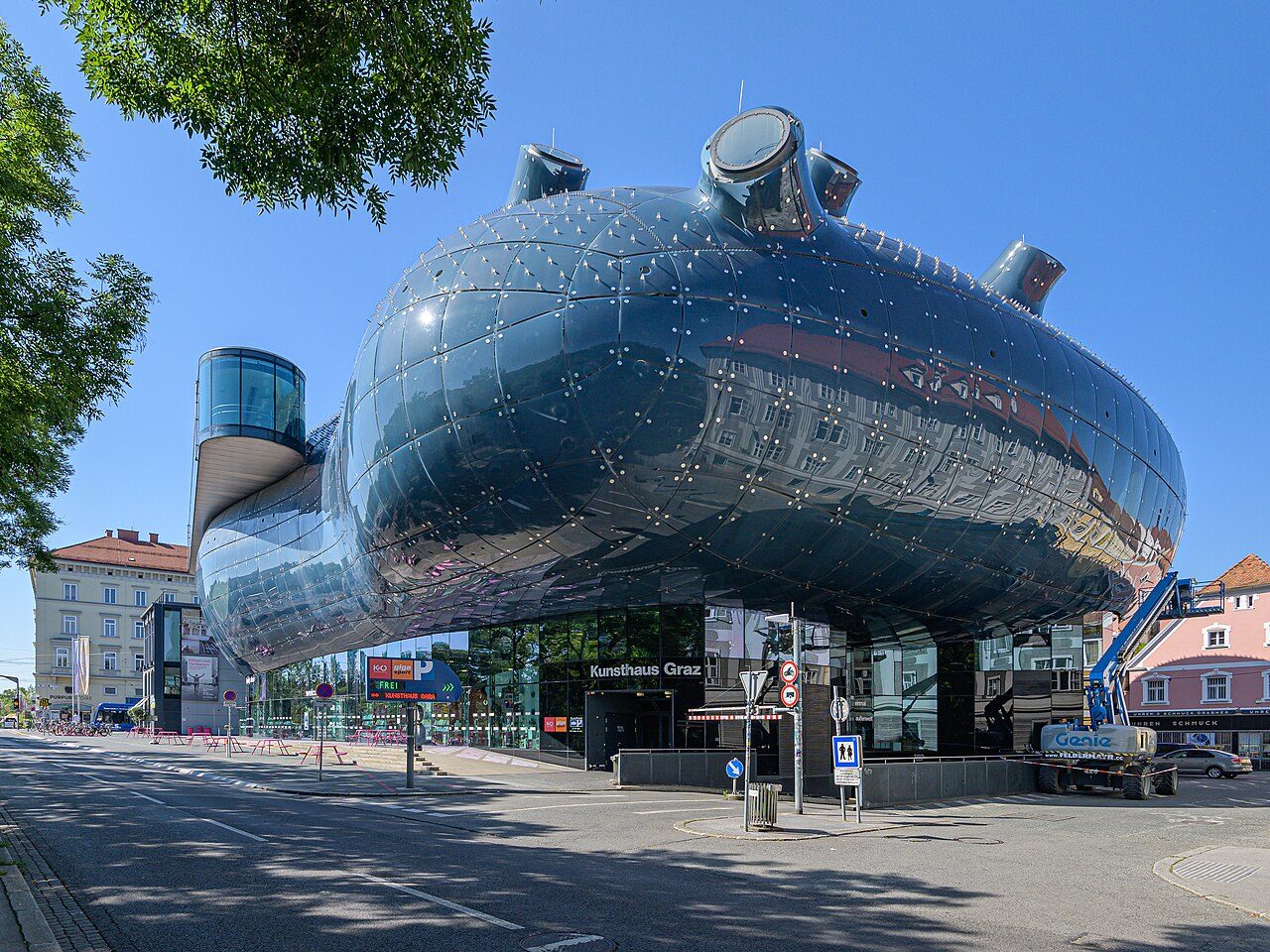
Kunsthaus Graz
Erected for Graz’s 2003 tenure as European Capital of Culture, this biomorphic marvel disrupts the Mur river’s sea of red-tiled Baroque rooftops. Conceived by British architects Peter Cook and Colin Fournier, the structure exemplifies radical "blobitecture" and was affectionately christened the "Friendly Alien" by its creators. Its skin consists of more than one thousand curved, iridescent blue-green acrylic panels seamlessly grafted onto the 1847 iron skeleton of the historic Eisernes Haus. Sprouting from its rounded carapace, sixteen angled skylights—known as "nozzles"—tilt north to channel daylight into the belly of the beast, while the underbelly integrates the BIX media façade, an electronic skin of nearly 930 circular fluorescent rings that pulse with light installations after dusk. Visitors enter by ascending through the underbelly via the "Pin," a 30-meter inclined travelator that glides straight into two vast, column-free gallery levels completely devoid of right angles. Inside, the cool, curving interior hums with rotating contemporary art exhibits tailored to the hall’s organic, cavernous contours. The ascent culminates at the "Needle," a glazed viewing platform cantilevered dramatically over the street. Stepping into this glass tube, travelers are suspended between eras, looking directly past the alien skin across the river to the Renaissance clock tower crowning the forested Schlossberg.
More in Graz
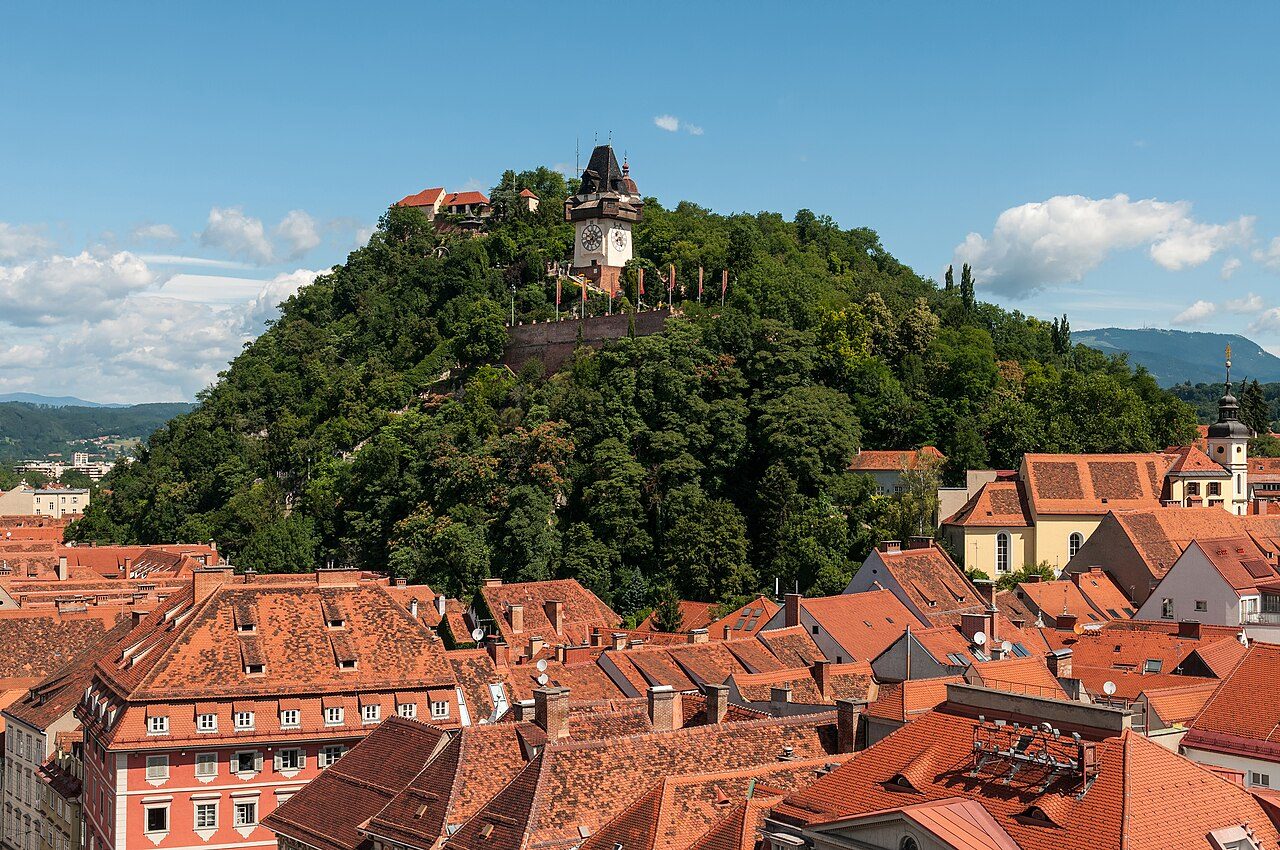
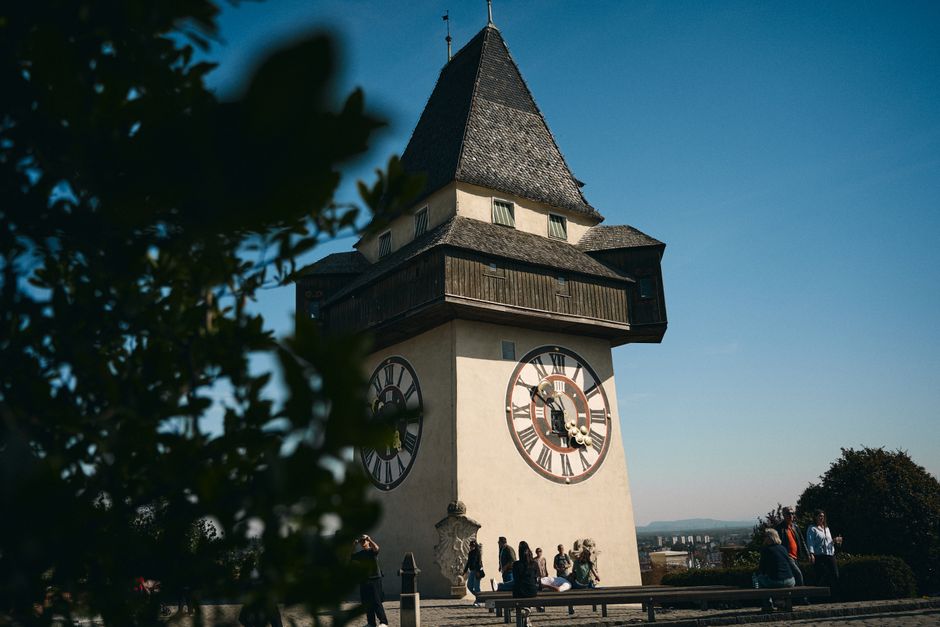
Photo credits (4)
- Isiwal, CC BY-SA 4.0, via Wikimedia Commons
- Ralf Roletschek, CC BY-SA 3.0 at, via Wikimedia Commons
- Allie_Caulfield from Germany, CC BY 2.0, via Wikimedia Commons
- Nxr-at, CC BY-SA 4.0, via Wikimedia Commons