
Schlossberg
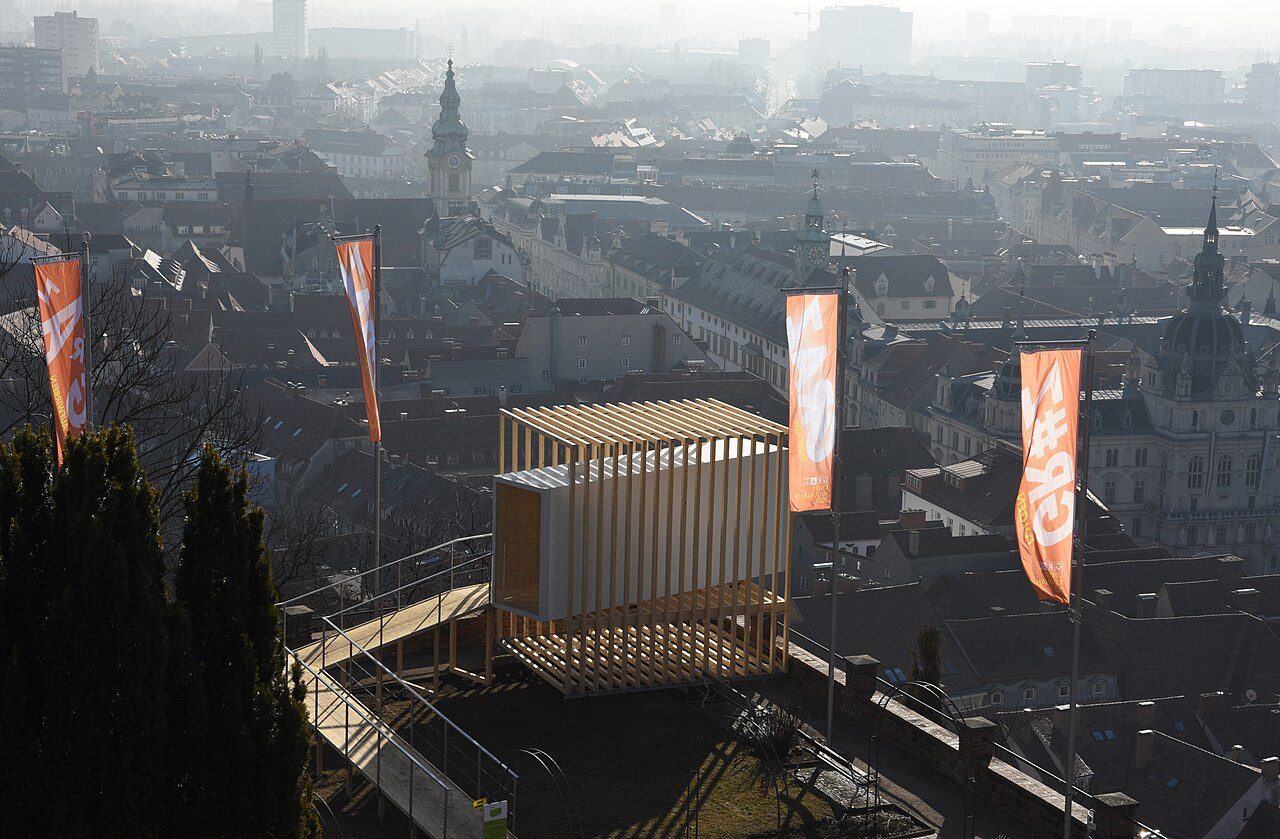
Rising 123 meters above the Mur River, this forested dolomite crag cradles the stubborn remnants of a citadel so formidable that even Napoleon Bonaparte failed to take it by force. Though the 1809 Treaty of Schönbrunn dictated the fortress’s systematic demolition, devoted Graz burghers paid a substantial ransom to spare two beloved bastions from French explosives: the octagonal Glockenturm and the 28-meter-tall Uhrturm (Clock Tower). Originally fortified in the sixteenth century by Italian architect Domenico dell'Allio, the whitewashed Uhrturm features a steep, overhanging hipped roof and an eccentric temporal quirk—its oversized clock hands indicate the hours, while the slender ones mark the minutes, a design calculated so laborers in the valley could read the time from afar. Reaching the summit via the 260 zig-zagging stone steps of the *Kriegsteig*, or through the sheer vertical ascent of the glass mountain lift, visitors emerge into terraced gardens vibrant with blooming wisteria and Mediterranean fig trees. Standing along the surviving limestone parapets, the pine-scented breeze carries the resonant chime of the five-ton "Liesel" bell from the nearby belfry. The overlook delivers a striking panorama: a terracotta sea of UNESCO-listed Renaissance and Baroque rooftops sprawling outward to the Styrian hills, sharply contrasted by the biomorphic, iridescent bubble of the modern Kunsthaus resting along the riverbank below.
More in Graz
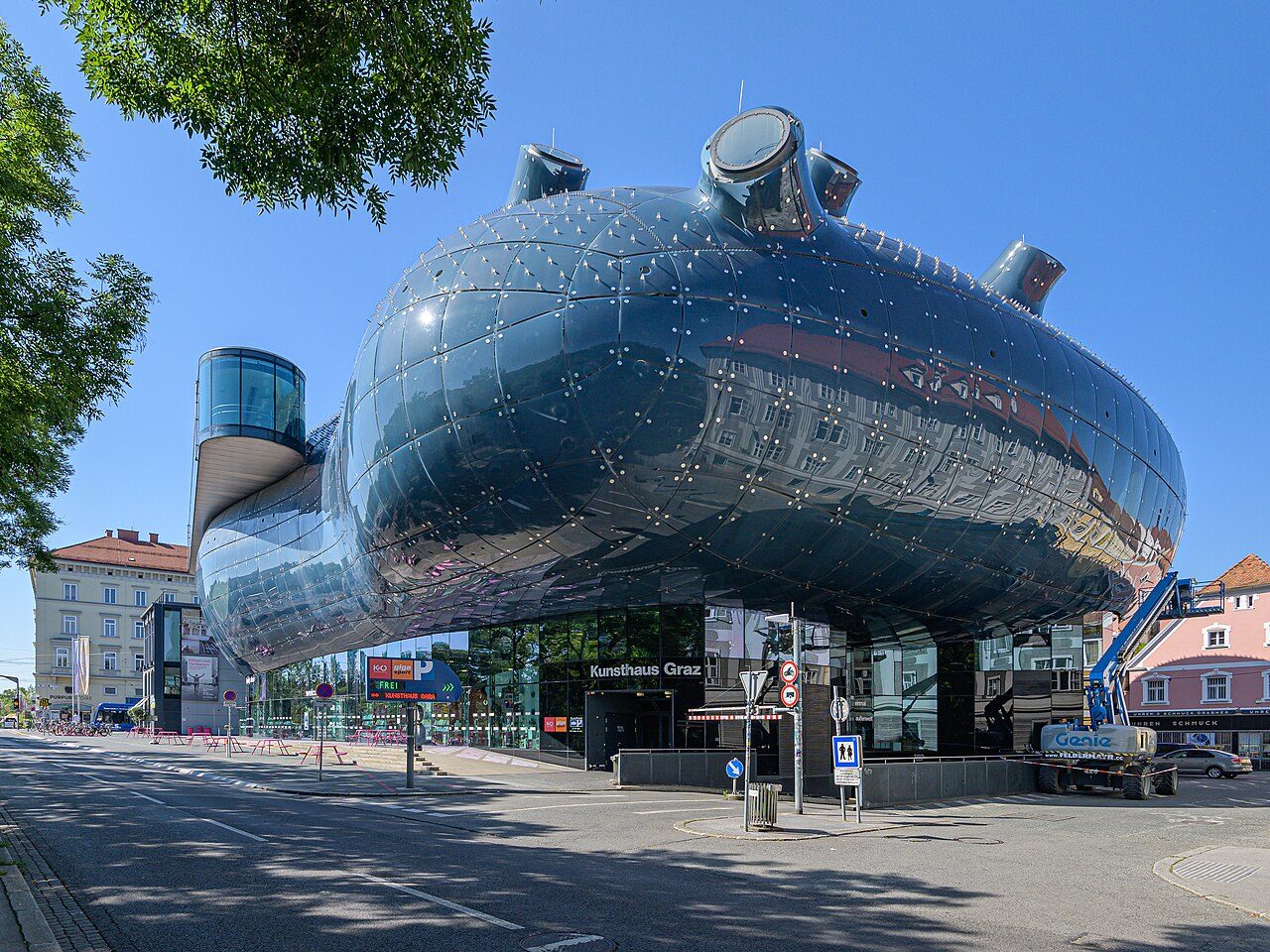
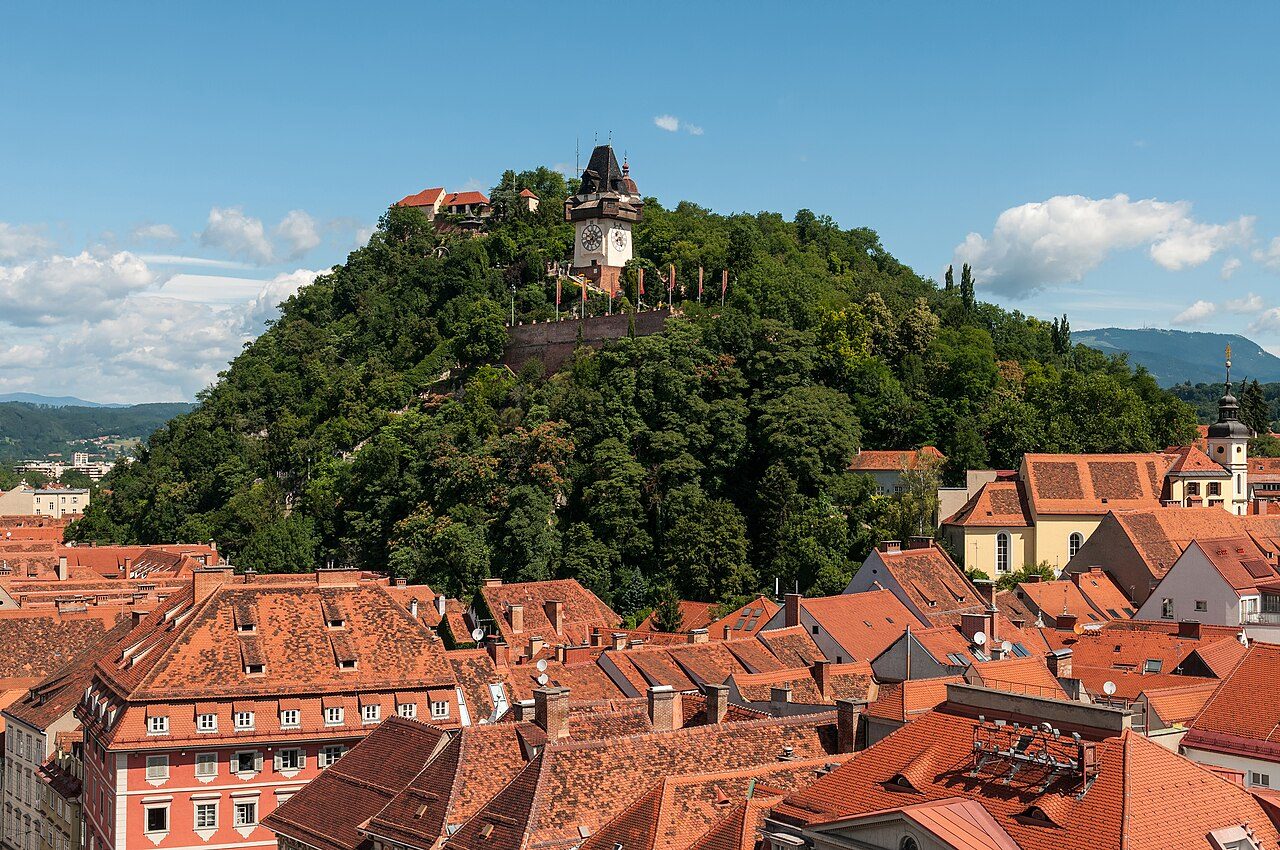
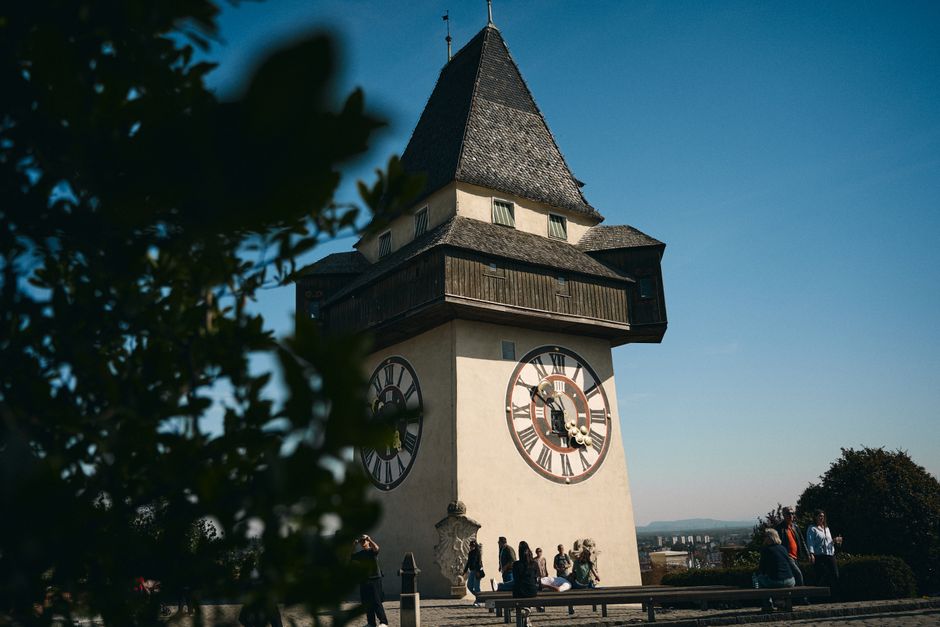
Photo credits (4)
- Nxr-at, CC BY-SA 4.0, via Wikimedia Commons
- Isiwal, CC BY-SA 4.0, via Wikimedia Commons
- Ralf Roletschek, CC BY-SA 3.0 at, via Wikimedia Commons
- Allie_Caulfield from Germany, CC BY 2.0, via Wikimedia Commons