
 New added
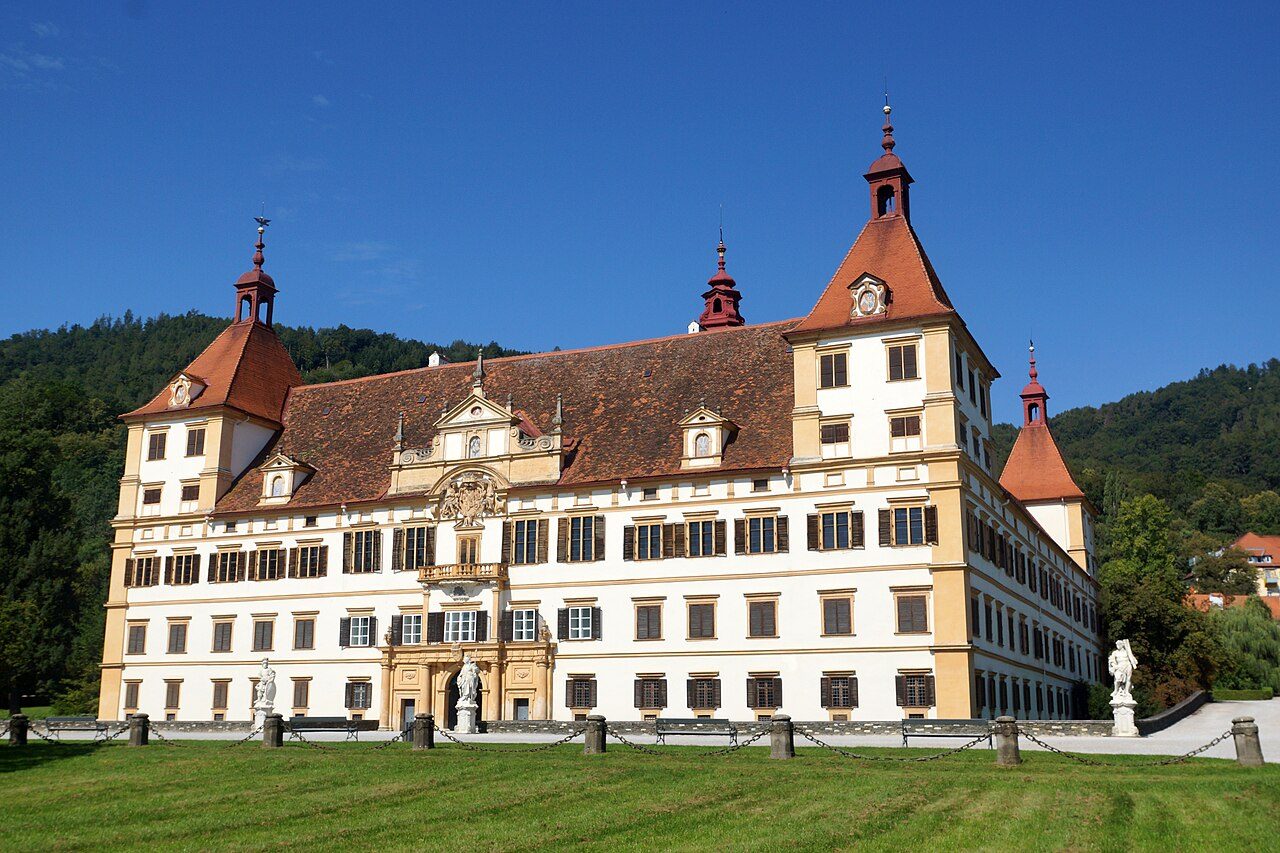
Eggenberg Palace
Commissioned in 1625 by Prince Hans Ulrich von Eggenberg and designed by court architect Pietro de Pomis, this Mannerist and early Baroque complex was conceived as a cosmic allegory cast in stone. Reflecting the Renaissance fascination with astronomy, its architecture mirrors the Julian calendar: four corner towers represent the seasons, 365 outward-facing windows track the days of the year, and 24 staterooms correspond to the hours of the day. At its center lies the breathtaking Planetary Room (*Planetensaal*), where artist Hans Adam Weissenkircher blanketed the ceiling in frescoes depicting the zodiac, classical elements, and planetary deities, visually intertwining the Eggenberg dynasty with celestial order. Passing through the palace gates, travelers step into sprawling landscape gardens where flamboyant peacocks strut across shaded gravel paths and manicured lawns. Within the preserved Piano Nobile—kept deliberately unheated and free of modern electrical wiring—filtered sunlight illuminates over 500 ceiling paintings and intricate white stuccowork across squeaking parquet floors. The faint scent of aged beeswax and historic lime plaster hangs in the quiet air, pulling visitors straight into the 17th century, where every measured step echoes through chambers built to reflect the mathematical harmony of the universe.
More in Graz
Photo credits (4)
- Allie_Caulfield from Germany, CC BY 2.0, via Wikimedia Commons
- Isiwal, CC BY-SA 4.0, via Wikimedia Commons
- Ralf Roletschek, CC BY-SA 3.0 at, via Wikimedia Commons
- Nxr-at, CC BY-SA 4.0, via Wikimedia Commons