
San Telmo
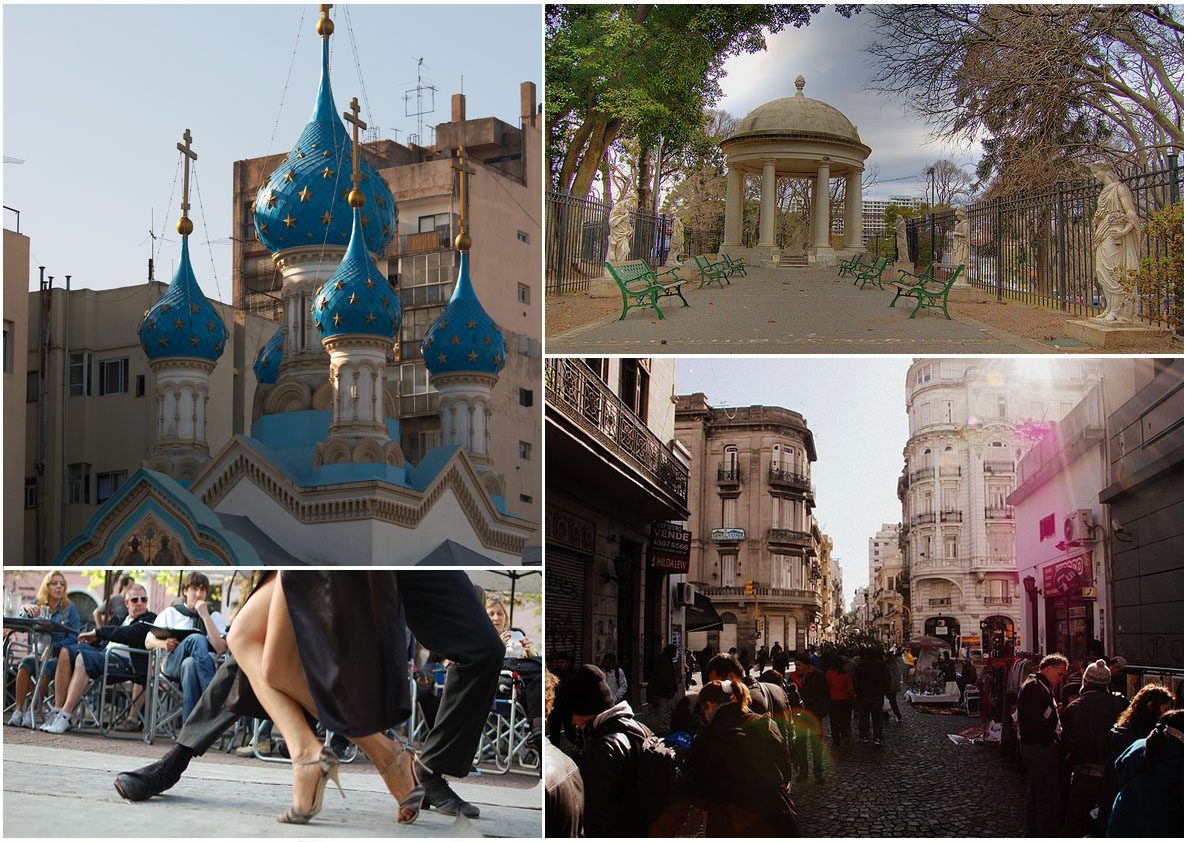
Rooted in the 17th century as a parish for river dockworkers, San Telmo bears the distinct architectural imprint of Buenos Aires’ sudden patrician flight and bohemian rebirth. When the devastating yellow fever epidemic of 1871 drove the city's aristocracy north toward Recoleta, they abandoned grand Italianate casonas characterized by soaring ceilings, central courtyards, and ornate lintels. These palatial residences swiftly fractured into multi-family *conventillos*—crowded immigrant tenements that nurtured the nascent rhythms of early tango. At the district's core stands the 1897 Mercado de San Telmo, engineered by Juan Antonio Buschiazzo, whose soaring wrought-iron roof trusses and glass cupolas still shelter traditional butchery stalls alongside antique glass vitrines. Wandering the uneven diorite cobblestones of Calle Defensa, visitors navigate a sensory labyrinth flanked by peeling ochre facades, gaslit lanterns, and rusted filigree balconies. Sunday mornings bring the famed Feria de San Telmo into Plaza Dorrego, where centuries of Argentinian domestic history materialize in piles of heavy silver mate gourds, cut-crystal siphons, and pre-Peronist memorabilia. Standing beneath the plaza's plane trees, travelers feel the floor vibrate as impromptu dancers carve sharp, dramatic eights into wooden boards, their steps paced to the melancholic wheeze of an accordion-like bandoneón and the drifting aromas of charred flank steak from nearby corner grills.
More in Buenos Aires
Photo credits (7)
- Bleff, CC BY-SA 3.0, via Wikimedia Commons
- EEJCC, CC0, via Wikimedia Commons
- Dragan, CC BY 3.0, via Wikimedia Commons
- ProtoplasmaKid, CC BY-SA 4.0, via Wikimedia Commons
- Sking, CC BY-SA 3.0, via Wikimedia Commons
- Bleff, CC BY-SA 3.0, via Wikimedia Commons
- DerHexer, CC BY-SA 4.0, via Wikimedia Commons