
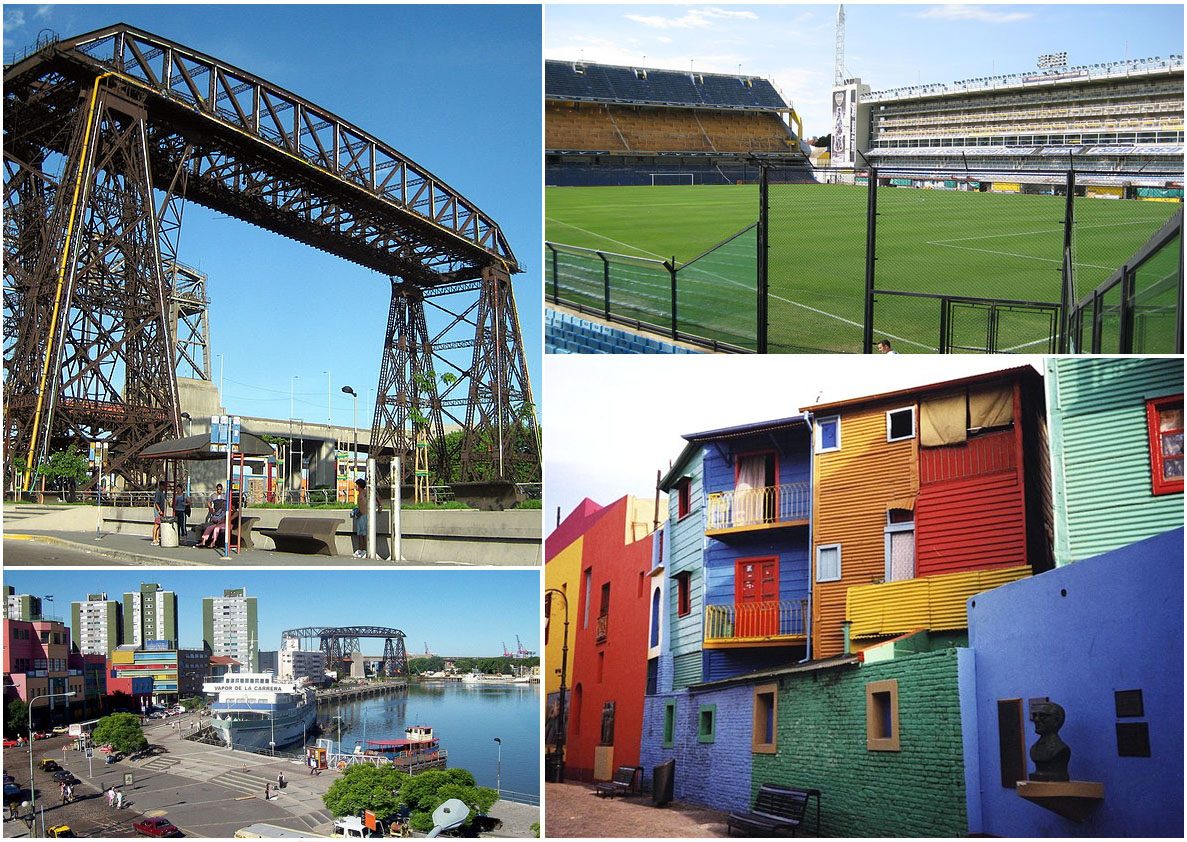
La Boca
Rooted along the Riachuelo river, La Boca emerged in the late 19th century as a working-class enclave built by thousands of Genoese dockworkers who constructed communal tenements known as *conventillos*. Lacking traditional materials, these immigrants salvaged scrap timber and corrugated zinc sheets from the nearby shipyards, weatherproofing them with leftover dregs of maritime enamel. This accidental patchwork of canary yellow, cobalt blue, and vermilion evolved into an intentional artistic haven in the 1950s, when local painter Benito Quinquela Martín campaigned to convert an abandoned railway trench into the open-air pedestrian museum dubbed Caminito, officially inaugurated in 1959. Today, the crooked, two-story facades retain their rough-hewn industrial textures, distinguished by steep exterior staircases, railed overhangs, and vivid relief sculptures bolted directly onto the corrugated metal. Stepping onto the uneven flagstones immerses visitors in a sensory surge of classic *porteño* culture. On street corners, costumed dancers execute sharp, synchronized *cortes* on makeshift wooden platforms, moving to the wheeze of a live bandoneón playing Juan de Dios Filiberto's vintage tangos. Larger-than-life papier-mâché effigies of Diego Maradona and Eva Perón lean over wrought-iron balconies draped with blue-and-gold Boca Juniors flags. Wafting across the cobblestones is the rich, savory smoke of sizzling *choripán* and skirt steak from nearby sidewalk *parrillas*, mingling with the chatter of open-air studios where painters sell riverfront landscapes rendered in thick palette-knife strokes.
More in Buenos Aires
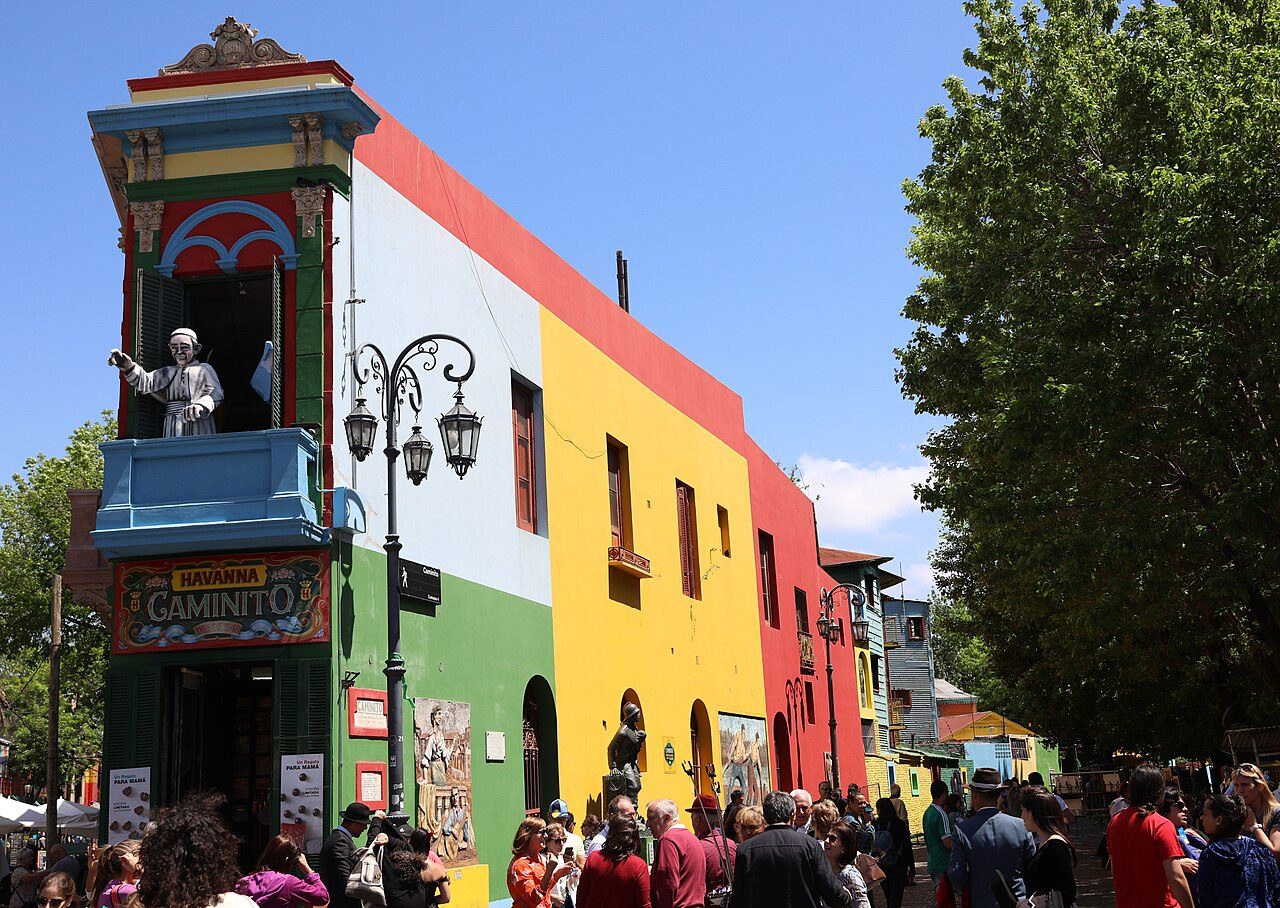
Photo credits (7)
- Bleff, CC BY-SA 3.0, via Wikimedia Commons
- EEJCC, CC0, via Wikimedia Commons
- Dragan, CC BY 3.0, via Wikimedia Commons
- Bleff, CC BY-SA 3.0, via Wikimedia Commons
- ProtoplasmaKid, CC BY-SA 4.0, via Wikimedia Commons
- Sking, CC BY-SA 3.0, via Wikimedia Commons
- DerHexer, CC BY-SA 4.0, via Wikimedia Commons