
Caminito
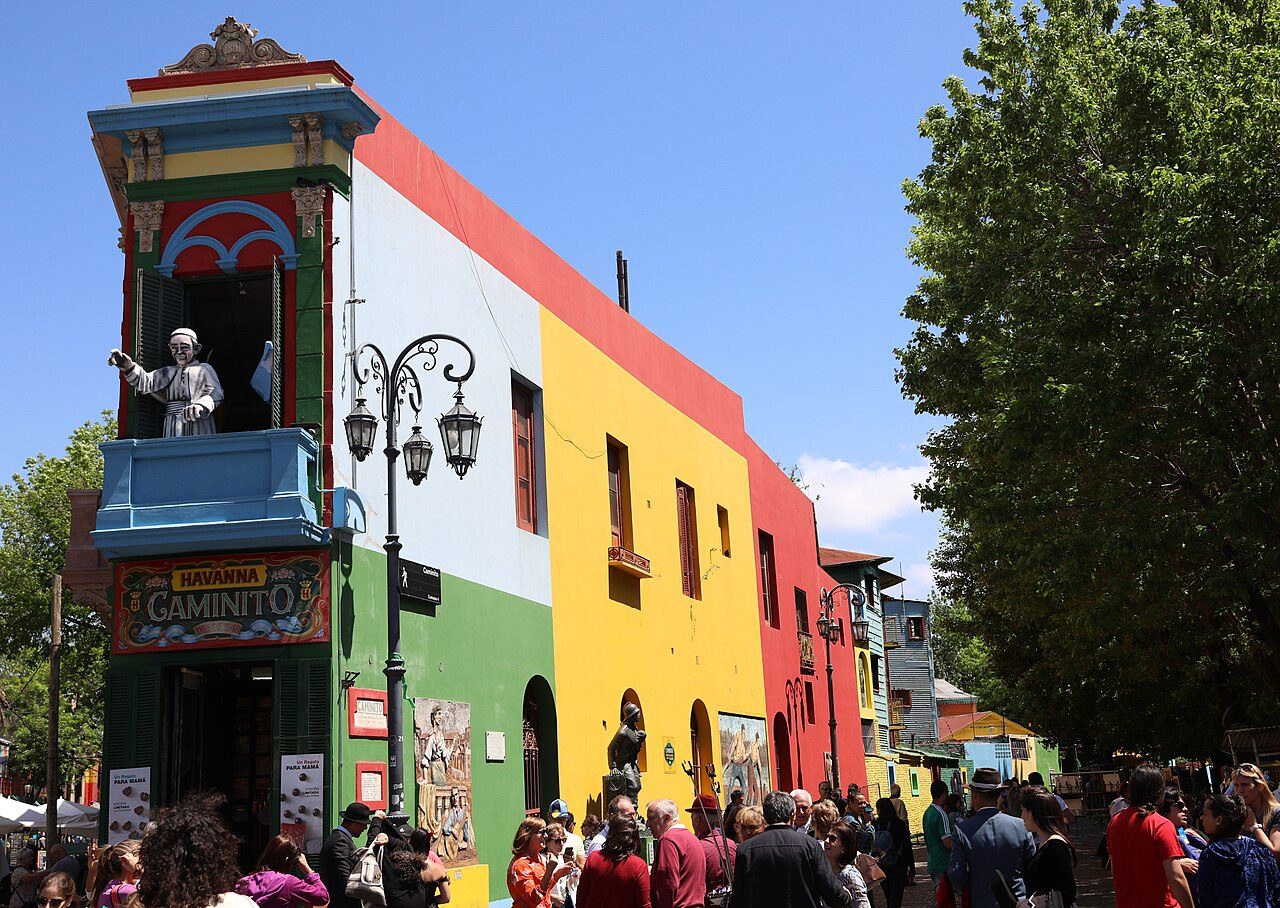
Tucked along the curving bend of an abandoned nineteenth-century railway bed in Buenos Aires’ working-class port district of La Boca, Caminito owes its chromatic rebirth to painter Benito Quinquela Martín. In the mid-1950s, Quinquela Martín rallied neighbors to salvage the neglected alley, converting it into a pedestrian-only, open-air gallery inspired by Juan de Dios Filiberto’s 1926 tango of the same name. Its architecture preserves the vernacular style of late-1800s *conventillos*—precarious communal tenements hastily constructed by Genoese immigrants from salvaged shipyard timber and corrugated zinc sheets. Lacking funds for uniform coats of paint, laborers coated the structures with leftover marine enamel from the Riachuelo docks, creating the iconic patchwork of clashing cobalt, dandelion yellow, and vermilion that defines the facades today. Walking the hundred-meter cobblestone passage, visitors encounter an evocative open-air salon framed by external wooden staircases and high balustrades. Life-sized papier-mâché caricatures of Carlos Gardel, Eva Perón, and Diego Maradona lean out from upper-floor balconies, overlooking bronze reliefs and murals permanently affixed to the corrugated iron. The sharp, nostalgic wheeze of a bandoneón frequently fills the corridor as professional tango couples sweep across wooden platforms set right against the pavers. Between the aroma of grilled *choripán* wafting from nearby cantinas and open-air easels lined with wet oil paintings, the short corridor immerses travelers in the raw, theatrical rhythm of Argentina’s foundational immigrant narrative.
More in Buenos Aires
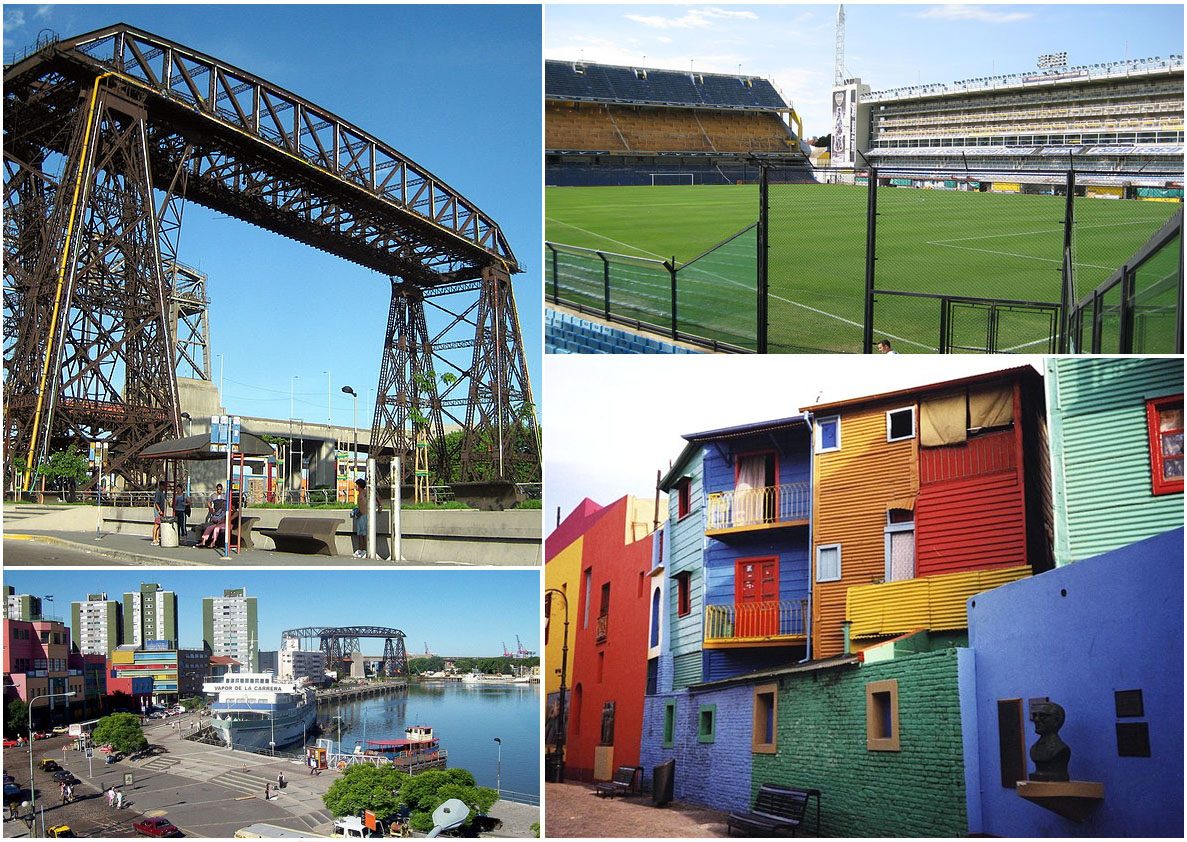
Photo credits (7)
- DerHexer, CC BY-SA 4.0, via Wikimedia Commons
- EEJCC, CC0, via Wikimedia Commons
- Dragan, CC BY 3.0, via Wikimedia Commons
- Bleff, CC BY-SA 3.0, via Wikimedia Commons
- ProtoplasmaKid, CC BY-SA 4.0, via Wikimedia Commons
- Sking, CC BY-SA 3.0, via Wikimedia Commons
- Bleff, CC BY-SA 3.0, via Wikimedia Commons