
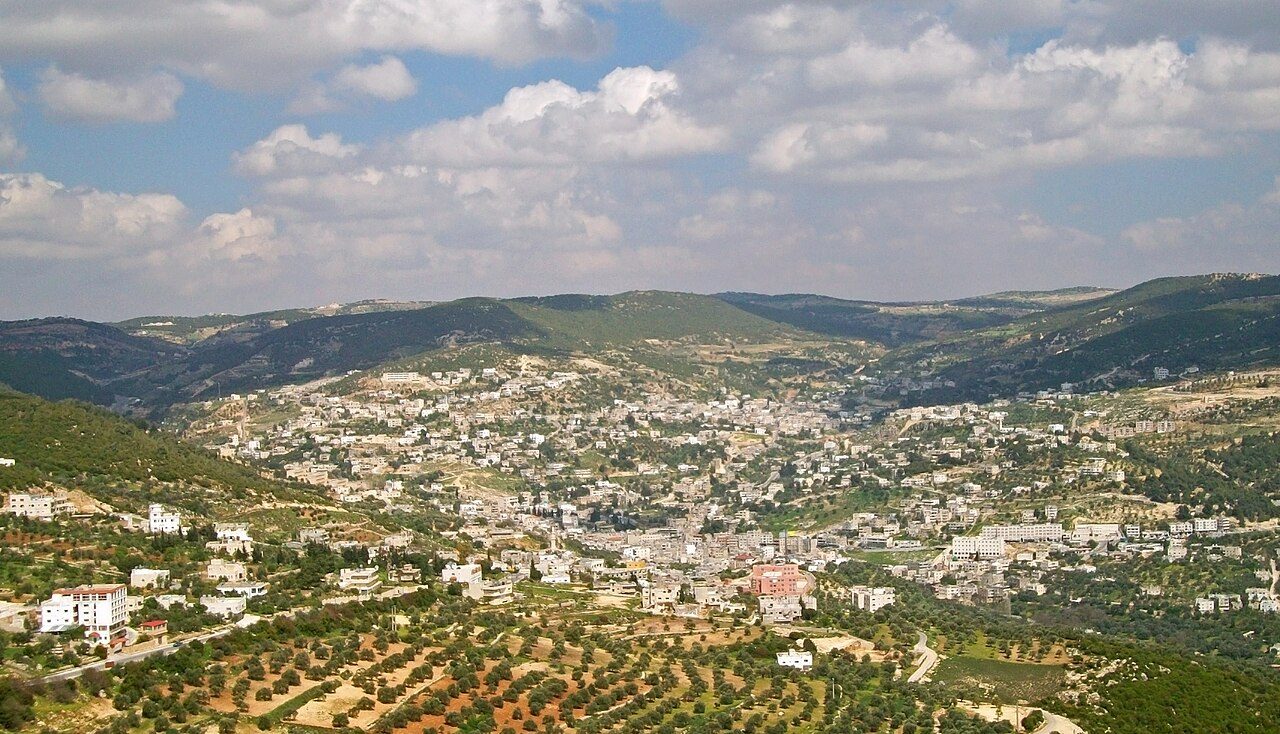
Ajloun Castle
Commissioned in 1184 CE by General Izz al-Din Usama—a trusted commander under Saladin—Ajloun Castle (Qal'at ar-Rabad) was raised atop Mount 'Auf to neutralize the Crusader stronghold of Belvoir and protect Damascus-to-Cairo trade routes. A masterwork of medieval Islamic military engineering, the fortress withstood a destructive sack by the Mongols in 1260 before undergoing extensive Mamluk-era expansions. Its imposing honey-toned ramparts sit girded by a sixteen-meter-wide dry moat carved directly from the limestone bedrock, fortified with stout square watchtowers, concealed arrow slits, and corbelled machicolations engineered to rain projectiles down upon approaching sieges. Crossing the modern bridge where a timber drawbridge once hung, you plunge into a shadowy labyrinth of barrel-vaulted corridors, echoing garrison halls, and subterranean grain silos. The air turns damp and cool, scented with centuries of aged mortar. Piles of heavy, sphere-carved catapult stones still rest in the central courtyards, quiet relics of bitter desert warfare. Winding staircases climb out of the gloom onto the wind-whipped upper battlements, where the enclosed stonework opens to a breathtaking panorama: rolling pine forests drop steeply into the sunken rift of the Jordan Valley, with the hills of the West Bank and the distant, snow-tinged peak of Mount Hermon shimmering on the northern horizon.
More in Amman
Photo credits (7)
- Daniel Case, CC BY-SA 3.0, via Wikimedia Commons
- Gadora81, CC BY-SA 4.0, via Wikimedia Commons
- Bernard Gagnon, CC BY-SA 4.0, via Wikimedia Commons
- Berthold Werner, CC BY 3.0, via Wikimedia Commons
- David Bjorgen, CC BY 2.5, via Wikimedia Commons
- Ldud at English Wikipedia, Public domain, via Wikimedia Commons
- The original uploader was Freedom's Falcon at Arabic Wikipedia ., CC BY-SA 2.5, via Wikimedia Commons