

Historic Centre of Bukhara
For over two millennia, Bukhara served as the intellectual and commercial heartbeat of the Silk Road, evolving into an open-air archive of Islamic architecture. The old town’s skyline is crowned by the 46-meter-tall Kalyan Minaret, erected in 1127 with intricate bands of fired brickwork so awe-inspiring that even Genghis Khan spared it from destruction in 1220. Facing it rise the twin cerulean domes and kaleidoscopic mosaic tilework of the 16th-century Mir-i Arab Madrasah. A short walk through dusty alleyways reveals the 10th-century Ismail Samani Mausoleum, an early Samanid masterpiece engineered entirely from unglazed terra-cotta bricks laid in woven, basket-like patterns that catch and manipulate the harsh desert light. Wandering the historic centre today immerses visitors in a sensory tapestry of shifting light and ancient craftsmanship. The massive, sloping earthen ramparts of the 5th-century Ark fortress loom fortress-like over the dusty Registan, while vaulted trading domes—the *taqi*—still echo with the clink of chiseled brass and the rustle of hand-knotted Suzani silks. As afternoon heat softens into dusk, travelers gather at the edge of the stone-banked Lyabi-Khauz pool, reclining on wooden *tapchans* beneath centuries-old mulberry trees. In the air lingers the fragrance of saffron- and cumin-spiced *plov*, accompanied by the quiet rustle of evening breezes blowing across clay-paved squares once walked by Avicenna and Omar Khayyam.
More in Bukhara
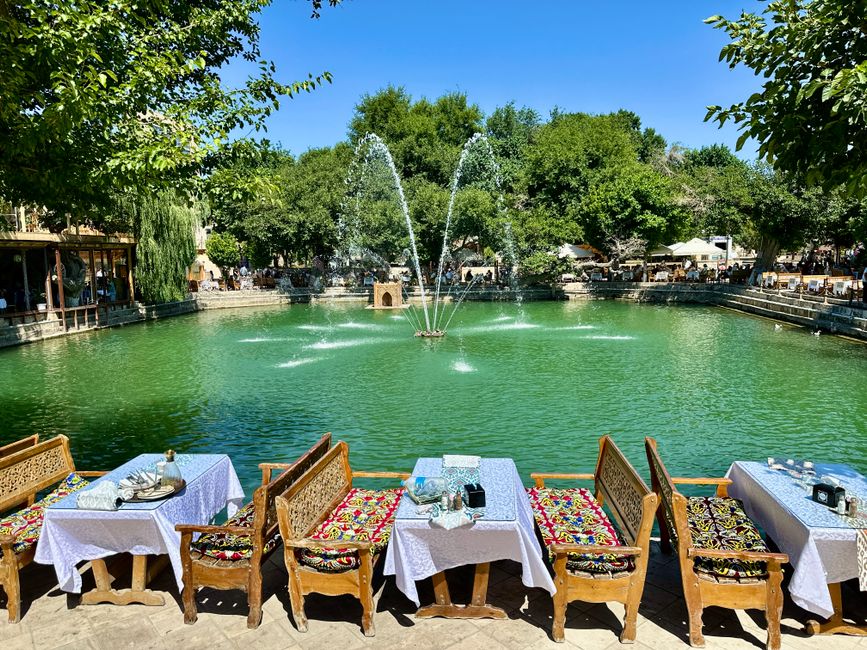
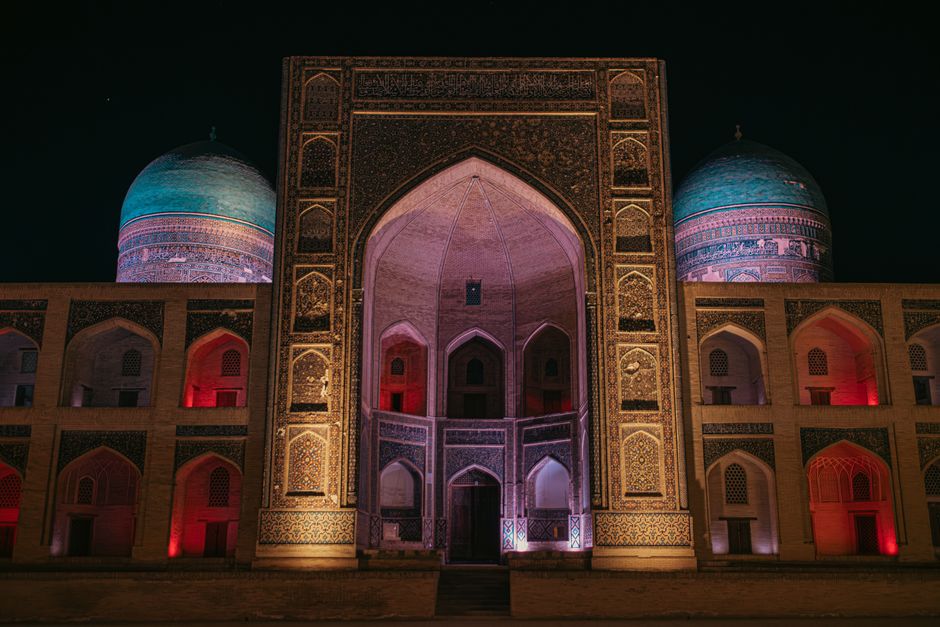
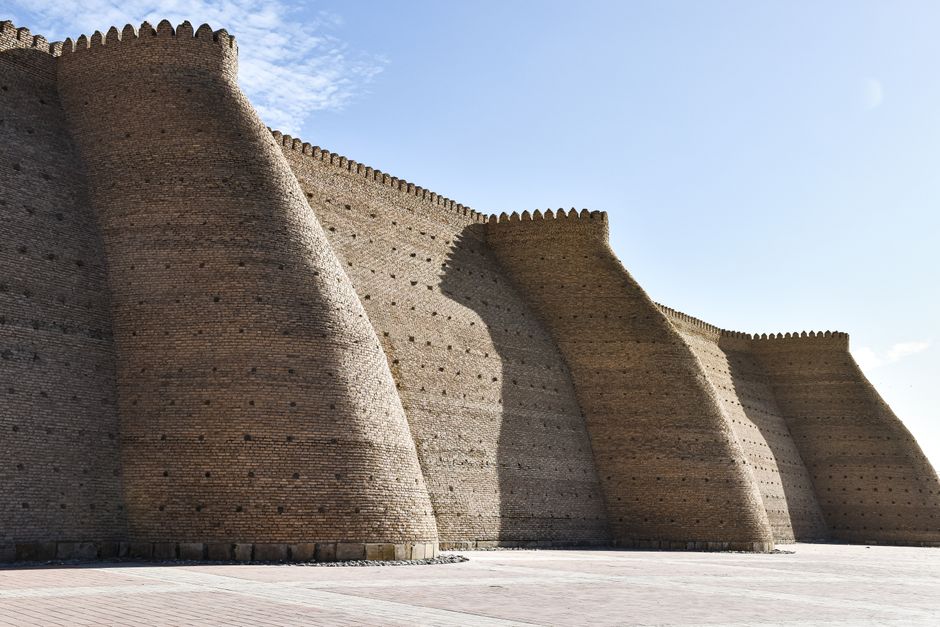
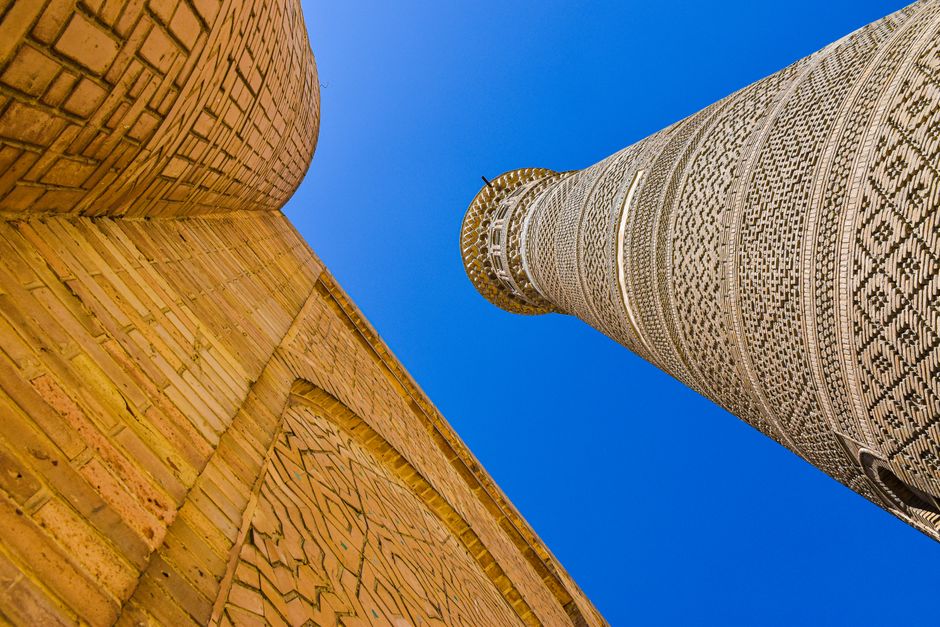
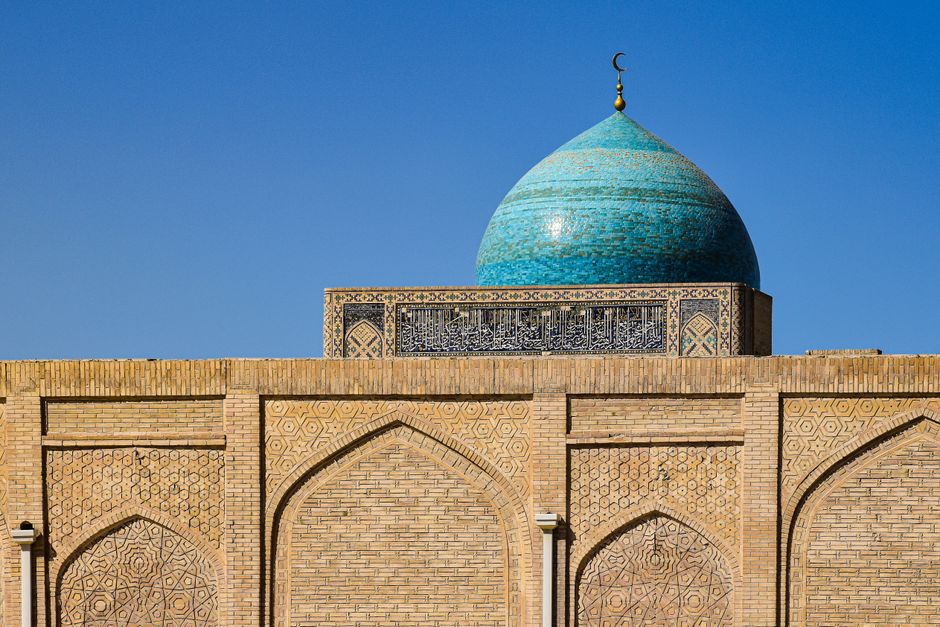
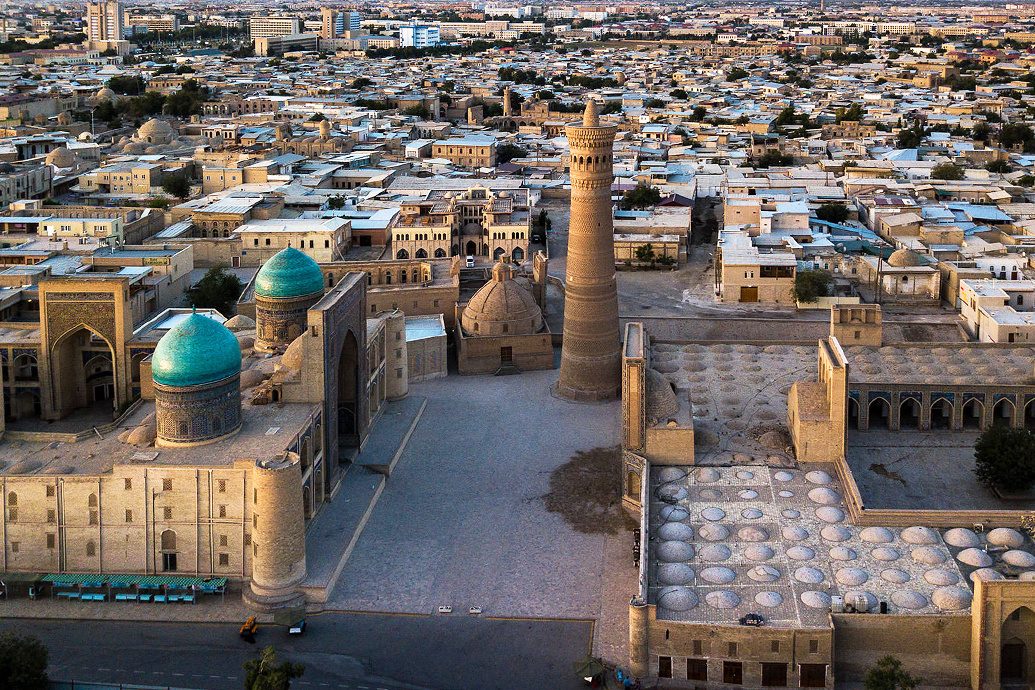
Photo credits (1)
- Официальный веб-сайт Агентства культурного наследия Республики Узбекистан, CC BY 4.0, via Wikimedia Commons