
Telavi
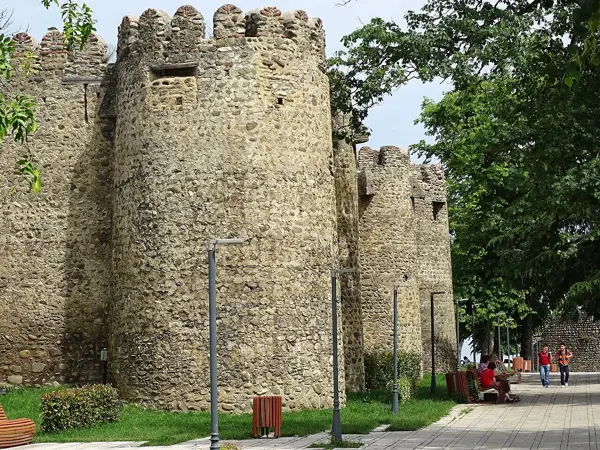
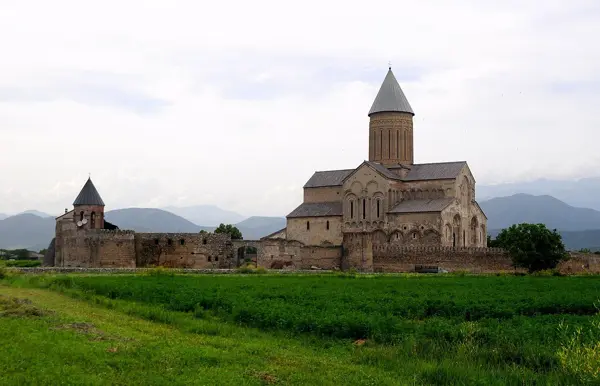
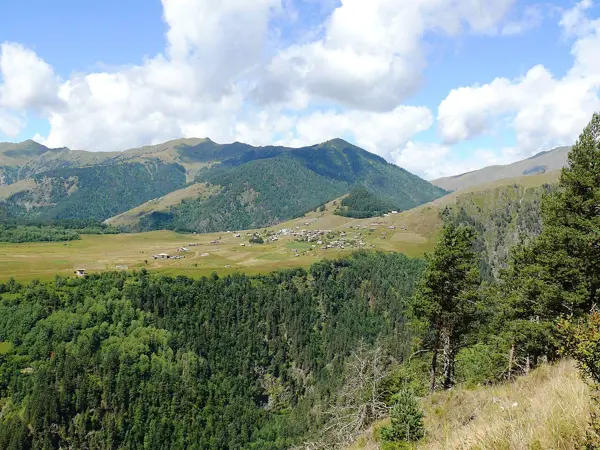
Telavi rests on the northeastern slopes of the Tsiv-Gombori Range, looking out across the fertile floor of the Alazani Valley toward the Greater Caucasus. Walking through the town feels unhurried, defined by cobbled lanes, grapevine-shaded yards, and nineteenth-century brick houses with carved wooden balconies. Telavi rose to political prominence in the seventeenth and eighteenth centuries as the capital of the Kingdom of Kakheti. At its core stands Batonis Tsikhe, the fortified residence of King Erekle II, who ruled during the late eighteenth century. A short walk from the fortress gates brings you to a hollow oriental plane tree said to be over nine hundred years old, while Cholokashvili Street showcases carefully preserved period facades, and Nadikvari Park offers sweeping panoramas across the valley. Daily Kakhetian life revolves around the sprawling Telavi Bazaar, a sensory maze piled high with strings of walnut churchkhela, rounds of salty curd cheese, unrefined roasted sunflower oil, and seasonal mountain herbs. In September and October, the autumn grape harvest known as Rtveli dominates the calendar, filling the air with the smell of crushed rkatsiteli and saperavi grapes destined for underground clay qvevri jars. Autumn is the finest time to visit for crisp weather and harvest festivities. The town itself is easily explored on foot, while shared minibuses departing from the market provide straightforward links to nearby historic sites like the cathedral at Alaverdi.
Read more
What to see in Telavi
Guides & drivers nearby
Travel guides for Telavi
Photo credits (6)
- პაატა შ, CC BY-SA 3.0, via Wikimedia Commons
- falco, CC0, via Wikimedia Commons
- Adam Jones from Kelowna, BC, Canada, CC BY-SA 2.0, via Wikimedia Commons
- Gerd Eichmann, CC BY-SA 4.0, via Wikimedia Commons
- Sarah Murray from South Bend, IN, USA, CC BY-SA 2.0, via Wikimedia Commons
- Kober, CC BY-SA 4.0, via Wikimedia Commons