
 New added
Batoni Castle
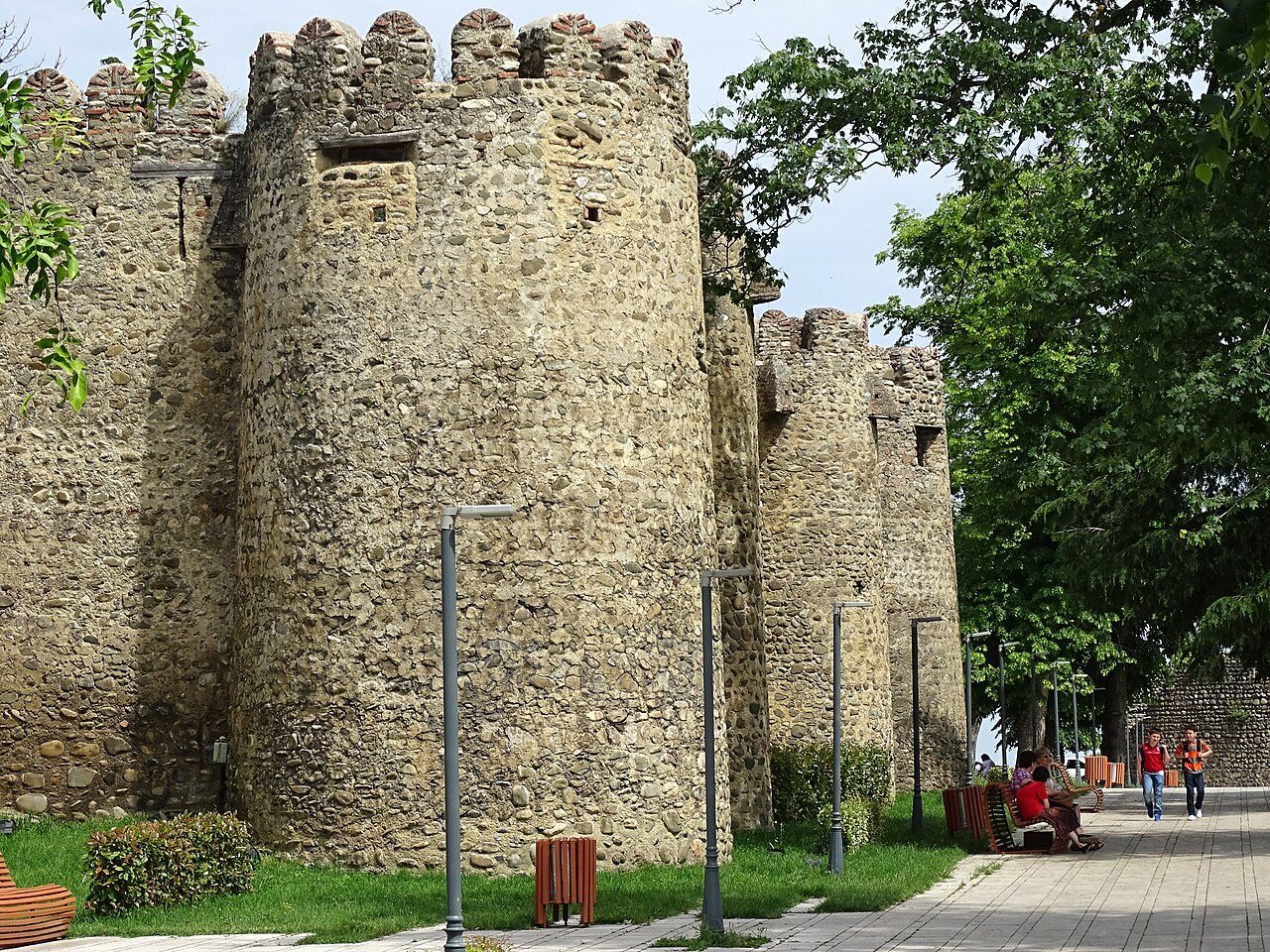
Encircled by crenelated 17th-century ramparts and stout limestone watchtowers, Batonis Tsikhe served as the fortified seat of Kakheti's monarchs, most notably King Erekle II, who was born and died within its walls in 1798. Begun under King Archil in the 1660s and extensively refortified throughout the 18th century, the complex reflects a striking fusion of defensive Georgian stonework and Persian-Safavid aesthetic flourishes. At its center stands the king's single-story palace, defined by low-slung whitewashed brickwork, pointed Persian-style arcades, and carved wooden loggias. Tucked beside the royal quarters are two modest court chapels and domed royal bathhouses, which once sustained a royal household navigating turbulent regional alliances. Standing atop the restored stone parapets, visitors look out over the fortress battlements across the sprawling vineyards of the Alazani Valley toward the snow-capped crests of the Greater Caucasus. Inside the palace museum, the scent of aged cedar and cool mortar fills intimate chambers illuminated by deep-set lancet windows, where exhibits showcase King Erekle’s battle-worn sabers, Persian carpets, and royal manuscripts. Exiting toward the citadel’s outer gates, travelers are confronted by the colossal bronze equestrian statue of the monarch himself, anchoring the quiet historical sanctuary firmly against the modern rhythm of central Telavi.
More in Telavi
Photo credits (6)
- Adam Jones from Kelowna, BC, Canada, CC BY-SA 2.0, via Wikimedia Commons
- falco, CC0, via Wikimedia Commons
- Gerd Eichmann, CC BY-SA 4.0, via Wikimedia Commons
- Sarah Murray from South Bend, IN, USA, CC BY-SA 2.0, via Wikimedia Commons
- Kober, CC BY-SA 4.0, via Wikimedia Commons
- პაატა შ, CC BY-SA 3.0, via Wikimedia Commons