
Nakhchivan
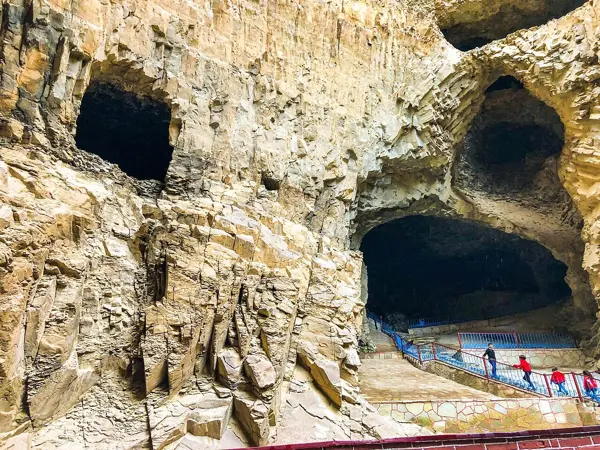
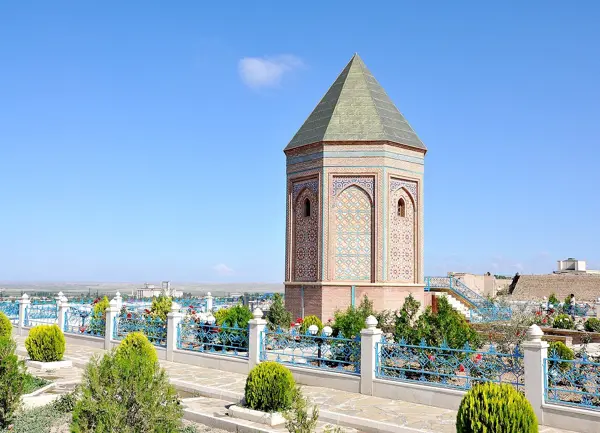
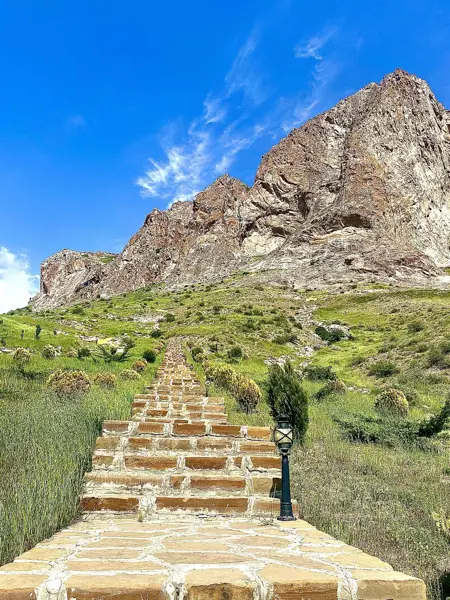
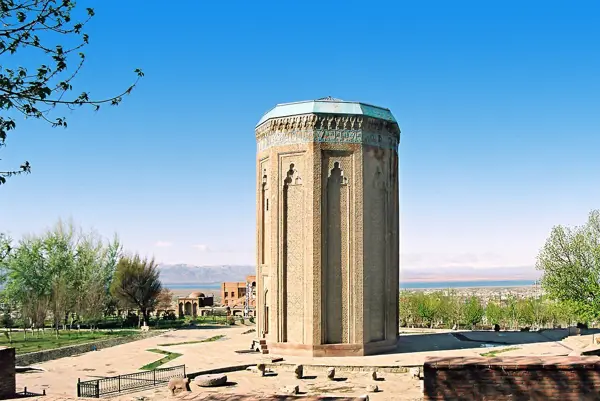
Tucked in a sun-baked river valley beneath the jagged ridge of Mount Ilanly, Nakhchivan forms the quiet heart of Azerbaijan’s southwestern exclave. The Nakhchivanchay River flows past its southern edge, backed by the arid Zangezur Range. Walking through the center feels calm and remarkably orderly, where wide, plane-tree-lined boulevards connect polished stone plazas with neat Soviet-era residential quarters. Settlement here dates back millennia, reaching an artistic peak under the twelfth-century Eldiguzid dynasty. Master architect Ajami Nakhchivani erected the Momine Khatun Mausoleum in 1186, a ten-sided brick tower detailed in glazed turquoise tiles and kufic script. Nearby stands Noah’s Mausoleum, an octagonal tomb rebuilt on ancient foundations. Above the river, the reconstructed seventh-century Yezidabad Fortress guards the town perimeter, while just north, Duzdag holds subterranean salt galleries used today for respiratory therapy. Daily rhythms center on the bazaar, where counters brim with dried mountain herbs, sumac, and local walnuts. In autumn, neighborhood households maintain the custom of baking and drying stacks of thin lavash in underground clay ovens for the winter. Dining centers on Nakhchivan piti, a rich mutton-and-chickpea stew cooked slowly in individual clay pots. Visit during May or October to avoid extreme continental heat. Taxis are cheap for trips to outer sights, but the core district is best navigated on foot.
Read more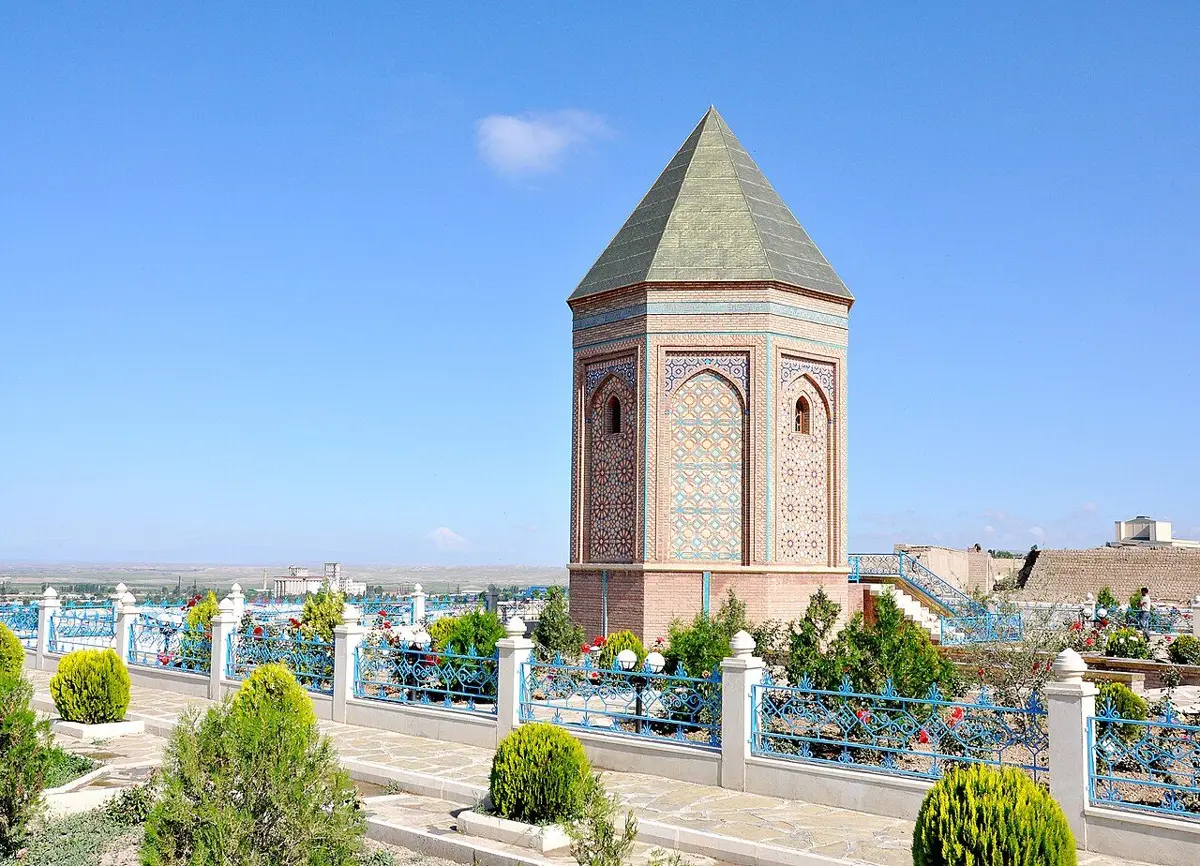
What to see in Nakhchivan
Guides & drivers nearby


Travel guides for Nakhchivan
Photo credits (4)
- Toghrul Rahimli, CC BY-SA 4.0, via Wikimedia Commons
- Sefer azeri, CC BY-SA 4.0, via Wikimedia Commons
- Fira Guli, CC BY-SA 4.0, via Wikimedia Commons
- Fuad2006, CC BY 2.5, via Wikimedia Commons