
 New added
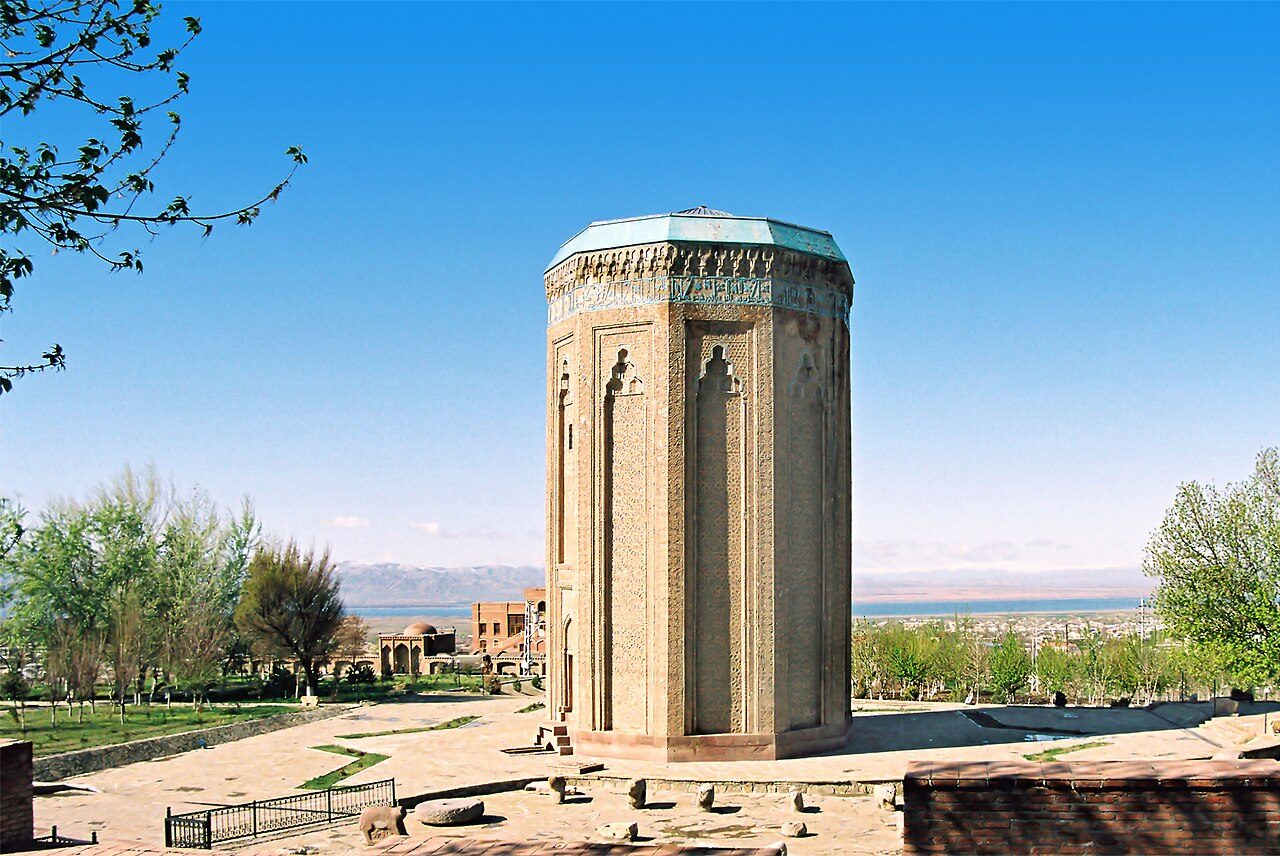
Momine Khatun Mausoleum
Completed in 1186 by master builder Ajami ibn Abubakr Nakhchivani, the Momine Khatun Mausoleum stands as the crowning achievement of the medieval Atabeg (Ildegizid) dynasty. Commissioned by the ruler Jahan Pahlavan to honor his formidable mother, Momine Khatun, the monument established the renowned Nakhchivan architectural school. Soaring twenty-five meters into the arid Transcaucasian sky, this decagonal red-brick tower rests on a low stone plinth. Each of its ten exterior facets is recessed into an arched niche, adorned with mathematically precise geometric strapwork and highlighted with vibrant, turquoise-glazed tile inlays. Encircling the upper perimeter, an unbroken frieze of intricate Kufic calligraphy recites Quranic verse alongside the architect's proud epitaph: "We pass away, but the world remains; we die, but our work endures." Approaching the monument across its sunlit esplanade, travelers are struck by the dynamic interplay of light across the shifting terracotta patterns, which vary distinctly from one facet to the next. The original towering conical roof has yielded to history, but the sheer verticality of the brickwork still commands awe. Inside, the mausoleum shifts from decorative exuberance to stark, meditative solemnity. Visitors can descend into the shadowy, subterranean crypt, where a central stone pillar anchors ten groined vaults that branch out like ribbing to support the structure above. Standing in the cool silence of this twelfth-century vault, one feels the timeless resonance of a son's grief translated into enduring architectural genius.
More in Nakhchivan
Photo credits (4)
- Fuad2006, CC BY 2.5, via Wikimedia Commons
- Sefer azeri, CC BY-SA 4.0, via Wikimedia Commons
- Toghrul Rahimli, CC BY-SA 4.0, via Wikimedia Commons
- Fira Guli, CC BY-SA 4.0, via Wikimedia Commons