
 New added
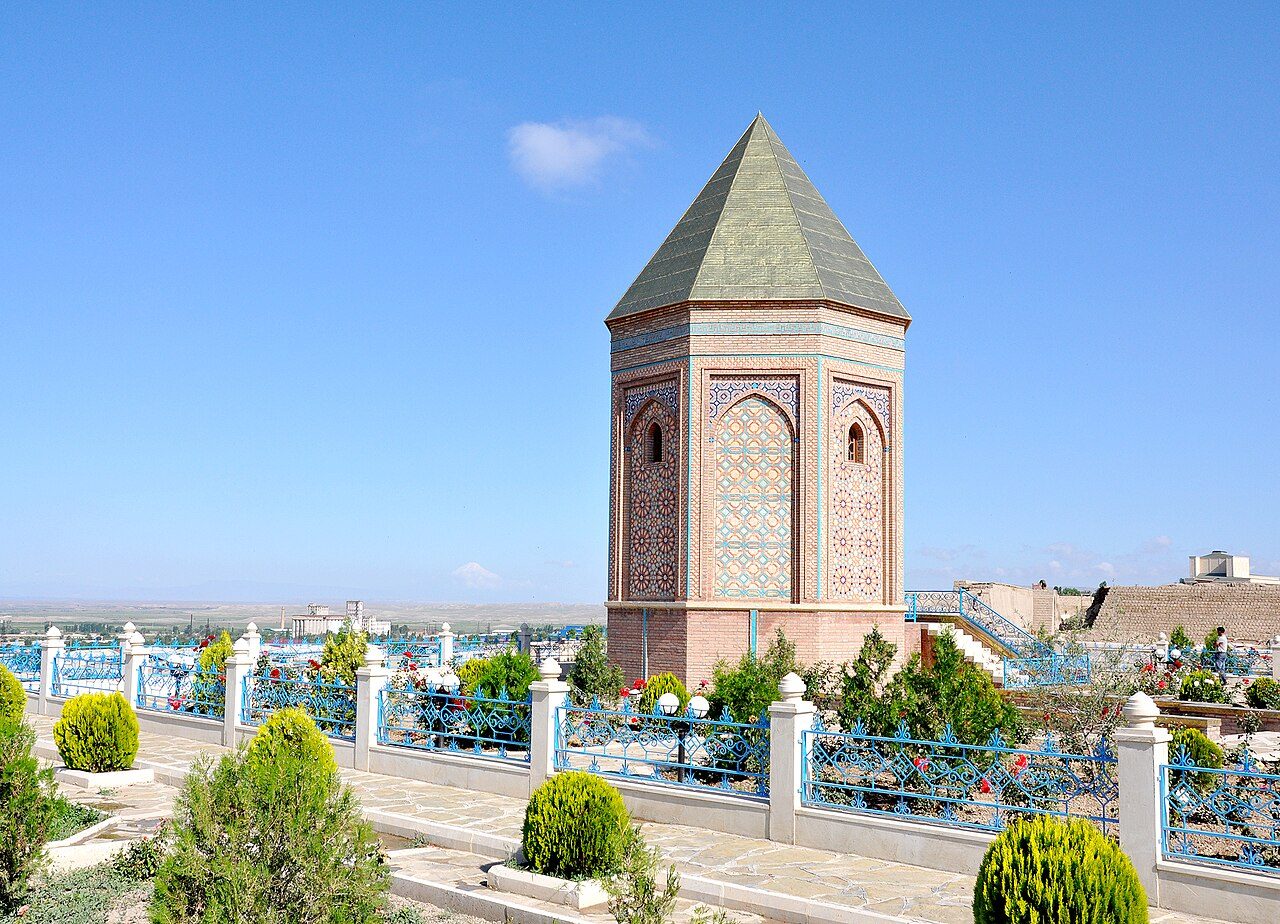
Noah’s Mausoleum
Perched atop the remnants of the Bronze Age Köhna Gala fortress, this monument anchors Nakhchivan to the primeval narrative of the Great Flood, drawing from local lore that Noah’s Ark struck the cleft peak of nearby Mount Ilandagh before settling in the valley. While chronicles trace an earlier shrine here to the eighth century—later recorded in detail by nineteenth-century Russian ethnographers—the present structure was carefully restored in 2006 to honor the classical Nakhchivan architectural school of Ajami Nakhchivani. Its exterior is a striking study in geometric symmetry: an octagonal red-brick tower rising toward a sharp, faceted conical roof, punctuated by intricate brickwork friezes and glazed turquoise tile bands that gleam against the arid Caucasian sky. Stepping inside, visitors leave the desert wind behind to descend a narrow stone staircase into the cool, silent subterranean crypt. Beneath the low brick vaulting sits a heavy, central stone pillar, the traditional focal point where pilgrims historically left offerings and where Noah’s earthly remains are said to lie interred. Standing in the soft half-light of this subterranean chamber, one feels the visceral weight of millennia-old folklore, before emerging back onto the sun-drenched terrace to gaze out at the dramatic silhouette of the surrounding mountains.
More in Nakhchivan
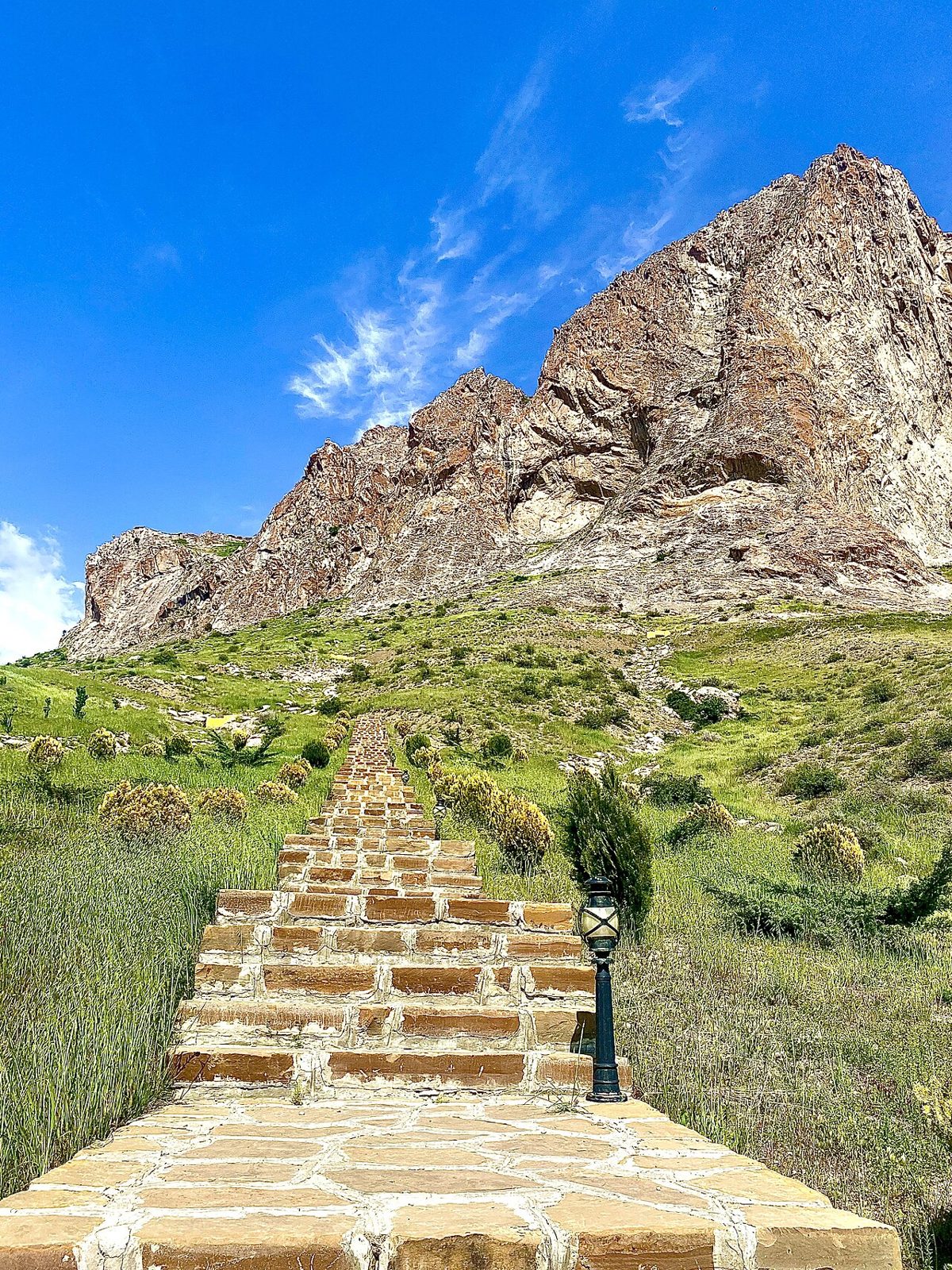
Photo credits (4)
- Toghrul Rahimli, CC BY-SA 4.0, via Wikimedia Commons
- Sefer azeri, CC BY-SA 4.0, via Wikimedia Commons
- Fira Guli, CC BY-SA 4.0, via Wikimedia Commons
- Fuad2006, CC BY 2.5, via Wikimedia Commons