
 New added
Ashabi-Kahf
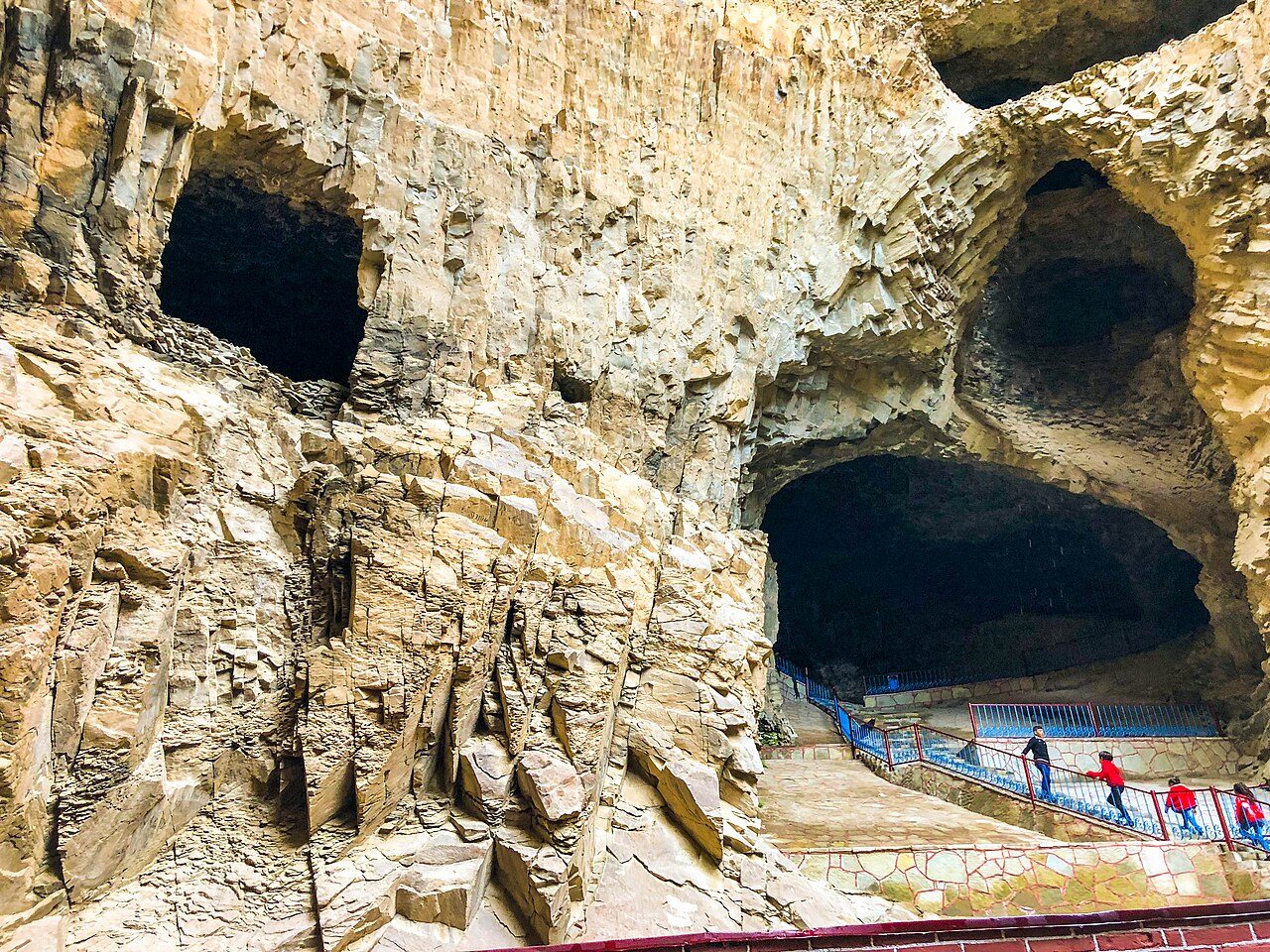
Carved into the jagged limestone between Mount Ilandağ and Mount Nahajir, this sacred fissure anchors the ancient legend of the Seven Sleepers directly to the Transcaucasian landscape. Epigraphic inscriptions chiseled into the rock face trace pilgrimage traditions here back to the 15th century during the Aq Qoyunlu era, though extensive restoration in 1998 formalized the site with a monumental flight of hundreds of paved stone stairs. Climbing this narrow, sun-bleached chasm, travelers pass sheer rust-red cliff faces that rise dramatically toward a series of natural chambers, where a vaulted stone mosque and an open-air prayer terrace merge seamlessly with the mountain’s raw bedrock. Stepping past the threshold into the deep subterranean grotto, the arid desert heat yields to an immediate, subterranean chill. Visitors encounter pilgrims gathered in hushed reverie around the *Damla*, a sacred black rock where natural mineral seepage steadily drips into the hands of those whispering prayers, believed to symbolize the tears of the slumbering faithful. Inside the low-ceilinged sanctuary, woven carpets soften the uneven natural stone floors, and the scent of incense mingles with cool, mineral-heavy air. Standing at the upper terrace, the cavern frames an arresting view: the steep, vertical lips of the gorge open outward to reveal the sweeping, windswept plains of Nakhchivan stretching toward the horizon.
More in Nakhchivan
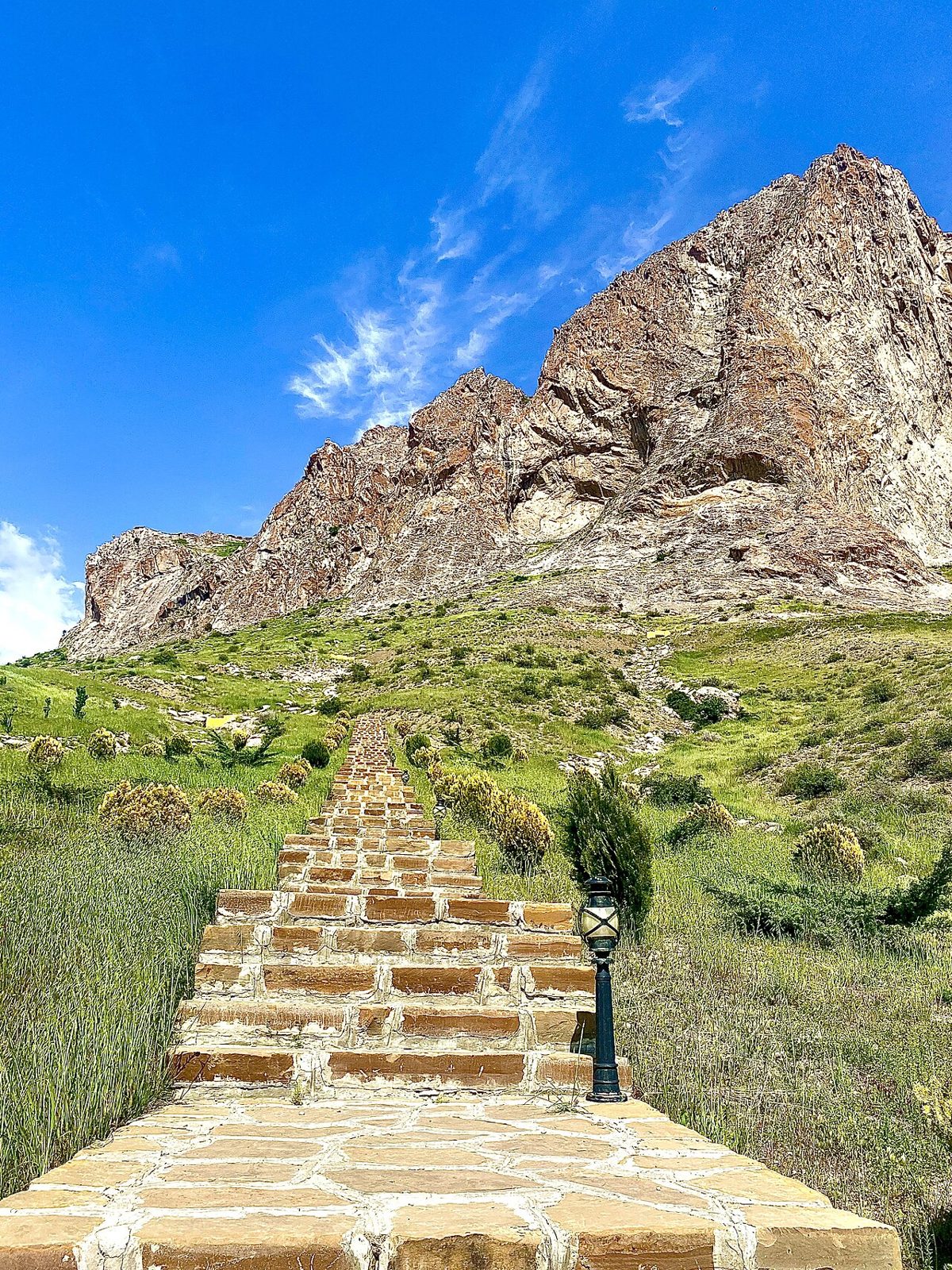
Photo credits (4)
- Sefer azeri, CC BY-SA 4.0, via Wikimedia Commons
- Toghrul Rahimli, CC BY-SA 4.0, via Wikimedia Commons
- Fira Guli, CC BY-SA 4.0, via Wikimedia Commons
- Fuad2006, CC BY 2.5, via Wikimedia Commons