
Mtskheta
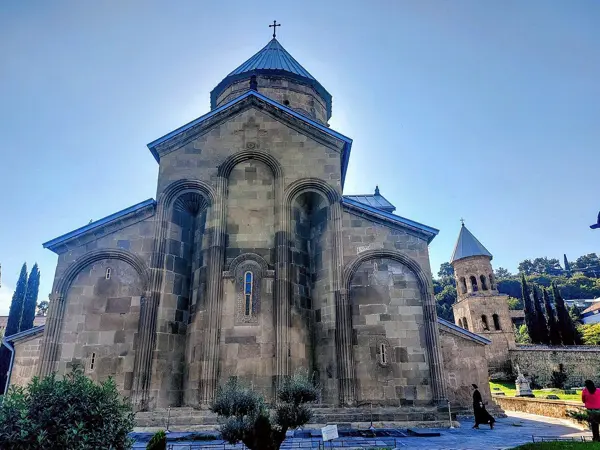
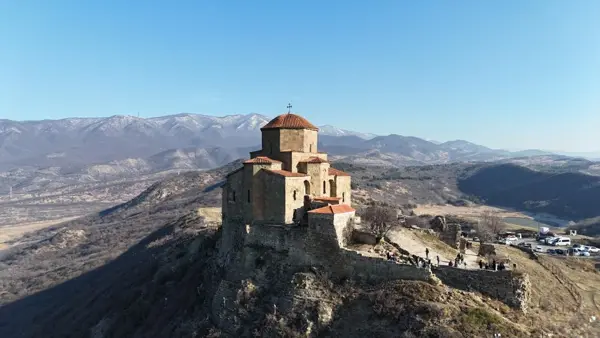
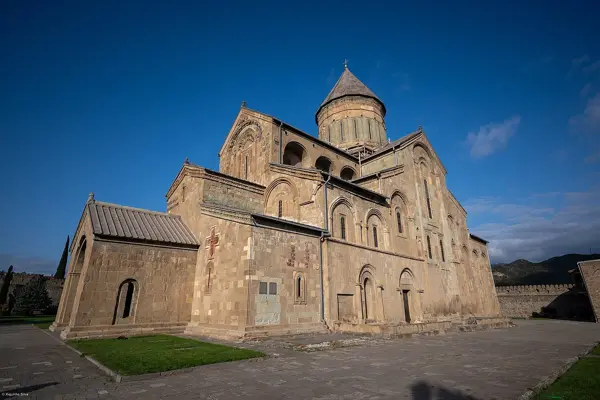
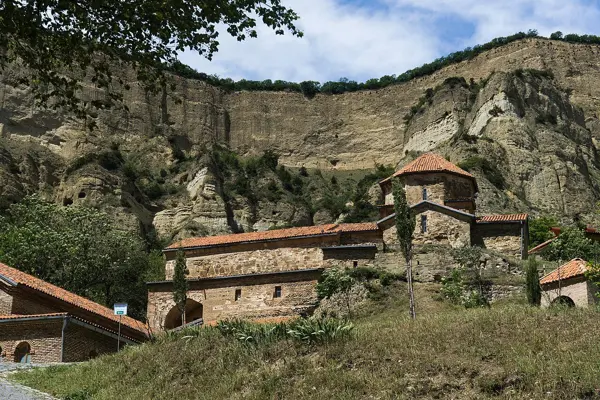
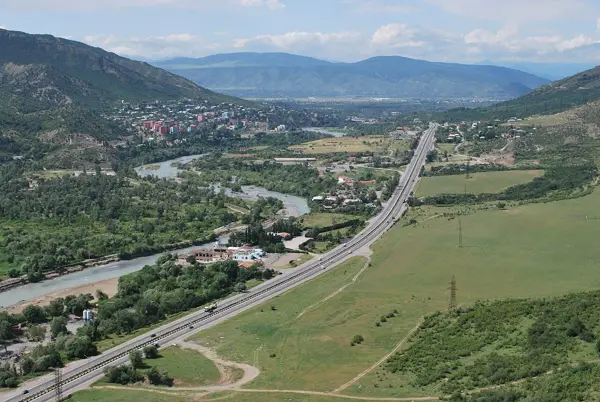
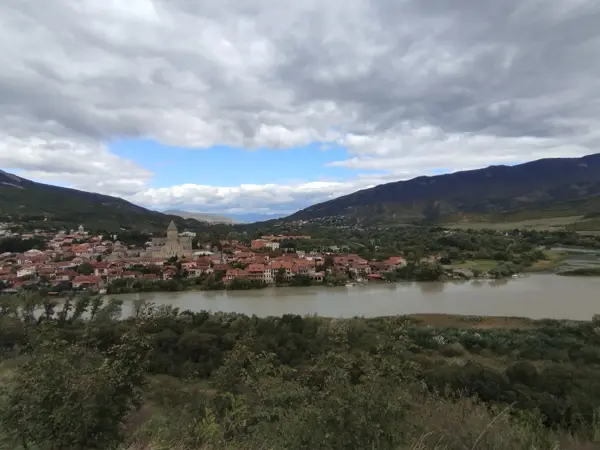
Mtskheta sits at the confluence of the Aragvi and Mtkvari rivers, tucked beneath steep limestone hills just twenty kilometers north of Tbilisi. Its compact center is paved with river stones, where vine-draped balconies overhang quiet courtyards and the smell of baking bread drifts through residential alleys. Despite being the historical heart of Georgia, the town preserves the unhurried pace of an inland river settlement, cradled by dry ridges that catch the shifting southern Caucasian light. Founded in the third century BC as the capital of the kingdom of Iberia, Mtskheta became the cradle of Georgian Christianity when Saint Nino converted King Mirian III here in 326 AD. Dominating the valley floor, eleventh-century Svetitskhoveli Cathedral preserves soaring defensive walls and the burial site of early Georgian monarchs. Across the river, perched on a sheer promontory overlooking the water junction, the sixth-century cross-domed church of Jvari Monastery stands battered by mountain winds. Within the residential streets, the quieter Samtavro convent encloses the modest cell where Saint Nino lived beneath a bramble patch that still flowers each spring. Along the market stalls, vendors sell dark walnut churchkhela and sheets of sour tklapi fruit leather. Meals here focus on roadside taverns serving seasoned lobio stewed in clay pots, accompanied by hot mchadi cornbread and pickled jonjoli flowers. The town fills every October fourteenth for the feast of Svetitskhovloba, drawing pilgrims from across the Caucasus for mass and choral singing. For the clearest light and empty courtyards, arrive by marshrutka from Tbilisi early in the morning, and hire a local driver to ascend the winding road to Jvari before walking the central town on foot.
Read more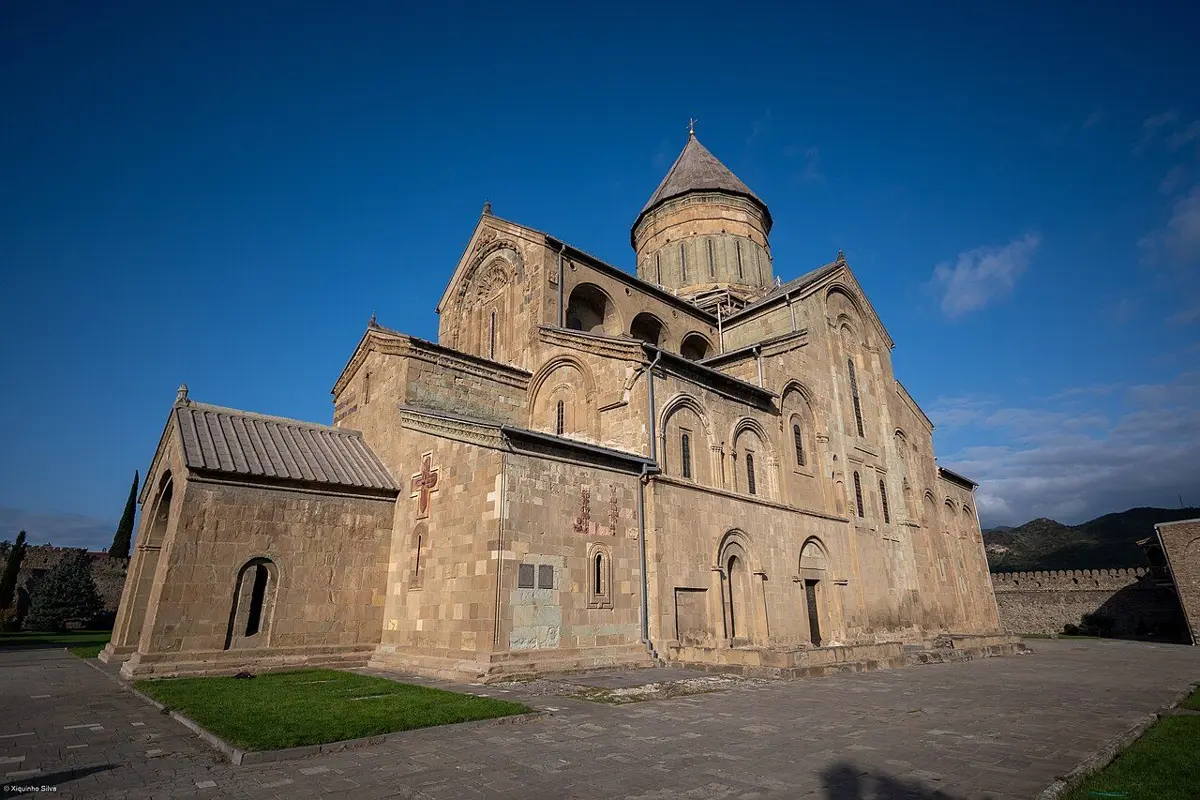
What to see in Mtskheta
Tours in Mtskheta
Guides & drivers nearby
Travel guides for Mtskheta
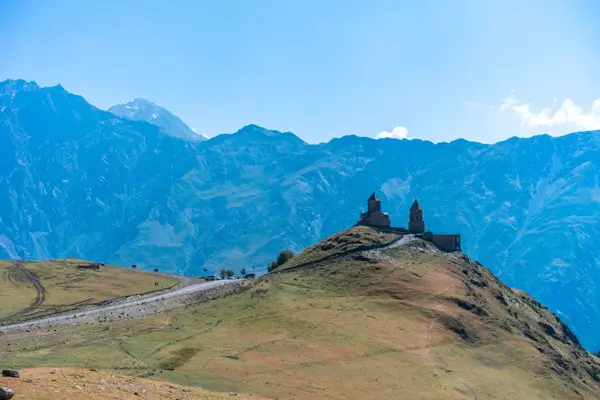
Photo credits (4)
- xiquinhosilva, CC BY 4.0, via Wikimedia Commons
- Kober, CC0, via Wikimedia Commons
- Alexey Komarov, CC BY-SA 4.0, via Wikimedia Commons
- Adam Harvey, CC BY 2.0, via Wikimedia Commons