
 New added
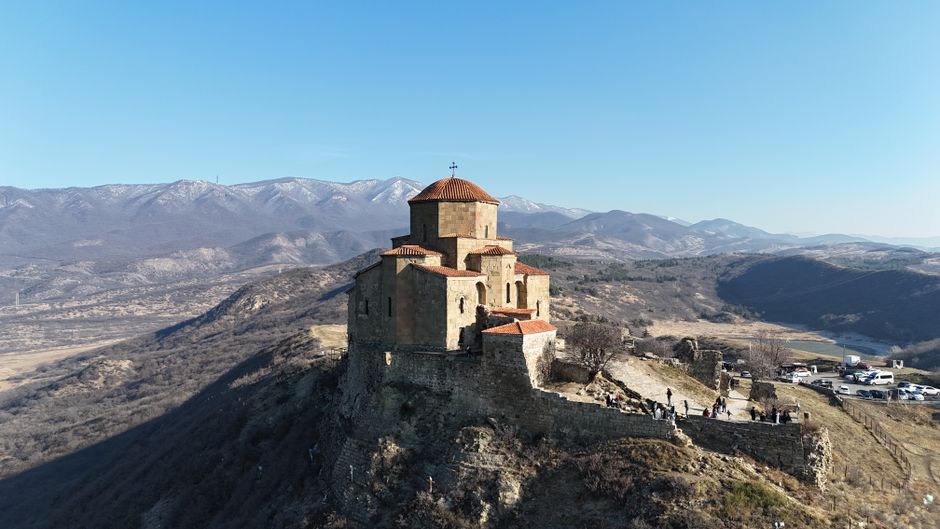
Jvari Monastery
Perched atop a sheer promontory above Georgia’s ancient capital, this late sixth-century sanctuary marks the apex of early Caucasian Christian architecture. Erected between 590 and 605 AD under Erismtavari (Presiding Prince) Stepanoz I, Jvari enshrines the precise rocky summit where Saint Nino raised a miraculous wooden cross in the early fourth century to signal Iberia's conversion. The structure serves as the archetype of the "four-apse with corner niches" (tetraconch) architectural style, engineered with mathematical harmony beneath a central octagonal dome. Hewn from weathered pinkish-gray sandstone, its exterior facades bear archaic, Hellenistic-influenced stone bas-reliefs depicting Stepanoz and his kin kneeling in supplication before Christ. Stepping over the worn stone threshold into the dim, cross-vaulted interior, visitors are met by the faint scent of beeswax candles and cold mountain air filtering through slit windows. In the center rests the original carved stone plinth that once anchored Nino’s wooden cross, stripped bare of later ornamentation to highlight pure stone geometry. Outside, the sheer cliff offers a dramatic sensory contrast: fierce river winds whip across the terrace as the turquoise Aragvi converges with the silty, olive-brown Mtkvari far below, creating a striking two-toned hydrological ribbon that frames the terracotta rooftops of Mtskheta.
More in Mtskheta
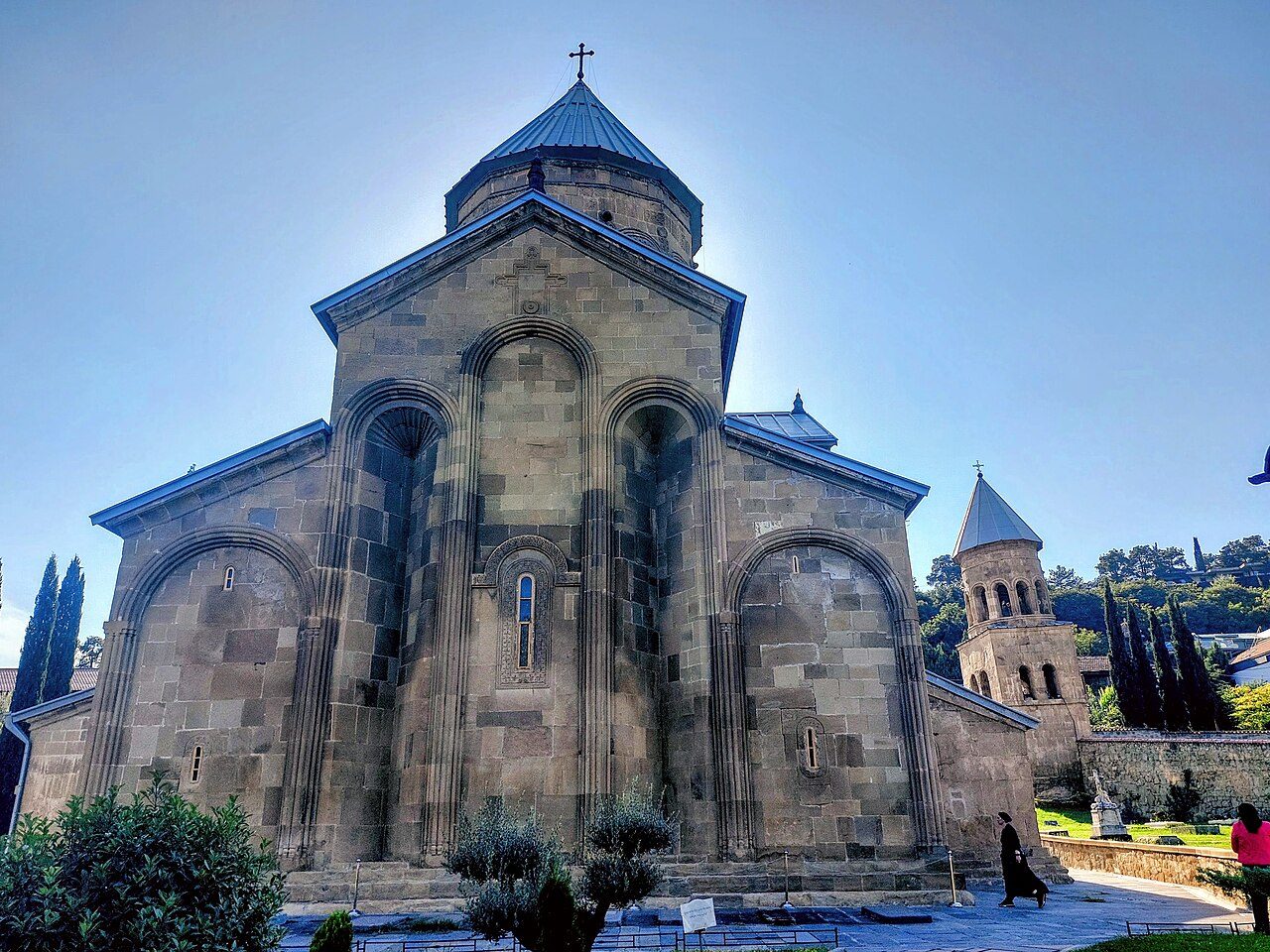
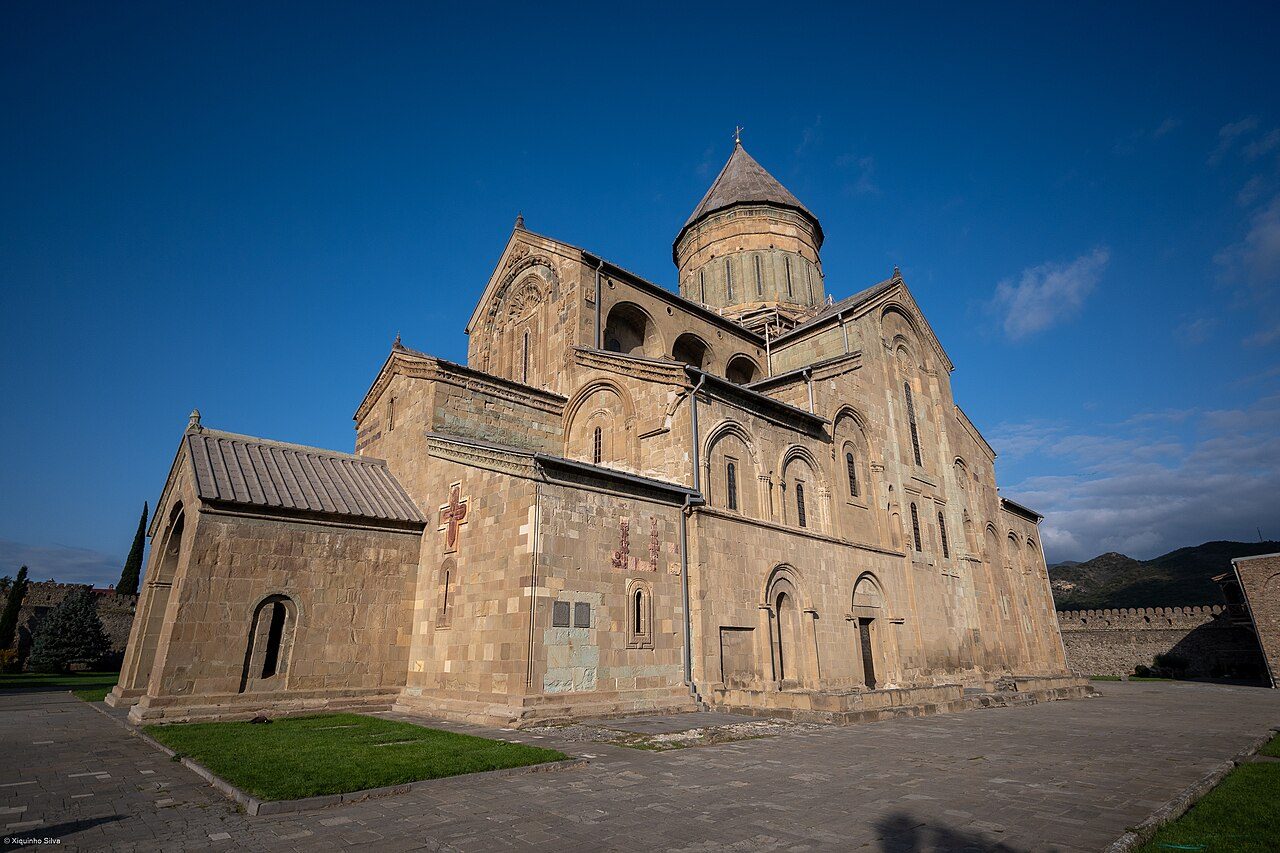
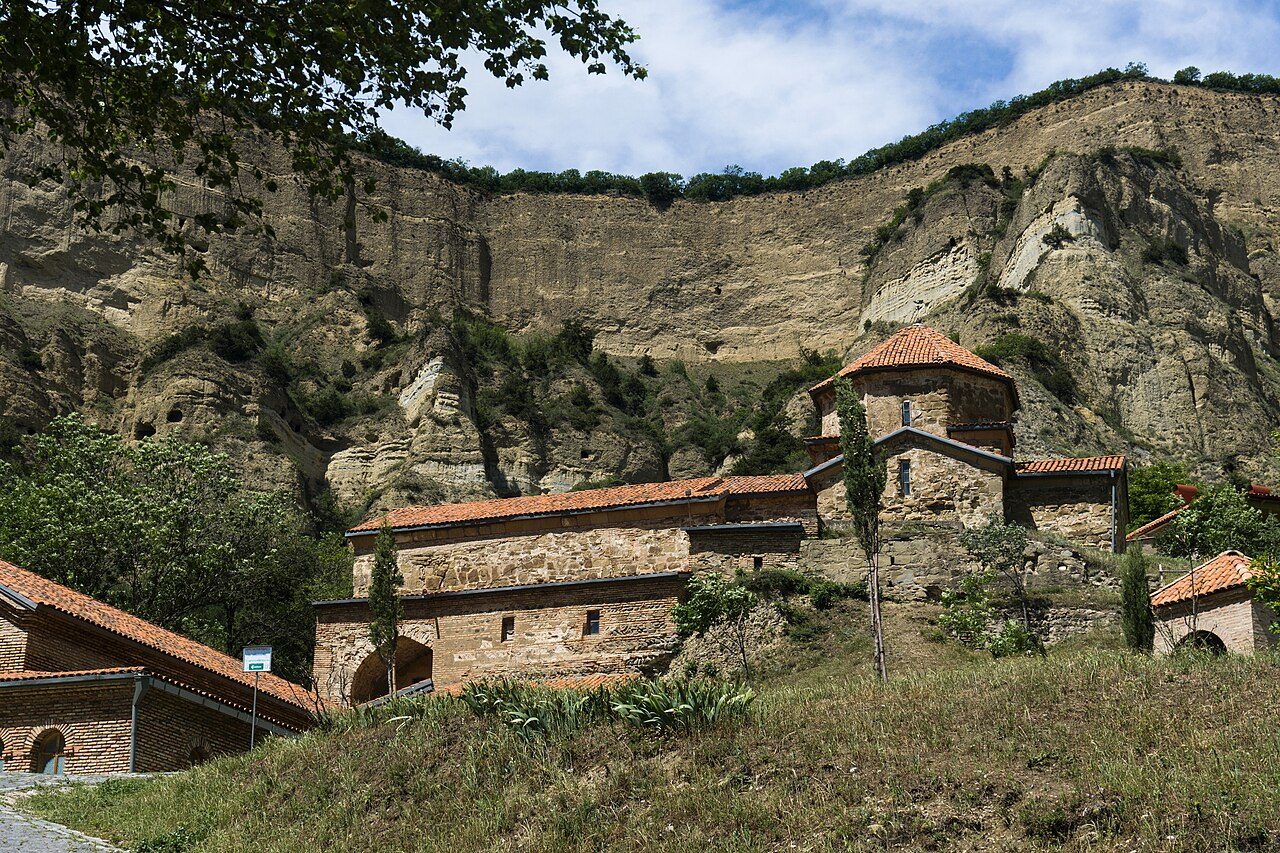
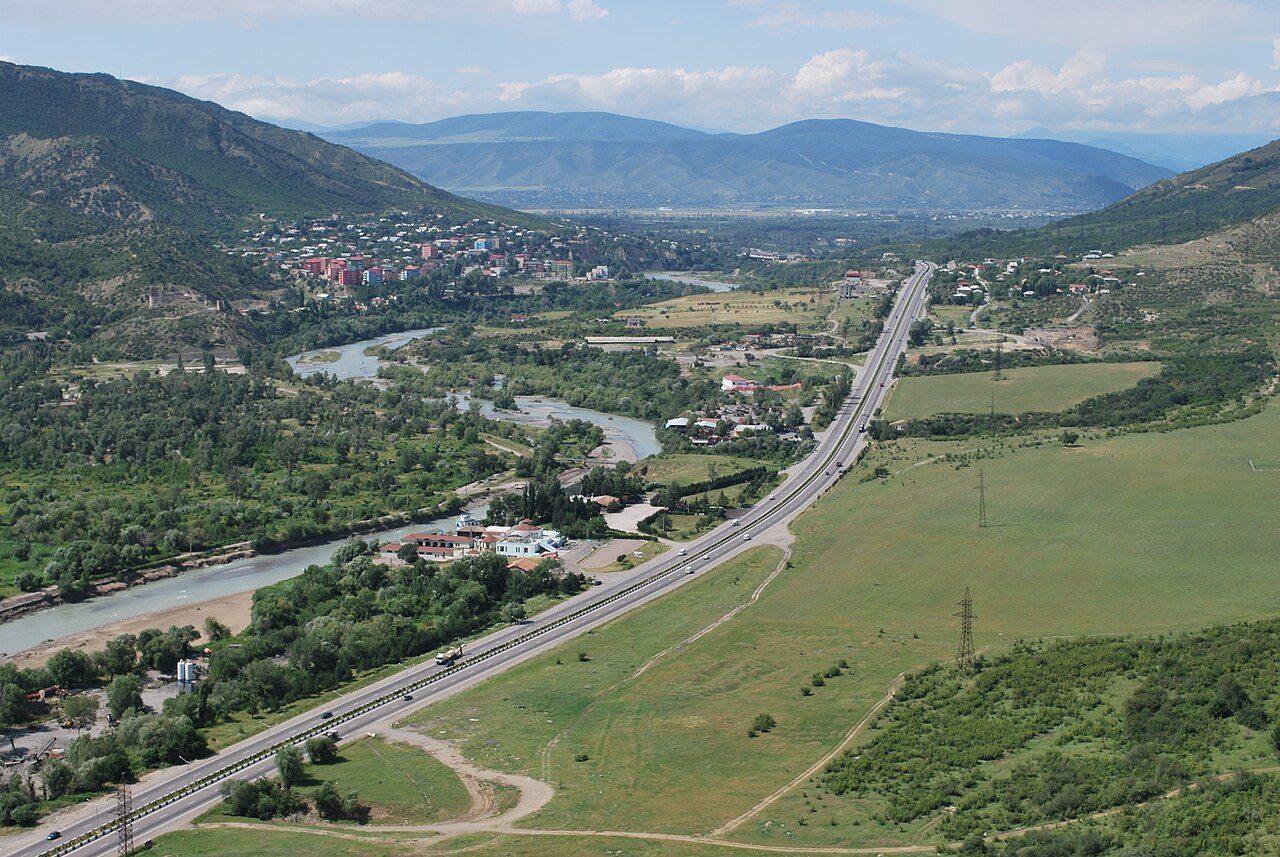
Photo credits (4)
- Kober, CC0, via Wikimedia Commons
- xiquinhosilva, CC BY 4.0, via Wikimedia Commons
- Alexey Komarov, CC BY-SA 4.0, via Wikimedia Commons
- Adam Harvey, CC BY 2.0, via Wikimedia Commons