
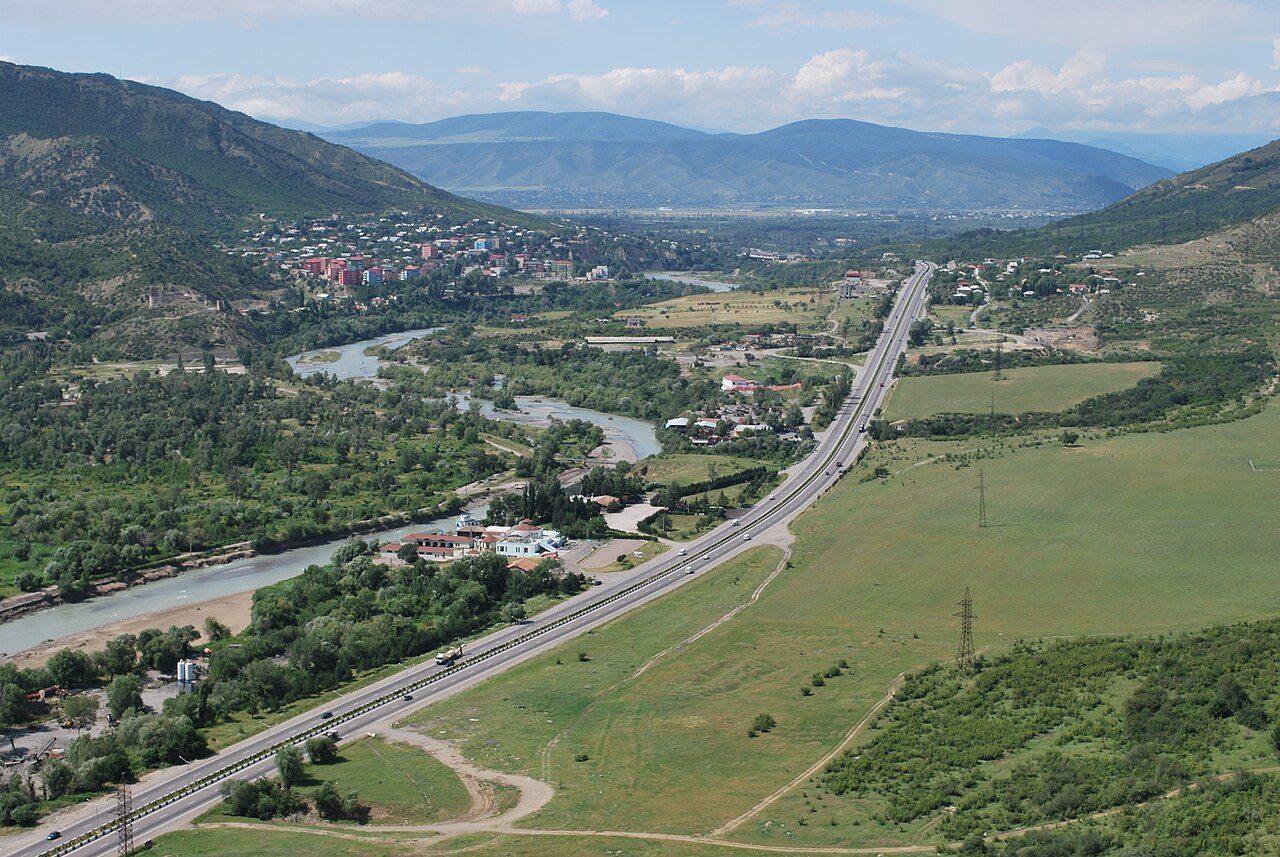
Aragvi River
Carving southward from the Greater Caucasus before colliding with the Mtkvari at the base of Mtskheta, the Aragvi River stages one of the region's most arresting natural spectacles. Viewed from the windswept limestone cliffs of the 6th-century Jvari Monastery, the river's pale-turquoise, glacial ribbon meets the silty, olive-brown current of the Mtkvari without instantly mixing. For hundreds of meters downstream, a sharp, two-toned seam cleaves the water’s surface, slicing between sun-bleached ochre hills and framing the distant conical green domes of Svetitskhoveli Cathedral below. This liquid boundary represents the spiritual and strategic heart of Caucasian Iberia. Along these gravelly riverbanks in 337 CE, Saint Nino and King Mirian III orchestrated mass baptisms to establish Christianity as the state religion, forever binding Georgia's identity to the Aragvi basin. Centuries later, this dramatic clash of waters inspired Mikhail Lermontov’s 1839 Romantic epic *Mtsyri*. Travelers descending to the pebble beaches beside the confluence encounter a sharp, mountain-born wind carrying the scent of river mud and wild thyme, with the rushing chill of Caucasus meltwater cutting directly through the arid heat of the surrounding Kartli lowlands.
More in Mtskheta
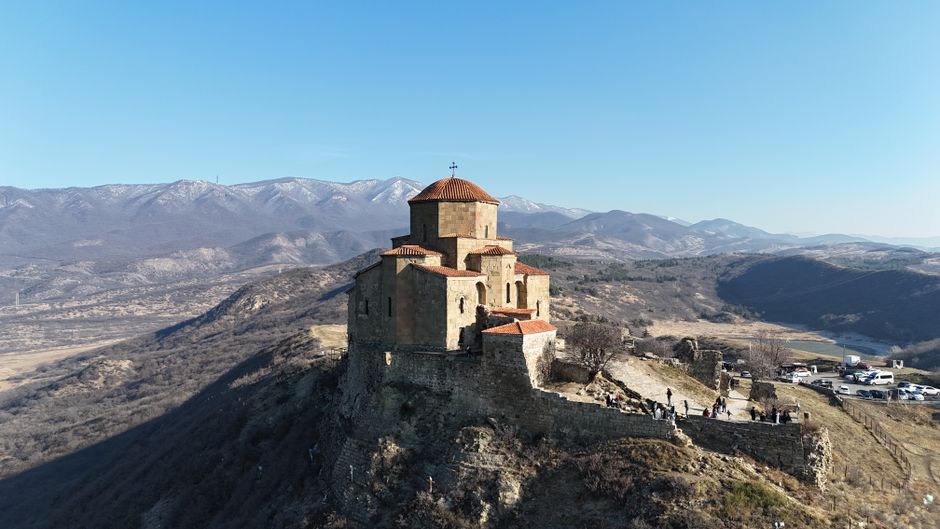
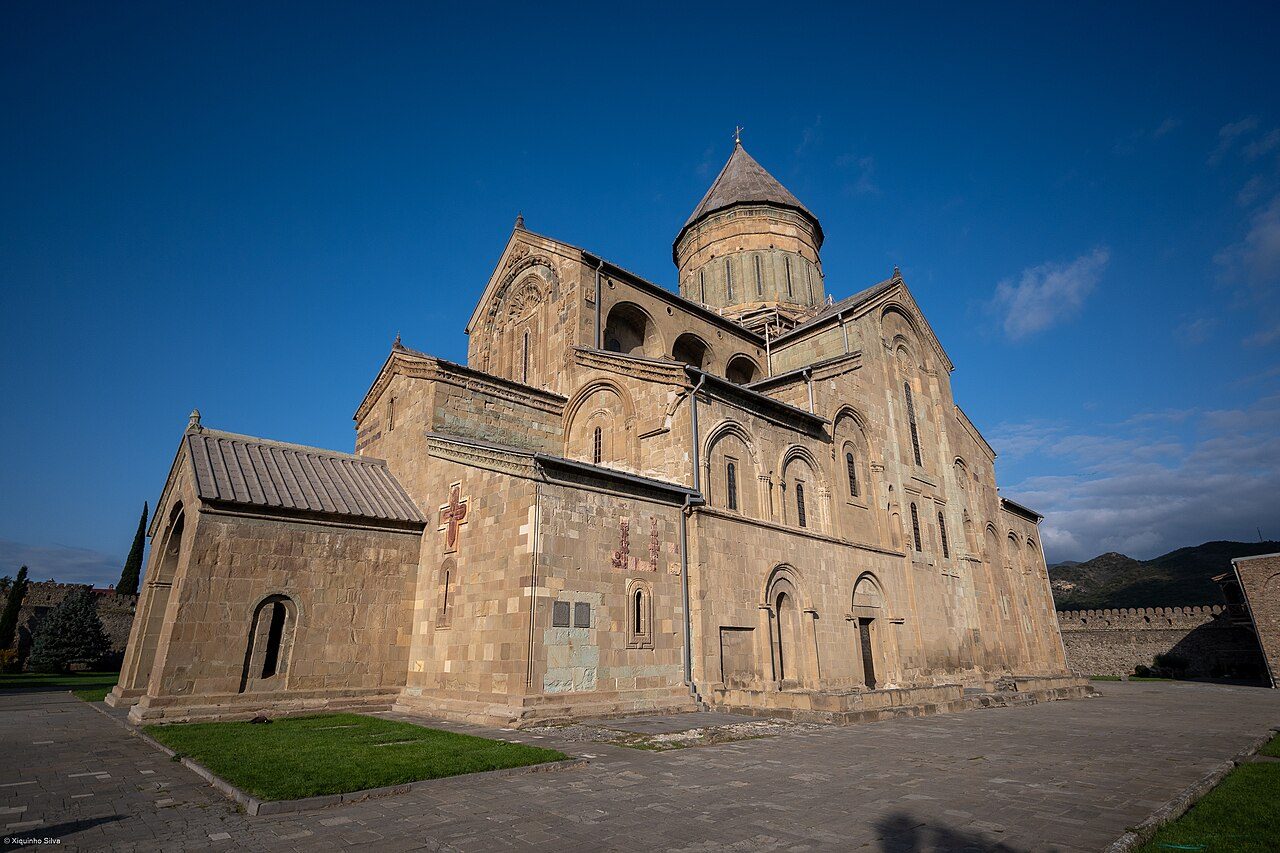
Photo credits (4)
- Adam Harvey, CC BY 2.0, via Wikimedia Commons
- Kober, CC0, via Wikimedia Commons
- xiquinhosilva, CC BY 4.0, via Wikimedia Commons
- Alexey Komarov, CC BY-SA 4.0, via Wikimedia Commons