
Antalya
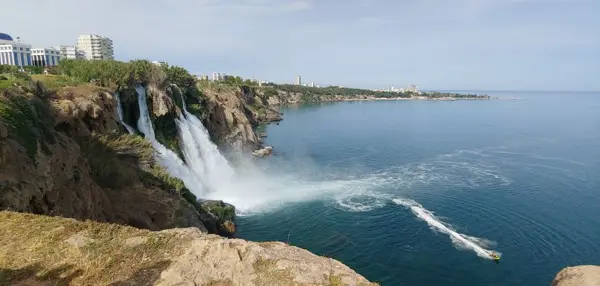
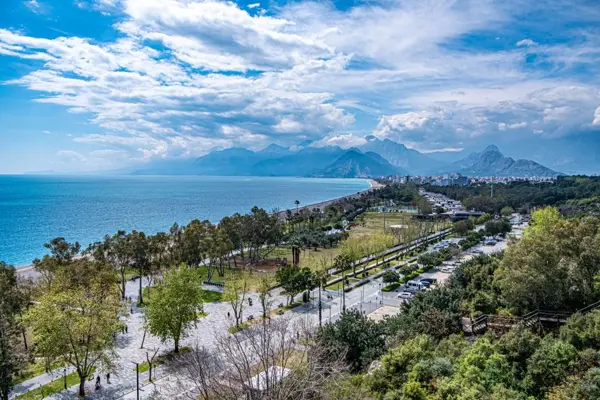
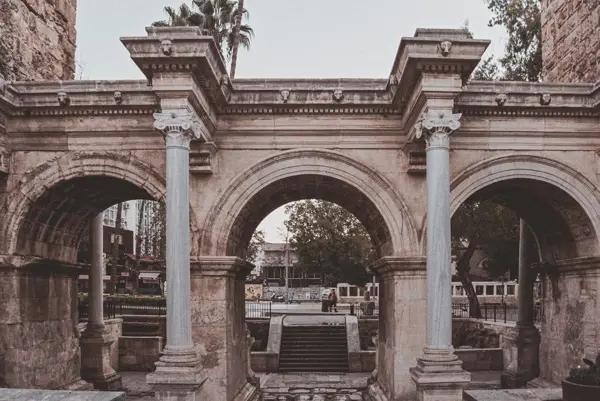
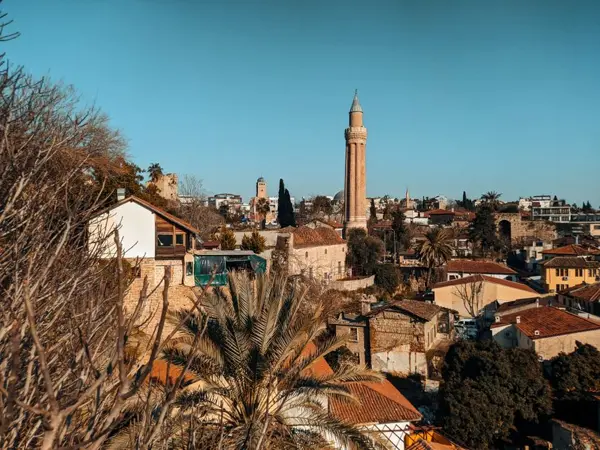
Antalya clings to limestone cliffs over the Gulf of Antalya, flanked by the craggy wall of the Taurus Mountains along the Turkish Riviera. Walking through the city feels like drifting between distinct eras; the salty sea breeze carries the sound of the Düden River cascading over rocky bluffs directly into the open Mediterranean, while shade-dappled lanes open suddenly onto steep vistas of deep blue water. King Attalus II of Pergamon founded the city around 150 BC, establishing a port that has been occupied continuously by Romans, Byzantines, Seljuks, and Ottomans. Travelers enter the historic quarter of Kaleiçi through Hadrian’s Gate, a triple-arched marble portal raised in 130 AD. Inside, narrow cobblestone alleys weave past whitewashed Ottoman-era mansions with timber overhanging balconies. The thirteenth-century Yivli Minare, a distinctive fluted minaret built under the Seljuk Sultan Alaeddin Keykubad, anchors the district, while nearby cliffside paths lead to the ancient Roman harbor where fishing boats still moor beside stone seawalls. Local life centers around the table, particularly dishes like Antalya piyazı, a cold salad of white beans dressed with tahini, lemon, and hard-boiled eggs, followed by citrus sweets made from sour Seville oranges. Every autumn, the city turns out for the long-running Antalya Golden Orange Film Festival, which fills waterfront parks and municipal halls with open-air screenings. Visit during April or October to avoid the sweltering coastal heat, and take the historic tramway linking the city center to Konyaaltı Beach for simple, breezy transit along the shoreline.
Read more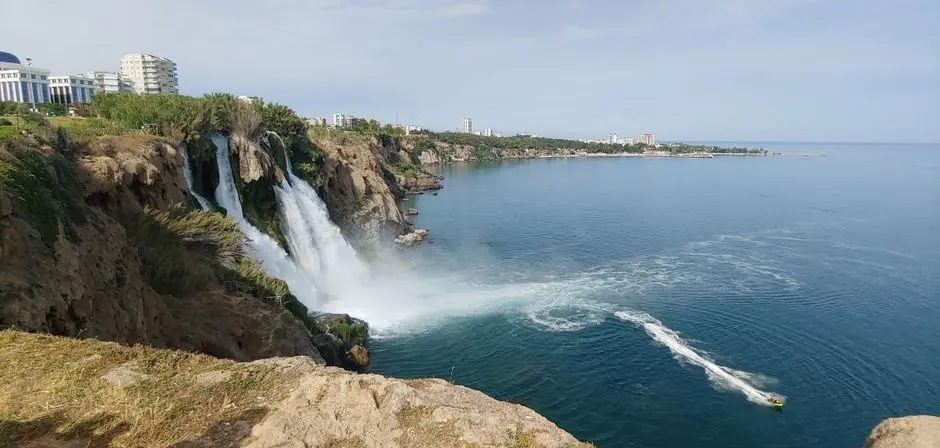
What to see in Antalya
Travel guides for Antalya

Photo credits (3)
- Saffron Blaze, CC BY-SA 3.0, via Wikimedia Commons
- Saffron Blaze, CC BY-SA 3.0, via Wikimedia Commons
- Martin Cígler, CC BY-SA 3.0, via Wikimedia Commons