
Perge
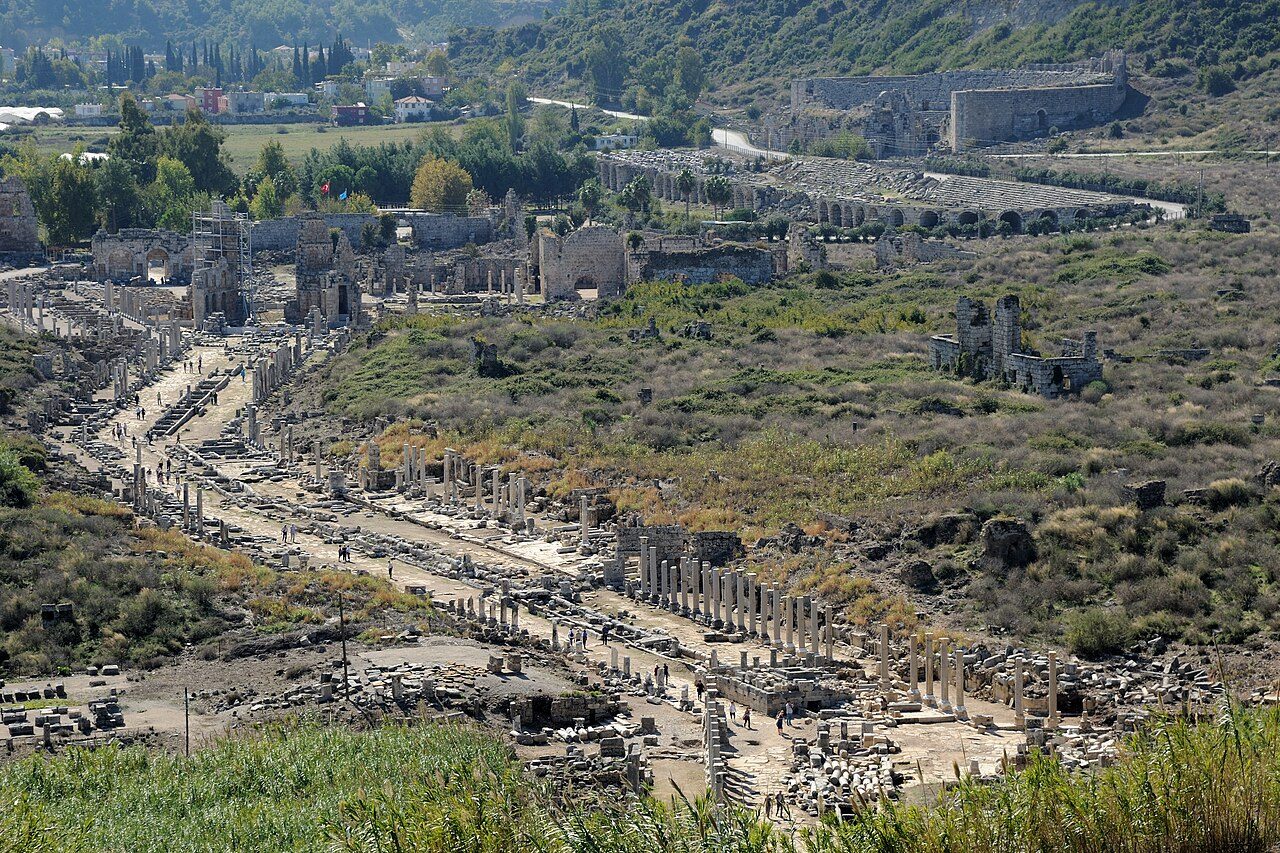
Stepping past the fractured limestone threshold of Perge thrusts travelers directly into the imperial zenith of ancient Pamphylia. Here, where Alexander the Great marched his forces in 333 BCE and the civic benefactress Plancia Magna financed sweeping marble transformations in the 2nd century CE, history is etched into every surface. The entrance is anchored by two soaring Hellenistic round towers of weathered ashlar masonry, standing as fortified sentinels before the expansive urban grid. Just beyond lies a remarkably preserved 12,000-seat stadium, where visitors can duck into the cool, barrel-vaulted undercrofts that once housed gladiatorial dens and lively marketplace stalls beneath stone bleachers. Down the city’s spine, a grand 300-meter colonnaded avenue unfolds, bisected by a raised, stepped water channel that once channeled cascading mountain runoff from the northern nymphaeum to the palatial Roman baths. Walking along this monumental thoroughfare, you can still trace the deep ruts worn into the paving stones by centuries of iron-rimmed chariot wheels. Scattered among the standing Corinthian columns are fallen entablatures carved with acanthus leaves and reliefs dedicated to Artemis Pergaia. The scent of sun-baked wild thyme hangs heavy in the Mediterranean heat, evoking an immediate, palpable connection to the forgotten rhythms of an imperial metropolis.
More in Antalya
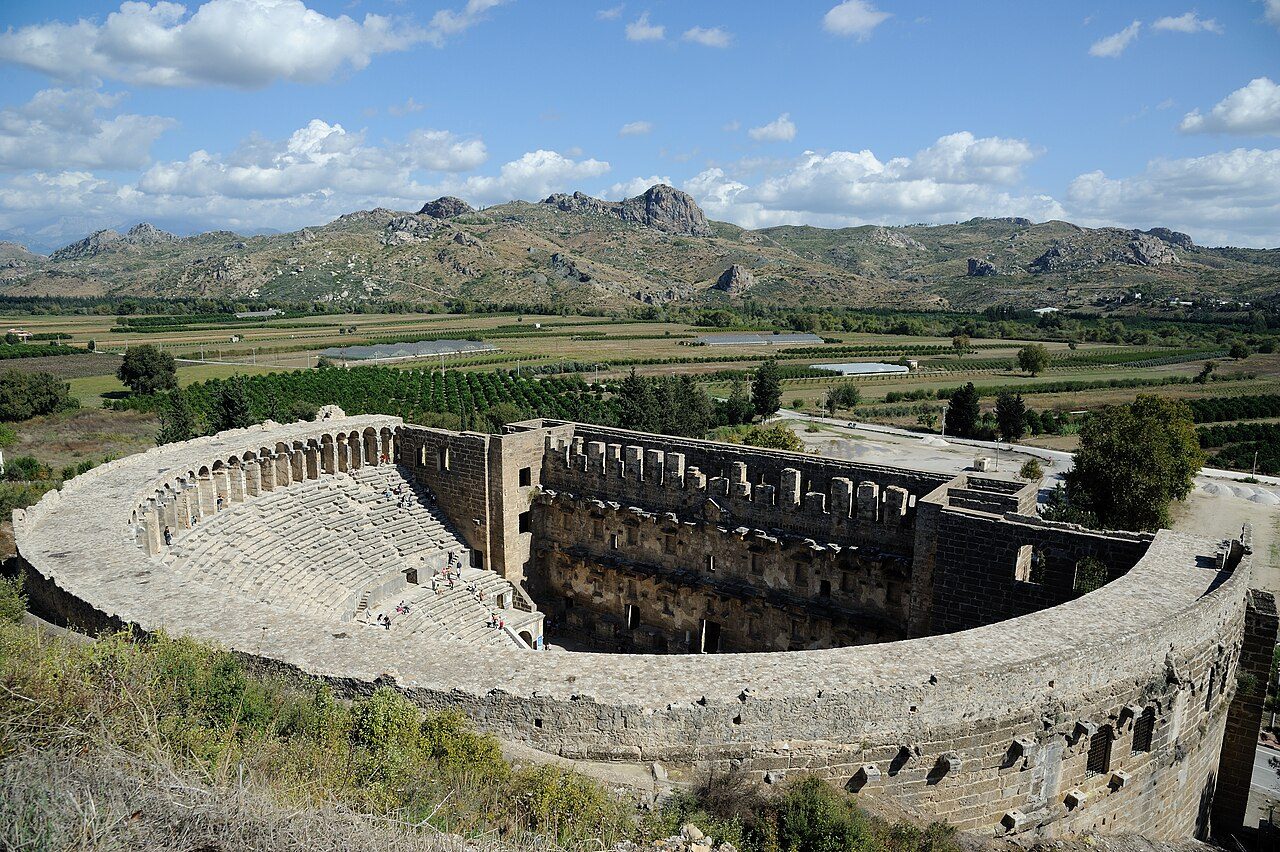
Photo credits (3)
- Saffron Blaze, CC BY-SA 3.0, via Wikimedia Commons
- Saffron Blaze, CC BY-SA 3.0, via Wikimedia Commons
- Martin Cígler, CC BY-SA 3.0, via Wikimedia Commons