
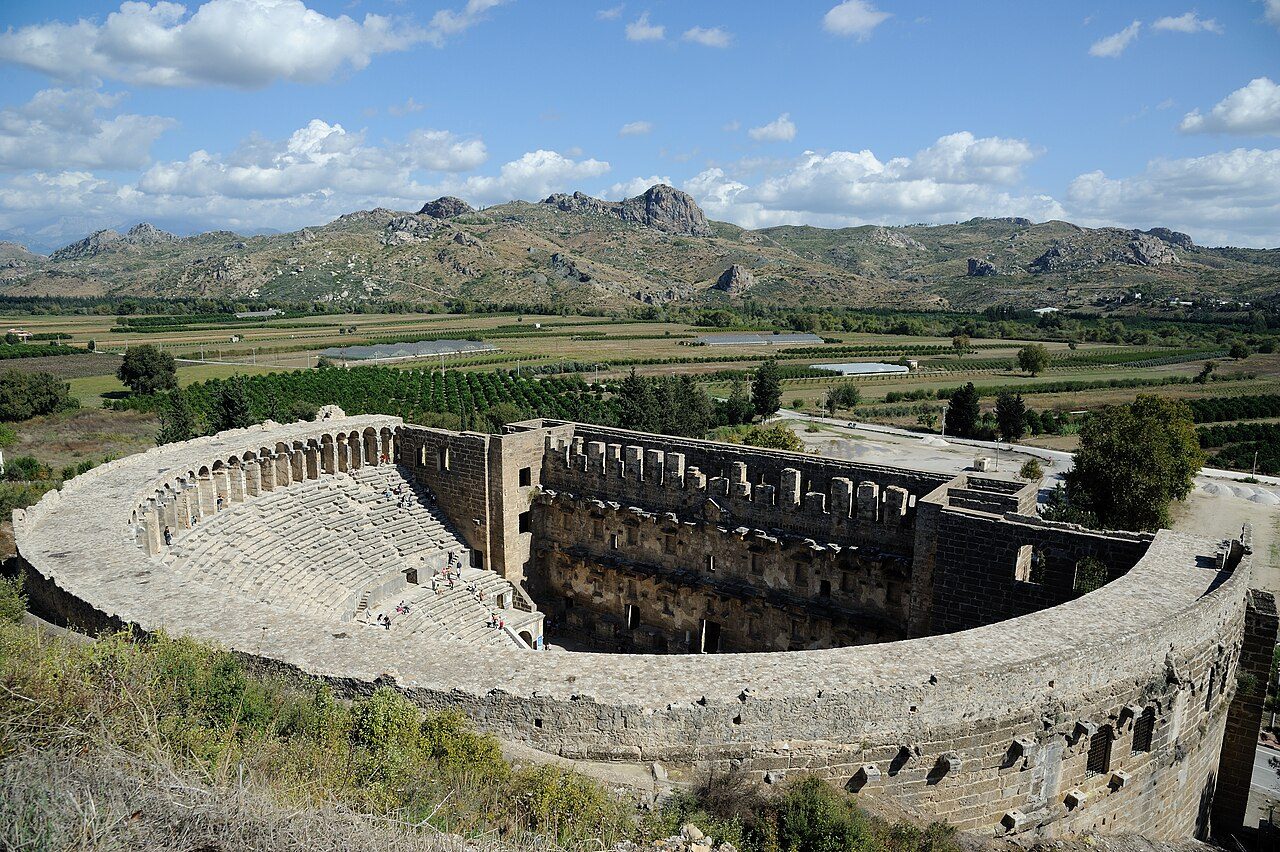
Aspendos
Rising against the hills of ancient Pamphylia, Aspendos showcases antiquity's most impeccably preserved Roman theater, constructed around 155 AD during the reign of Emperor Marcus Aurelius. Engineered by the local architect Zenon, the complex represents the apex of Roman imperial civic architecture, later salvaged from ruin when 13th-century Seljuk sultans reinforced the structure for use as a palace and caravanserai. Its centerpiece is the towering, two-story *scaenae frons*—a massive stage wall of ashlar masonry that once held multi-hued marble columns, ornate niches, and an elaborate frieze dedicated to Dionysus, the patron god of theater. Stepping into the semicircular auditorium, visitors confront a colossal sweep of forty-one steeply raked limestone tiers designed to seat 12,000 spectators. Ascending to the top row brings travelers beneath a rare, fully intact gallery of fifty-nine barrel-vaulted arcades, offering expansive vistas across the Eurymedon River plain toward the craggy Taurus Mountains. The acoustic engineering remains astoundingly functional; stand in the circular orchestra, speak in a gentle whisper or drop a coin, and the sound carries with crystalline clarity to the highest stone bench. Beyond the theater's vaulted perimeter, paths wind toward the monumental ruins of the city’s double-tiered Roman aqueduct, whose soaring stone siphons still bisect the olive-studded landscape.
More in Antalya
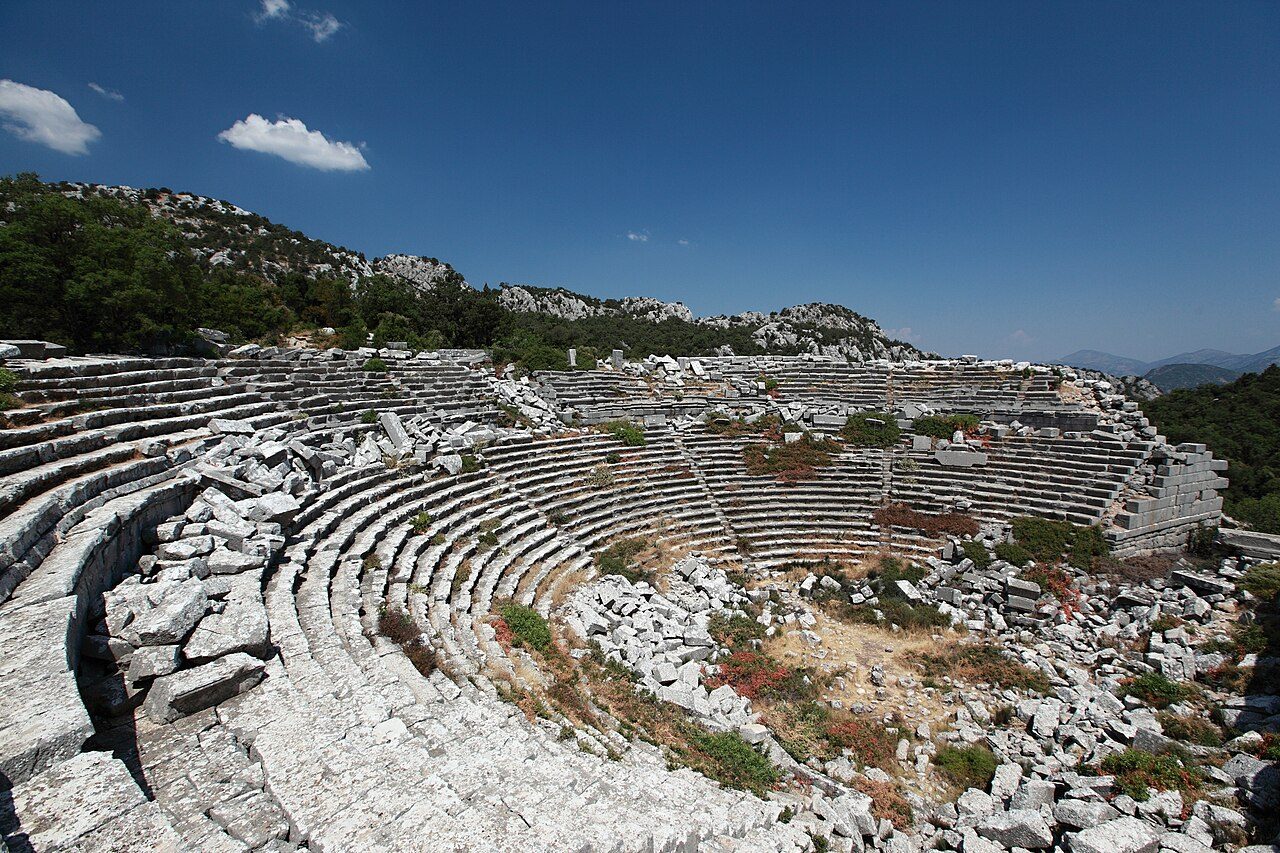
Photo credits (3)
- Saffron Blaze, CC BY-SA 3.0, via Wikimedia Commons
- Saffron Blaze, CC BY-SA 3.0, via Wikimedia Commons
- Martin Cígler, CC BY-SA 3.0, via Wikimedia Commons