Tunisia packs centuries of Mediterranean history and desert landscapes into an easily navigable country. This guide details the essential regions, cultural landmarks, and transportation options for your itinerary.
To decide where to go in Tunisia, start in the north with the cultural centers of Tunis and Sidi Bou Said before venturing south toward Roman amphitheaters, salt flats, and Saharan dunes. The compact geography of the country allows you to move smoothly between ancient Phoenician settlements, medieval Islamic medinas, and vast desert landscapes in a single journey. Whether you have four days or two weeks, prioritizing regional clusters ensures an unhurried experience across Tunisia.
Best Regions and Cities to Visit
Tunis and the Northern Coast
The capital city of Tunis serves as the primary gateway and cultural anchor of the country. Here, wide avenues lined with French colonial facades give way to the sprawling 7th-century Medina of Tunis. A short drive northeast leads to the ancient promontories over the Gulf of Tunis, where Phoenician and Roman empires clashed. Further inland, the green oak ridges of the Kroumirie mountains frame the rural north, providing a quiet contrast to the busy capital.
Sidi Bou Said and the Cap Bon Peninsula
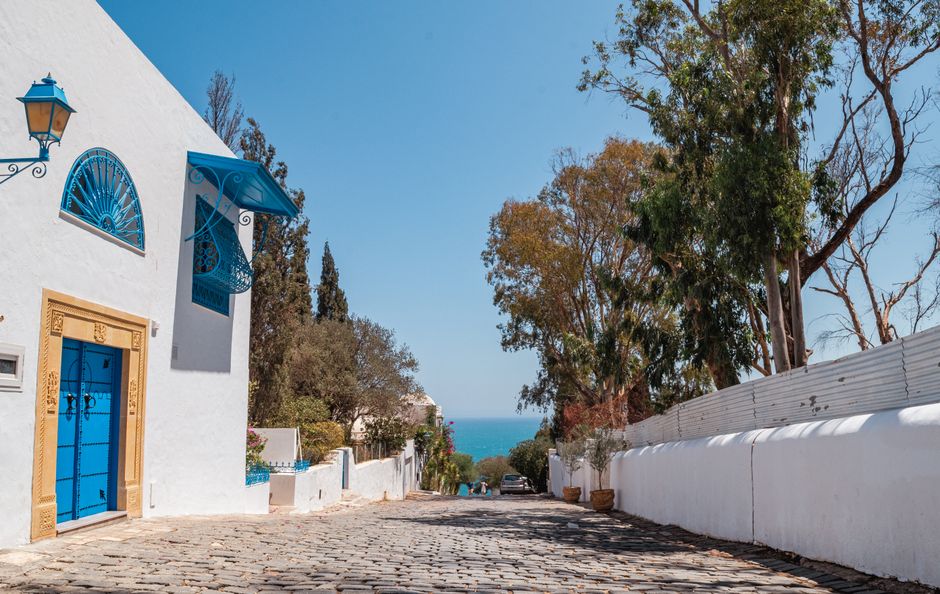
Perched atop cliffs above the sea, Sidi Bou Said is famous for its bright white architecture and blue woodwork. Originally settled around a 13th-century Sufi hermitage, it became an artist haven in the early 20th century. Further east along the Cap Bon peninsula, coastal towns showcase traditional crafts, such as the cobalt-glazed ceramics produced in Nabeul and fishing harbors framed by citrus groves.
The Sahel and Central Steppes
Moving southeast along the coast brings you into the Sahel, where expansive olive orchards stretch across rolling plains. Coastal ports such as Sousse and Monastir feature early Islamic ribats, built as fortified monasteries along the water. Slightly inland lies the monumental Roman amphitheater of El Jem, rising directly out of the flat central plains.
The Deep South and the Sahara
South of the steppe, the landscape transforms dramatically. The cracked salt surface of Chott el Djerid glistens under the sun, leading to date-palm oases around Tozeur. Further south near Matmata, indigenous Amazigh communities carved subterranean pit dwellings directly into the sandstone to stay cool during hot summers. Beyond the oases, the tracks disappear into the wind-sculpted sand dunes of the Grand Erg Oriental.
Top Sights and Historic Landmarks
Tunisia retains dense archaeological and architectural heritage across its northern towns. Spending time exploring both Roman antiquities and Islamic monuments gives context to the modern nation.
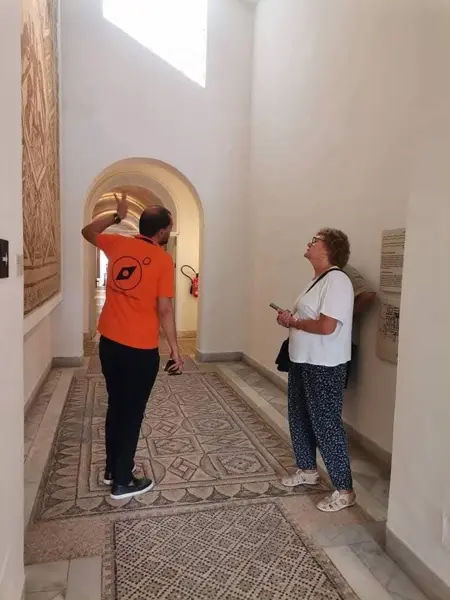
- Bardo National Museum: Housed within a 19th-century palace complex built for the Husainid Beys, this Tunis institution fuses Hispano-Moorish architectural details with one of the most comprehensive collections of Roman and Byzantine mosaics in existence.
- Carthage Ruins: Overlooking the Gulf of Tunis, the remnants of ancient Carthage chart the history of Phoenician naval power and subsequent Roman reconstruction. Key areas include the Punic ports, the Antonine baths, and Byrsa Hill.
- Medina of Tunis: Founded in 698 CE after the Umayyad conquest, this UNESCO World Heritage site contains hundreds of historic monuments, including the Al-Zaytuna Mosque, historic madrasas, and covered trade souks.
- Ennejma Ezzahra Palace: Located along the cliff edge in Sidi Bou Said, this estate was constructed by Baron Rodolphe d’Erlanger between 1912 and 1922 and stands as a masterwork of Moorish-Andalusian design.
- Café des Délices: Situated on the slopes of Sidi Bou Said, this cliffside terrace provides expansive views across the Gulf of Tunis and offers an iconic setting to pause for mint tea.
- Sidi Bou Said Village: Walking the quiet residential alleys away from the main commercial street reveals carved wooden mashrabiya window screens, decorative studded doors, and quiet sea views.
How to Get Around Tunisia
Navigating between cities in Tunisia can be accomplished by road or organized transport. While public transit connects major hubs, booking a private vehicle gives you the freedom to reach remote archaeological ruins and southern oases without navigating complex regional timetables.
Hiring a licensed vehicle makes day excursions seamless. On Tour & Car, you can hire private drivers in Tunisia by the hour from $20, or reserve a full day with a dedicated car and driver for $200. This is especially practical when traveling between Tunis, Carthage, and coastal settlements in a single day.
For travelers planning broader cross-country expeditions into the south, local specialists such as TRAVEL EST TUNISIA arrange custom regional itineraries, transport logistics, and cultural excursions.
Guided Day Trips and Itineraries
If your time in Tunisia is limited, joining an organized tour ensures you cover essential history with an expert. Knowledgeable local professionals unpack the layers of Phoenician, Roman, and Ottoman rule that define northern Tunisia.
Through Tour & Car, you can book The Tunis Triangle: Ancient Ruins to Medina Mosaics, an 8-hour private tour led by guide Chedi Sfaxi starting from $140 per group. This itinerary connects the Medina of Tunis, the classical stones of Carthage, and the mosaic halls of the Bardo Museum in a cohesive full-day experience. You can also explore options with other local guides in Tunisia to tailor your days around specific architectural or historical interests.
Best Time to Visit and 2026 Events
Spring (March through May) and autumn (September through November) provide mild temperatures ideal for exploring open-air archaeological ruins and desert tracks. Summer months bring intense heat to the interior, making coastal towns preferable.
Tunisia hosts vibrant cultural gatherings throughout late autumn and winter. Travelers visiting in late 2026 can plan around several significant events:
- Journées Théâtrales de Carthage (JTC): 21 Nov 2026 - 28 Nov 2026 in Tunis, showcasing contemporary regional and international theater.
- Tunisia Art Fair: 26 Nov 2026 - 29 Nov 2026 in Tunis, bringing together visual artists and galleries.
- Marathon COMAR de Tunis-Carthage: 04 Dec 2026 - 06 Dec 2026, winding between the capital and the ancient ruins.
- Journées Cinématographiques de Carthage (JCC): 12 Dec 2026 - 19 Dec 2026 in Tunis, one of the oldest film festivals in Africa.
- DarDéco - Salon de la Décoration et du Design: 18 Dec 2026 - 27 Dec 2026 in Tunis.
- Foire du Tapis et des Tissages Traditionnels (Zarbia): 18 Dec 2026 - 27 Dec 2026 in Tunis, highlighting traditional woven textiles and kilims.
- Festival International du Sahara de Douz: 19 Dec 2026 - 22 Dec 2026, celebrating desert traditions, camel races, and nomadic music at the edge of the dunes.
- New Year's Day: 01 Jan 2027 across the country.
Practical Tips for Your Trip
Tunisian daily life revolves around shared tables and unhurried hospitality. The national language is Derja, a rhythmic dialect braiding Arabic with French, Italian, and Berber roots, though French is widely understood in commercial centers.
Dining offers an immediate connection to the culture. Meals frequently center on steamed semolina couscous, crisp brik pastries stuffed with runny egg and tuna, and dishes seasoned with fiery homemade harissa. Take time to linger over spiced coffee in traditional cafes, listen for the Andalusian-influenced melodies of classical malouf music, and respect local customs by dressing modestly when visiting religious sites or working rural markets.