Sidi Bou Said
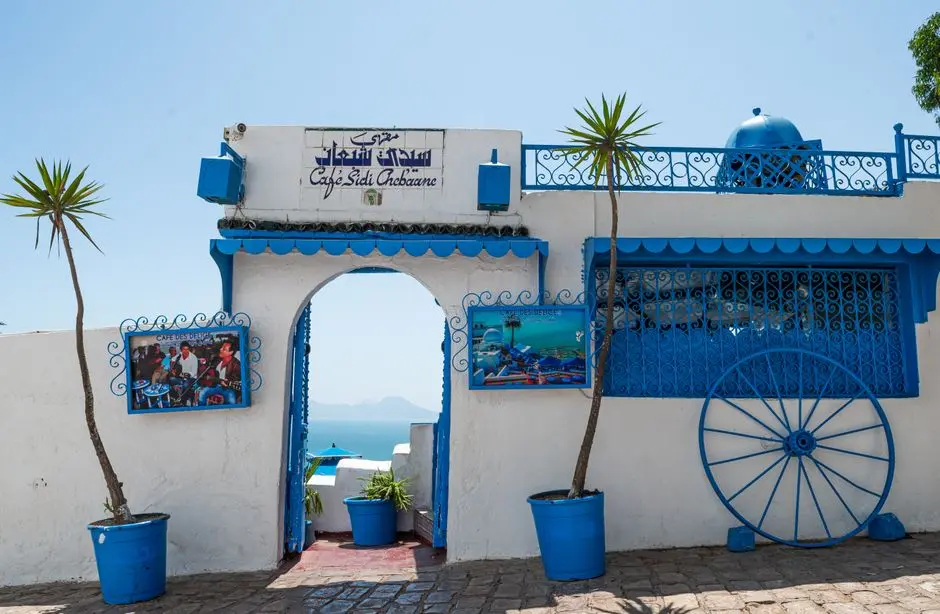
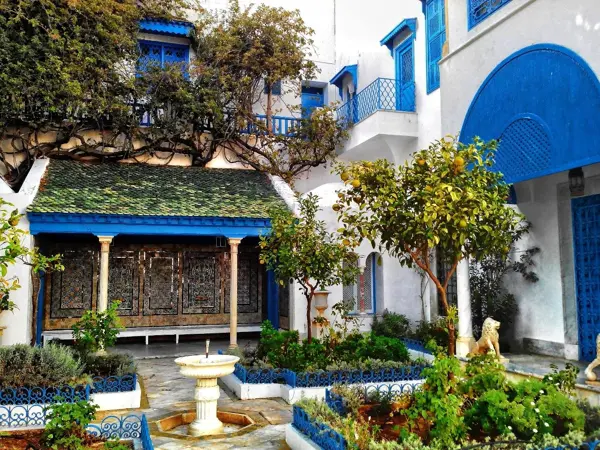
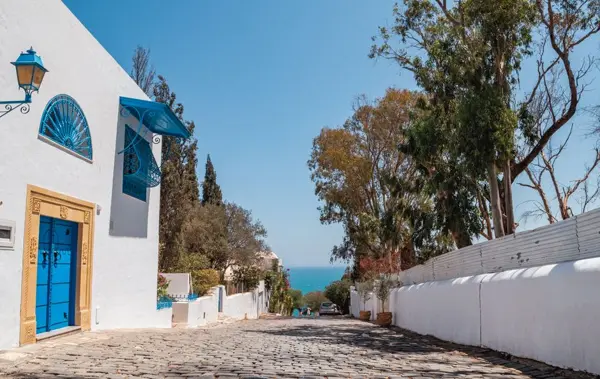
Perched on steep limestone bluffs twenty kilometers northeast of Tunis, Sidi Bou Said drops sharply into the turquoise Gulf of Tunis. Cobblestone lanes wind between chalk-white villas framed by moucharaby lattice screens and iron-studded doors painted in signature cobalt. Walking uphill brings scents of sea salt and wild jasmine, with tangled bougainvillea spilling over high courtyard walls while the Mediterranean stretches out below. The village took shape around the 13th-century Sufi scholar Abu Said al-Baji, but its uniform blue-and-white palette stems from a 1915 architectural protection decree championed by Baron Rodolphe d'Erlanger. Travelers can visit d'Erlanger's neo-Moorish palace, Ennejma Ezzahra, which now houses the Center for Arab and Mediterranean Music, or explore domestic Ottoman-era history inside the courtyard rooms of Dar El Annabi. Further up the main lane, Café des Nattes spreads woven reed mats across its tiered porch, while a quiet path past the cliffside cemetery leads out toward the Ras Sidi Bou Said lighthouse. Late afternoons revolve around warm bambalouni, crisp rings of sugar-dusted fried dough eaten on the go, alongside glasses of green tea steeped with toasted pine nuts. Vendors still thread and sell machmoum, fragrant collars of jasmine buds worn behind the ear, and each August the town honors its namesake during the Kharja procession of Sufi brotherhoods. Take the suburban TGM light rail from Tunis and plan your visit for the late afternoon, when tour coaches depart and cooler breezes sweep off the water.
Read more