Planning a trip across Central Asia requires careful route design given the country's vast scale. This guide outlines how many days you need and where to go to experience the highlights of Kazakhstan.
A comprehensive Kazakhstan itinerary requires between 7 and 14 days, depending on how many geographic zones you plan to traverse. For first-time visitors, a 7- to 10-day trip allows you to explore the mountain trails and cultural heritage of Almaty, the ancient Silk Road architecture of Turkestan, and the bold urban design of Astana. Travelers with 12 to 14 days can easily add natural excursions into deep gorges or head west to cross the continental boundary along the Ural River.
Because Kazakhstan is the world’s ninth-largest country, choosing where to spend your time is critical. Distances between regional hubs are substantial, meaning route pacing must balance city sights with travel days across the steppe.
How Many Days Do You Need in Kazakhstan?
Setting realistic expectations for travel time will shape your overall experience. Rushing across multiple regions can leave you spending more hours in transit than exploring landmarks.
- 5 to 6 Days (The Express Route): Focus exclusively on either Almaty and its surrounding mountain landscapes or split your time strictly between Almaty and Astana using domestic flights.
- 7 to 10 Days (The Classic Route): The ideal duration for a first visit. Spend three to four days around Almaty, take an overnight train or short flight to explore the ancient Silk Road shrines in Turkestan, and finish with two full days taking in the modern architecture of Astana.
- 12 to 14 Days (The Grand Route): Allows an unhurried circuit. You can spend extra days hiking in alpine reserves, venture to remote southern heritage sites, and travel west to Atyrau on the Caspian basin threshold.
Key Destinations: Where to Go
To build a sensible itinerary, divide the country into regional focus areas. Each primary stop offers a distinct look into the nation's culture, topography, and history.
Almaty and the Tian Shan Foothills
Almaty remains the cultural heart of the country. Shaded by the snowy crags of the Trans-Ili Alatau, the former capital combines leafy boulevards with quick access to alpine terrain. Within the city center, Panfilov Park hosts the wooden Zenkov Cathedral, noted for its bright pastel exterior and timber joinery that survived major historical tremors. Nearby, the cable car up Kok-Tobe Hill provides elevated panoramic viewpoints over the city grid and the towering mountain ridges behind it.
Venturing just outside the urban core brings you to high altitudes. Big Almaty Lake rests at over 2,500 meters above sea level, surrounded by Soviet Peak and Pyramid Peak. For winter recreation and year-round mountain walks, Shymbulak Ski Resort provides lift access into dramatic gorges that once served as secluded training grounds for high-altitude athletes.
Astana: Modernist Capital of the Steppe
Located in the northern plains, the modern capital represents the contemporary political and civic ambition of the country. Wide boulevards and monumental structures define the urban landscape along the Ishim River. At the center stands Bayterek Tower, a 105-meter monument translating ancient Turkic cosmology into soaring steel and glass.
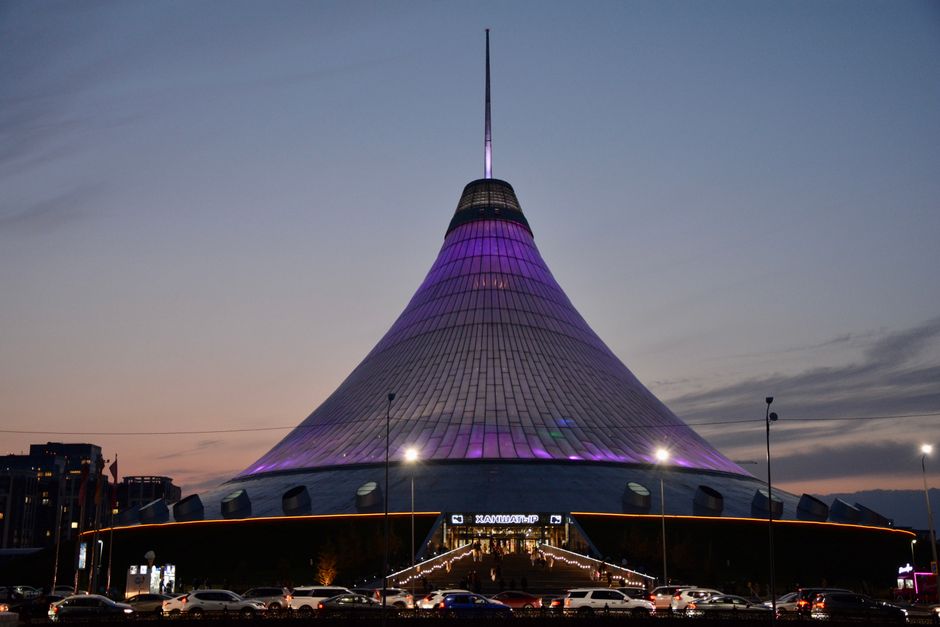
Architectural exploration continues at Khan Shatyr, a massive tensile structure evoking the form of a nomadic yurt, and the Palace of Peace, an eye-catching pyramid built to host international congresses. The monumental scale extends to Independence Square, where the towering white marble stele of the Qazaq Eli monument anchors the civic core.
Turkestan: The Great Silk Road Legacy
Situated in the southern desert plains, Turkestan provides a direct window into medieval Central Asian history. Caravans once stopped at oasis settlements throughout this region, leaving behind complex brick monuments and theological centers. The centerpiece of any southern stop is the Khoja Ahmed Yasawi Mausoleum. Commissioned in 1389 by Timur, this site represents a landmark achievement in Timurid tilework, grand domes, and ribbed vaults that influenced sacred architecture across the entire continent.
Atyrau: The Continental Divide
For travelers interested in frontier history and geography, the western city of Atyrau sits along the lower reaches of the Ural River before it meets the Caspian Sea. Walking the Ural River Embankment places you right at the recognized boundary between Europe and Asia, where one riverbank sits on the European continent and the other on the Asian landmass.
7-Day Kazakhstan Itinerary: The Essential Route
This classic one-week plan links the mountain landscapes of the south with the futuristic architecture of the north.
- Day 1: Arrival in Almaty. Explore Panfilov Park, step inside the pastel Zenkov Cathedral, and ride the aerial tram to Kok-Tobe Hill for sunset views over the valley.
- Day 2: Tian Shan Mountain Excursion. Arrange a day trip toward Big Almaty Lake or ride the gondolas at Shymbulak Ski Resort to take in the alpine passes.
- Day 3: Almaty to Turkestan. Take a short morning domestic flight or overnight sleeper train to Turkestan. Spend the afternoon exploring the immense Khoja Ahmed Yasawi Mausoleum and its surrounding archaeological grounds.
- Day 4: Southern Heritage to Astana. Walk the historical quarter of Turkestan before boarding an afternoon flight north to Astana.
- Day 5: Modern Landmarks of Astana. Ascend Bayterek Tower for views across the steppe, walk through the civic pavilions of Independence Square, and view the Palace of Peace.
- Day 6: Civic Architecture and Shopping. Visit the soaring interior spaces of Khan Shatyr and walk the central pedestrian corridors along the river.
- Day 7: Departure from Astana. Complete last-minute sightseeing before your flight home.
14-Day Kazakhstan Itinerary: The Grand Circuit
Two full weeks give you the leeway to travel deeper into nature reserves and western frontier outposts without rushing.
- Days 1–4: Almaty and Surrounding Valleys. Base yourself in Almaty. Tour city sights, take mountain day trips to Big Almaty Lake and Shymbulak Ski Resort, and explore regional nature reserves and river canyons.
- Days 5–7: The Southern Silk Road. Travel by train to Turkestan. Spend time exploring the sacred architecture of the Khoja Ahmed Yasawi Mausoleum, along with nearby archaeological sites across the southern river plains.
- Days 8–10: Astana Urban Exploration. Fly to Astana to tour Bayterek Tower, Khan Shatyr, and Independence Square. If visiting in winter, take in seasonal displays such as Wonderland Astana, which runs from early December into late January.
- Days 11–13: West to Atyrau. Fly west to Atyrau. Walk the pedestrian bridges along the Ural River Embankment, stand between Europe and Asia, and learn about the unique ecology and history of the Caspian basin.
- Day 14: Return to Almaty or Astana. Connect back to your international departure hub.
How to Get Around During Your Trip
Domestic travel requires thoughtful planning due to vast geography. Long-distance options include:
- Domestic Flights: Air routes link Almaty, Astana, Turkestan, and Atyrau with daily service. Flights save significant time when covering north-to-south or east-to-west routes.
- Railways: Modern fast trains and traditional sleeper carriages run regularly between Almaty, Shymkent, Turkestan, and Astana. Sleeper trains provide an atmospheric way to watch the steppe landscapes unfold.
- Private Drivers: For mountain excursions outside Almaty or desert routes around Turkestan, booking a private driver on Tour & Car provides flexibility, direct door-to-door transport, and local route knowledge without the stress of navigating rural roads.
Best Time of Year to Visit
Spring (April to June) and autumn (September to October) offer the most pleasant weather across the country, with comfortable temperatures for walking both urban avenues and mountain trails.
Summers can be very hot in Turkestan and the central steppe, though Almaty's high altitudes offer cooler mountain escapes. Winter brings heavy snowfall and sub-zero temperatures to Astana, while the mountains near Almaty transform into winter sports hubs. The Almaty Ski Season Opening typically occurs around the start of December, offering an ideal window for travelers keen on snow sports.
Practical Planning Tips
- Pacing: Never schedule tight flight or train connections on the same day as remote excursions; weather changes in mountain passes can cause transit delays.
- Layered Clothing: Mountain weather near Almaty shifts quickly from warm sunshine to chilly alpine winds. Pack warm layers even during late spring or early autumn visits.
- Local Guides: Booking local guides and verified stays on Tour & Car helps you understand the deep architectural context of Timurid shrines and modernist urban designs.