Turkestan
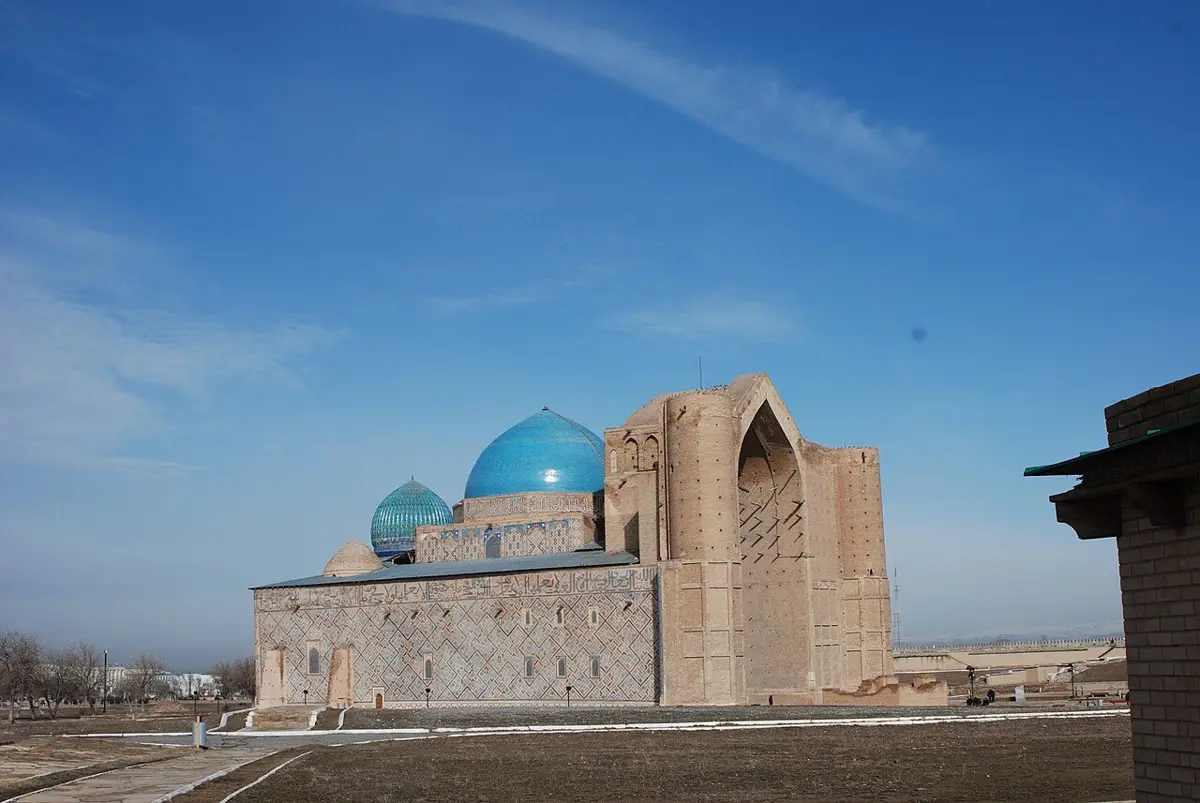
Set in the sunbaked expanse of southern Kazakhstan, east of the Syr Darya river and beneath the distant ridges of the Karatau Mountains, Turkestan carries a quiet, reverent gravity. Walking its wide avenues feels like navigating two worlds at once. Dust-blown steppe winds sweep past monumental turquoise domes, while paved plazas connect ancient earthen ruins with quiet pedestrian boulevards. The city owes its spiritual weight to Sufi mystic Khoja Ahmed Yasawi, whose burial place was rebuilt by Timur in 1389 into an immense brick mausoleum topped with glazed tiles and housing the monumental bronze Taykazan cauldron. Steps away lies the underground mosque of Hilvet, a warren of cool, semi-subterranean cells where Yasawi retreated in his final decades. Nearby, the excavated ruins of the Kultobe settlement reveal clay foundations of medieval residential quarters, while an authentic sixteenth-century bathhouse demonstrates how ancient residents managed water in the arid desert. Daily rhythms center on the Central Bazaar, where traders sell mountain herbs, rounds of sour kurt cheese, and blistered tandyr samsa stuffed with spiced mutton. Pilgrims from across Central Asia arrive continuously, maintaining the custom of walking thrice around the holy shrines before offering evening prayers. Visit in April or October to avoid summer temperatures that routinely exceed forty degrees Celsius. The central historical precinct is compact enough to explore entirely on foot, though inexpensive local taxis easily reach the outlying railway station.
Read more