
 New added
Khoja Ahmed Yasawi Mausoleum
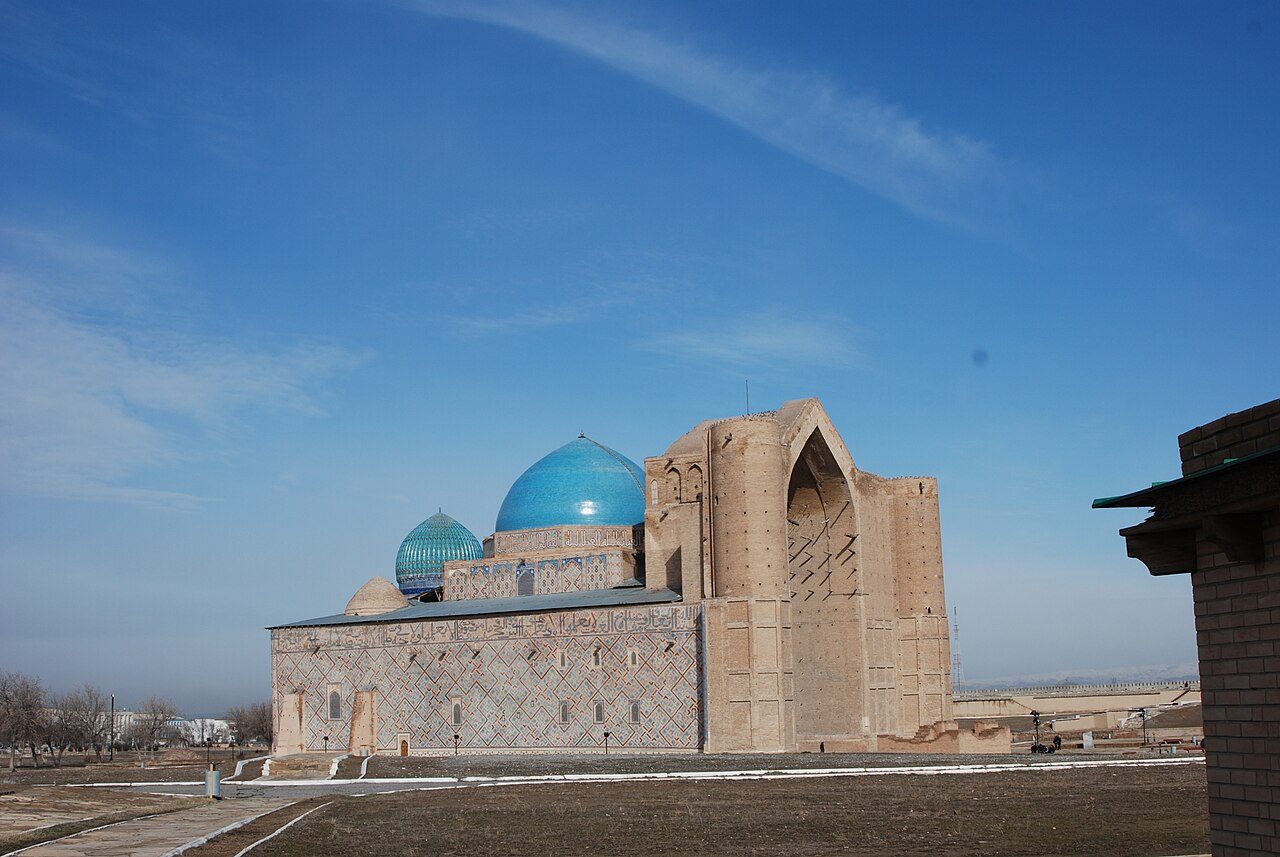
Rising dramatically above the sun-baked expanse of the southern Kazakh steppe, the Mausoleum of Khoja Ahmed Yasawi stands as the pioneering masterpiece of Timurid architecture. Commissioned in 1389 by the conqueror Timur (Tamerlane) to honor the revered 12th-century Sufi mystic, this colossal brick complex foreshadowed the grand domes of Samarkand. Approaching the facade, travelers are confronted by the raw contrast of the massive, unfinished *peshtaq* (monumental portal)—where exposed timber scaffolding remains embedded in the masonry, left untouched since work abruptly halted upon Timur’s death in 1405. Crowning the rear, a double-domed, turquoise-tiled ribbed cupola gleams against the pale sky, its drum wrapped in vivid geometric majolica and glazed Kufic inscriptions. Stepping through the portal, the arid desert heat yields instantly to the shadowed, cool resonance of a vast interior containing over thirty interconnected chambers. At the center of the soaring main hall (*Kazandyk*) rests the *Tayqazan*, a magnificent two-ton bronze cauldron cast in 1399 from an alloy of seven metals, originally used to serve sanctified water to pilgrims. Walking across polished flagstones beneath intricate alabaster *muqarnas* (stalactite vaulting), visitors encounter an active sanctuary humming with quiet reverence. Murmured prayers of Central Asian pilgrims drift through corridors lined with carved timber doorways, leading toward Yasawi’s sealed burial chamber where filtered shafts of sunlight illuminate centuries of unbroken Islamic mysticism.