
 New added
Jonker Street
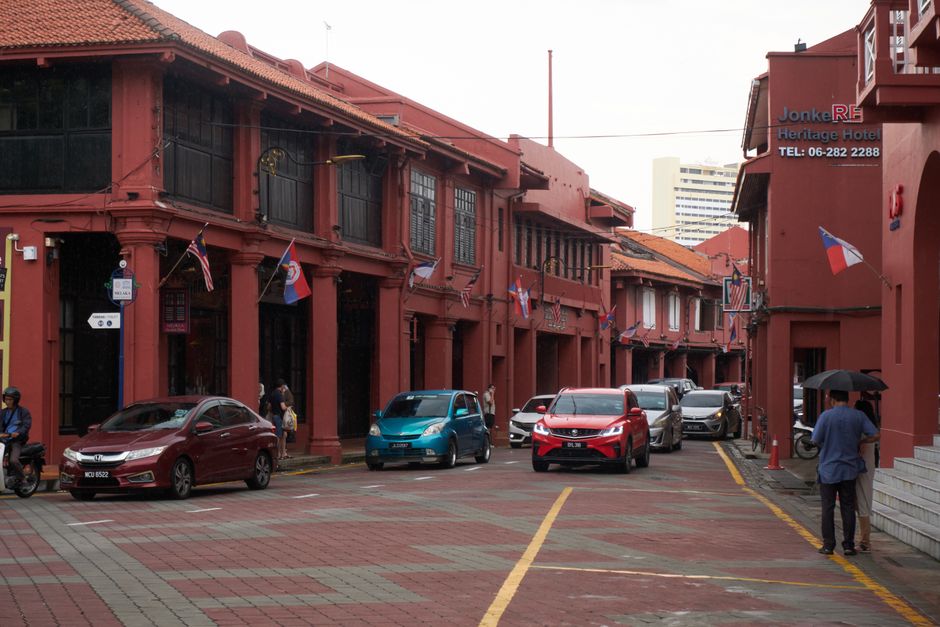
Laid out during the Dutch colonial administration following the 1641 conquest of Portuguese Malacca, Jonker Street—derived from the Dutch *Jonkvrouw* or *Jonker*, denoting young gentlemen—gradually evolved into the commercial and residential stronghold of the wealthy Peranakan (Straits Chinese) merchant elite. Flanking the narrow corridor are tightly packed nineteenth-century shophouses that synthesize Dutch masonry with Southern Chinese craftsmanship. Their narrow facades present a riot of pastel-plastered walls, ornate majolica tiles, and hand-carved gilded clan emblems mounted above timber jalousie shutters, with interiors stretching deeply past terracotta-tiled air wells designed to channel tropical breezes and natural light. Standing along the avenue, travelers encounter a dense sensory layering of maritime history and living commerce. By day, quiet antique troves like the family-run curio shops brim with Qing-dynasty celadon, Straits silver, and heavy blackwood furniture inlaid with mother-of-pearl, anchored by landmarks such as the dragon-encrusted Eng Choon Association guild hall. Come dusk, beneath a canopy of suspended crimson lanterns, the air thickens with the crackle of open-flame woks, the scent of charcoal-toasted satay, and sweet caramel notes of coconut milk and *gula melaka* ladled over shaved ice, immersing visitors in the kinetic pulse of old Melaka.
More in Malacca
Photo credits (1)
- User: (WT-shared) Slleong at wts wikivoyage, CC BY 1.0, via Wikimedia Commons