
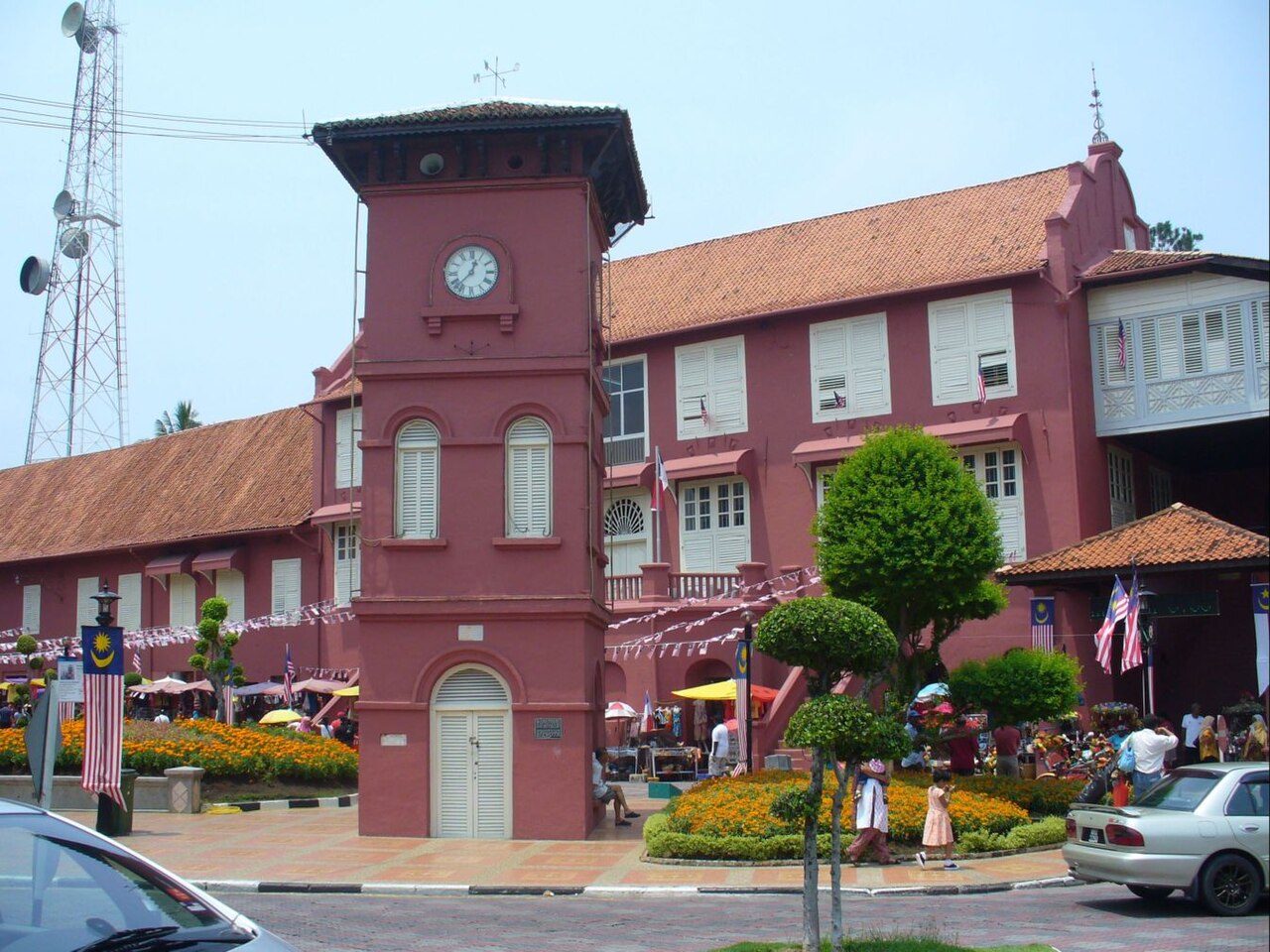
Stadthuys
Completed around 1650 to serve as the civic town hall and official residence for governors of the Dutch East India Company (VOC), the Stadthuys stands as the oldest surviving Dutch colonial building in the East. Originally whitewashed in the austere tradition of Zeeland architecture, its monumental façade was later coated in the deep terracotta crimson that now defines Malacca’s central square. Massive masonry walls—built thick to repel tropical heat and artillery—frame rows of heavy timber louvred windows, wrought-iron hinges, and fortified doorways that once guarded administrative chambers, tax offices, and maritime courtrooms. Stepping across the threshold into what is now the Museum of History and Ethnography, the blare of musical trishaws outside immediately gives way to the muffled quiet of cavernous halls. Visitors walk across creaking hardwood floorboards beneath soaring ceiling beams, navigating galleries filled with Portuguese armaments, Ming porcelain, and VOC trade ledgers. Toward the rear, the building unfolds into stepped, shaded inner courtyards where stone pathways climb the leafy lower slope of St. Paul’s Hill. Leaning against the cool, weathered plaster of the exterior balustrades, one can palpably sense the unyielding bureaucratic grip of the 17th-century merchants who directed global trade routes from this equatorial outpost.
More in Malacca
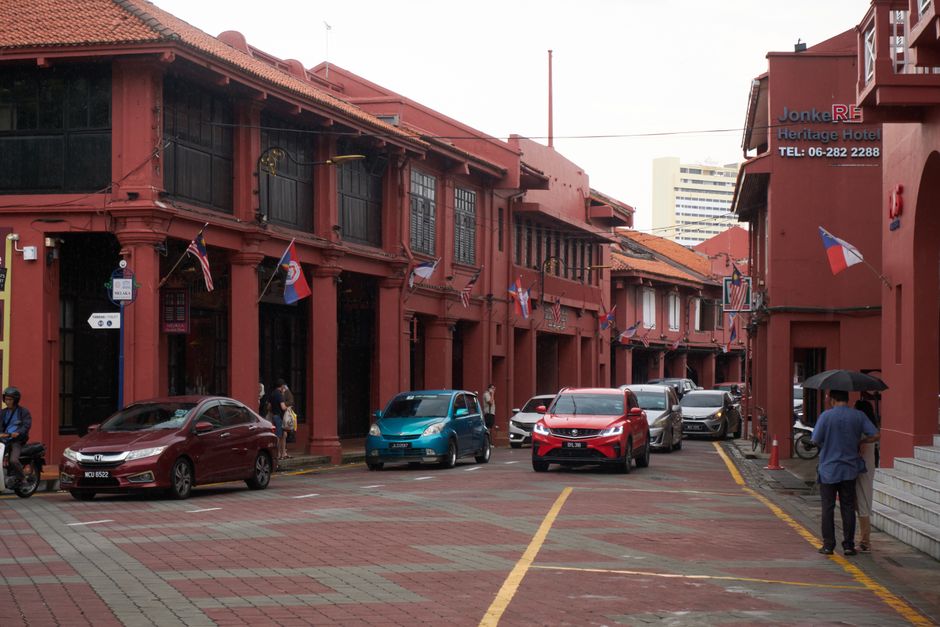
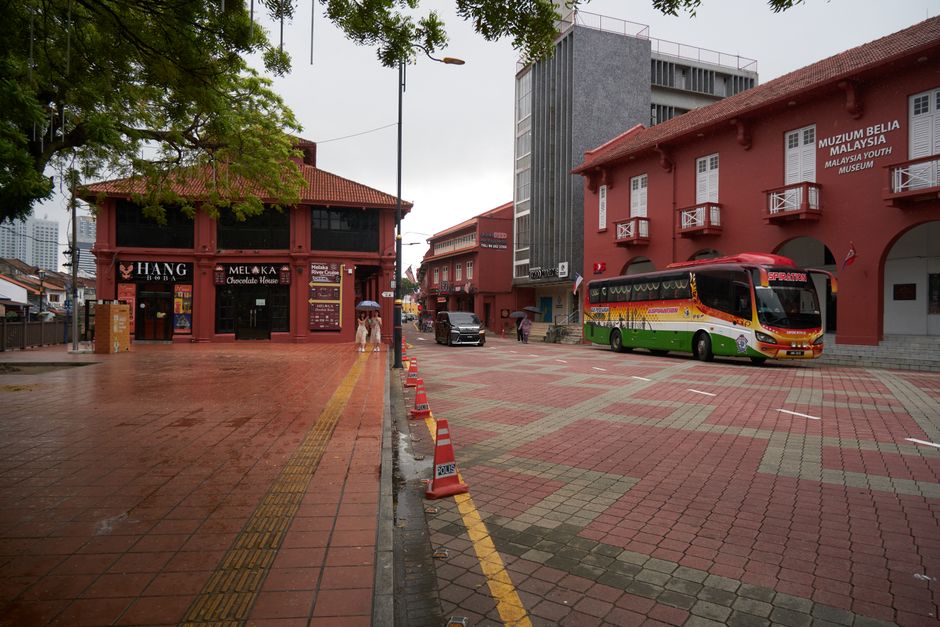
Photo credits (1)
- User: (WT-shared) Slleong at wts wikivoyage, CC BY 1.0, via Wikimedia Commons