
Malacca
Set along the southwestern coast of the Malay Peninsula where the Malacca River empties into the strait, this port town moves at an unhurried, pedestrian pace. Strolling through its core reveals a patchwork of maritime trade: salt air mingles with burning joss sticks, and covered five-foot ways run past pre-war shophouses with tiled roofs and hand-painted timber shutters. Founded around 1400 by the exiled prince Parameswara, Malacca grew into a wealthy sultanate before falling to the Portuguese in 1511 and the Dutch in 1641. This layered past remains visible in its streetscapes. At the base of St. Pauls Hill stands the weathered stone arch of Porta de Santiago, a surviving fragment of the Portuguese fortress. Across the water, the terracotta-red Stadthuys, built by the Dutch in the 1650s, anchors the central square. West of the river, Jonker Street cuts through Chinatown, leading past the ornate eaves of Cheng Hoon Teng, the oldest functioning Chinese temple in Malaysia. Daily life centers on the table, where Peranakan cooks blend Malay and southern Chinese techniques into claypot asam pedas, chicken rice balls, and iced bowls of cendol sweetened with dark palm sugar. In the coastal Portuguese Settlement, residents honor their heritage each June during Festa San Pedro, blessing brightly painted wooden trawlers. The historic center is best explored on foot; plan visits for weekday mornings to avoid regional weekend crowds and the stifling afternoon humidity.
Read more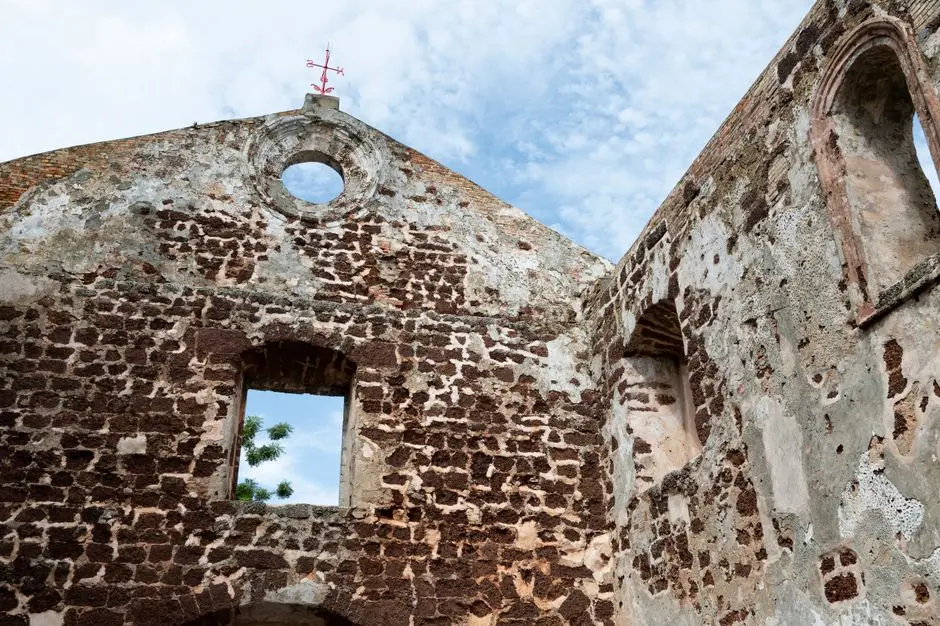
What to see in Malacca
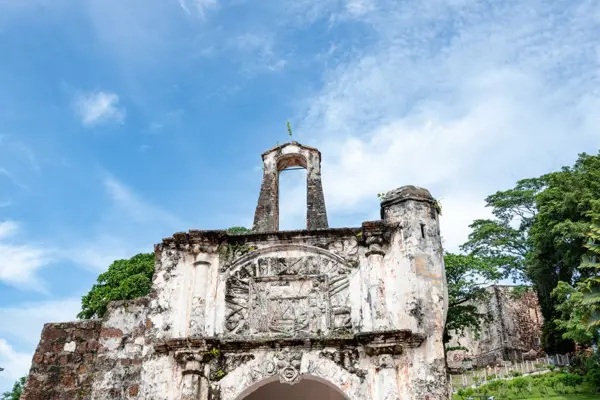
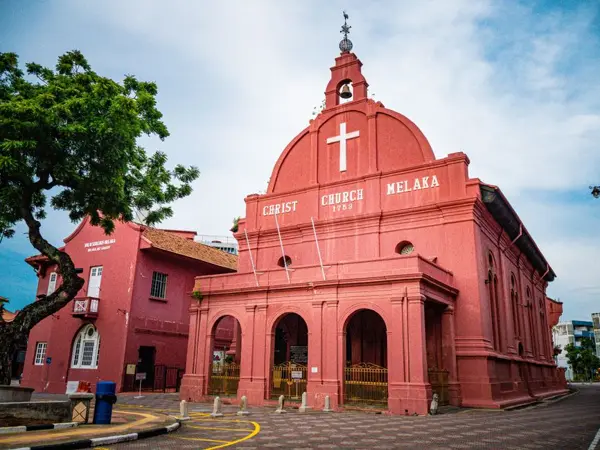
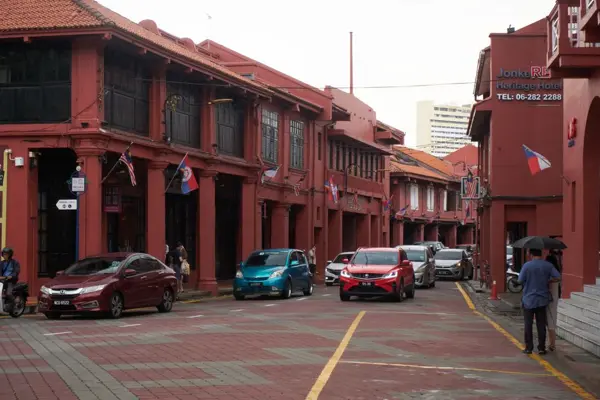
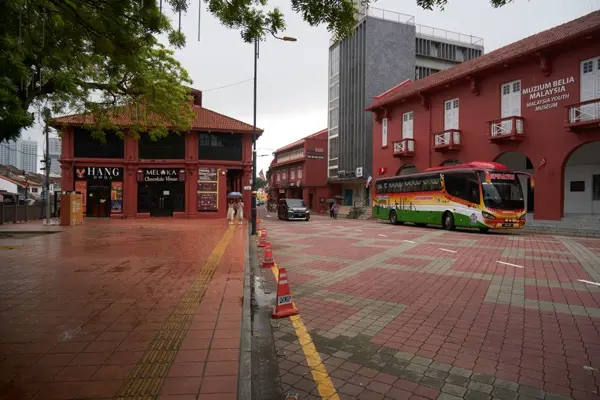
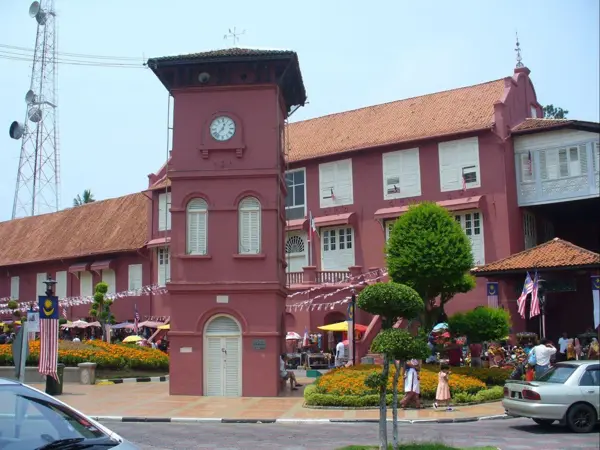
Photo credits (1)
- User: (WT-shared) Slleong at wts wikivoyage, CC BY 1.0, via Wikimedia Commons