 New added
Jantar Mantar
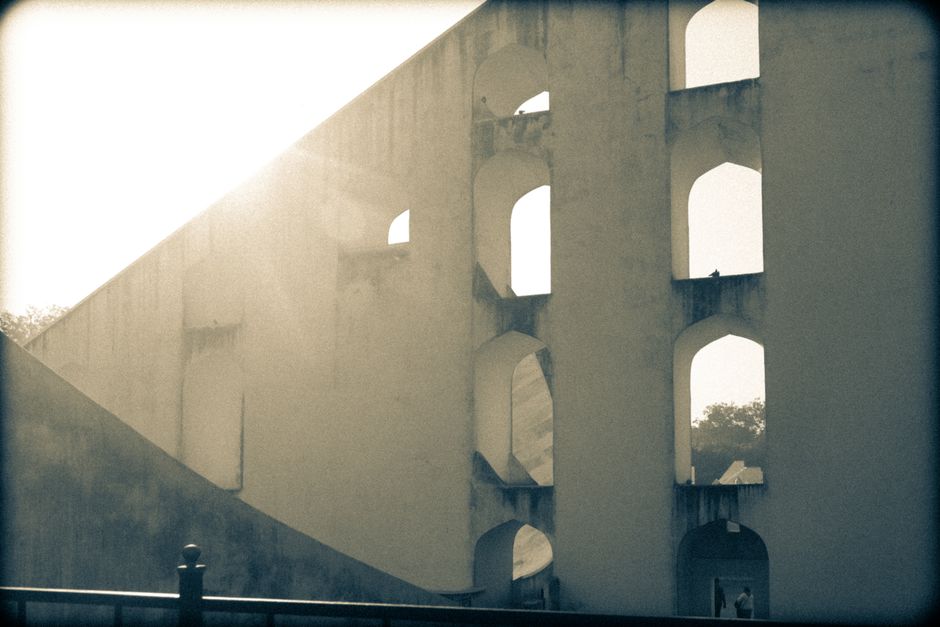
Commissioned in 1734 by the astronomer-king Maharaja Sawai Jai Singh II, Jaipur’s Jantar Mantar stands as an astonishing intersection of Vedic astronomy, Mughal masonry, and avant-garde architectural precision. Rather than relying on brass astrolabes, Jai Singh engineered nineteen colossal stone instruments designed to track celestial coordinates with naked-eye accuracy. Dominating the courtyard is the Vrihat Samrat Yantra, the world’s largest stone sundial, soaring 27 meters high as a dramatic ramp of local ochre sandstone aligned precisely with the Earth's axis. Scattered across the complex, the twin subterranean hemispheres of the Jai Prakash Yantra and the cylindrical open-air enclosures of the Ram Yantra mimic a modernist sculpture park centuries ahead of its time. Standing amid these monumental masonry forms, travelers encounter time not as an abstract measurement, but as a visible, moving force. Across the Samrat Yantra’s curved, white marble quadrants, the gnomon’s shadow audibly seems to move, visibly creeping at four centimeters per minute to calibrate the hour with startling two-second accuracy. As the intense Rajasthani sun glares down, the stark geometry of staircases climbing into empty skies and inverted marble bowls cross-sectioned by delicate sighting wires immerses visitors in an 18th-century cosmos mapped entirely through stone, shadow, and sky.