 New added
Amber Fort
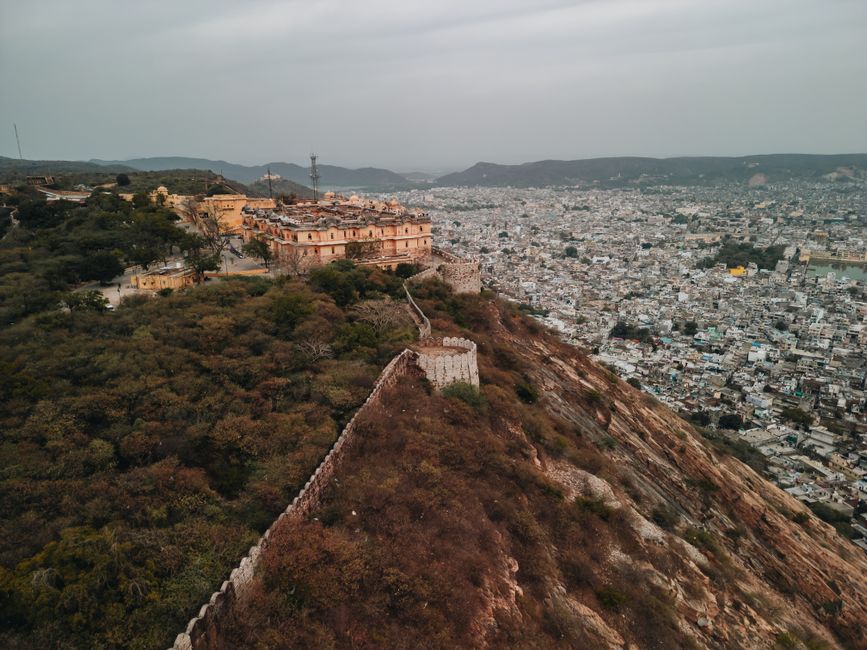
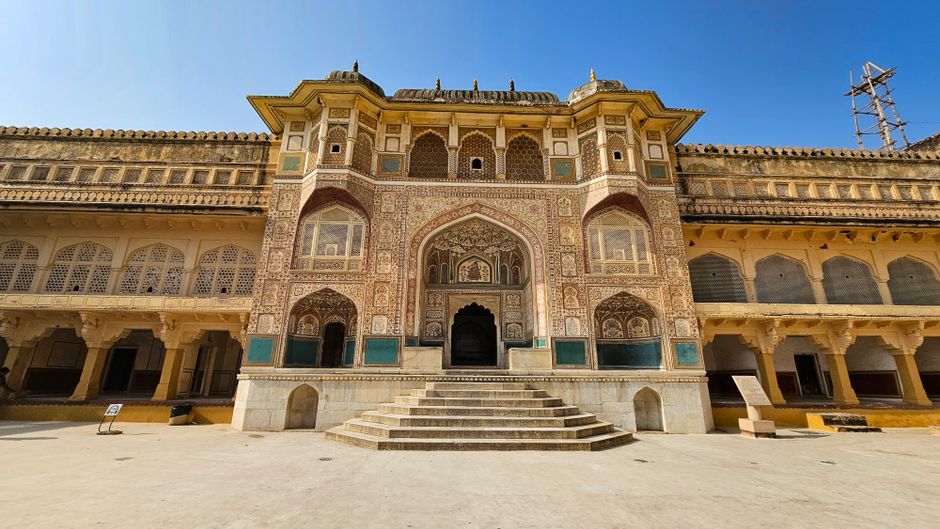
High above the shimmering waters of Maota Lake, the formidable ramparts of Amber Fort crest the rugged ridge lines of the Aravalli hills. Commissioned in 1592 by Raja Man Singh I and expanded over the following century by Mirza Raja Jai Singh, this fortified palace exemplifies Rajput-Mughal architectural synthesis, marrying defensive martial strength with refined Islamic symmetry. Ascending the cobblestone switchbacks toward the sprawling Jaleb Chowk courtyard, visitors encounter honey-hued and pale-pink sandstone bastions that glow against the desert sky, their austere exterior faces concealing an opulent royal redoubt of pillared pavilions, marble balustrades, and intricate geometric terraces. Passing beneath the vibrant, vegetable-dye frescoes of the tri-arched Ganesh Pol, travelers step into the sovereign realm of the Kachwaha dynasty. The sensory pinnacle awaits in the Sheesh Mahal (Mirror Palace), where thousands of concave glass facets and convex Belgian mirrors are inlaid into plaster walls, transforming a single beam of sunlight into a dazzling constellation of fractured brilliance. Further inside, the desert heat dissipates within the marble-clad Sukh Niwas, where engineered water channels once piped perfumed breezes through carved screens. Peering from the high-arched zenana windows, one looks directly down onto the star-shaped, floating flowerbeds of the Kesar Kyari garden, enveloped by the stillness of the surrounding valley and centuries of regal intrigue.