
 New added
Elafonissi Beach
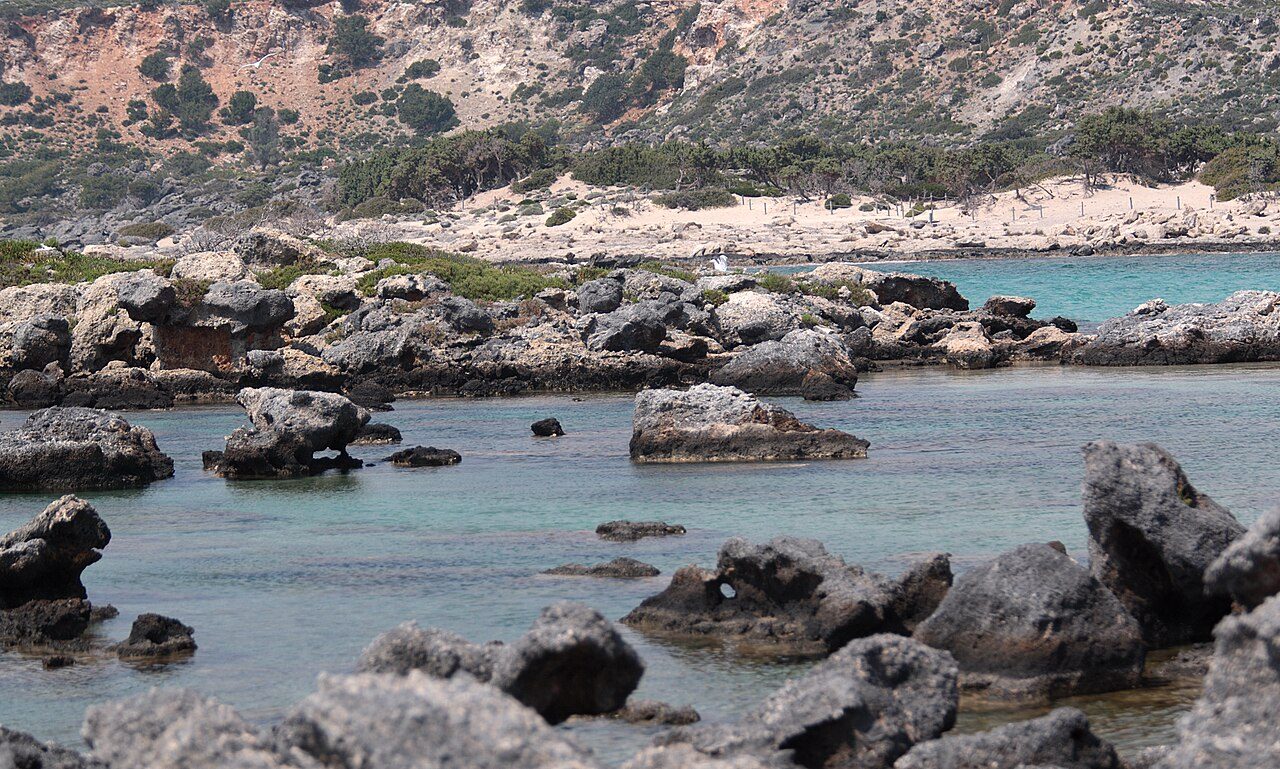
Perched on Crete’s remote southwestern tip, Elafonissi unfurls as a luminous, shifting tombolo where the Libyan Sea dissolves into a knee-deep lagoon of astonishing clarity. The shoreline owes its fabled pastel blush to microscopic *Foraminifera*—red-shelled marine organisms whose pulverized exoskeletons mingle with crushed white limestone. Wading across the warm, submerged sandbar to the islet, travelers feel the crunch of shell grit underfoot before emerging into protected coastal dunes anchored by fragrant sea daffodils and twisted Phoenician junipers. The turquoise shallows remain glass-calm, offering a striking, iridescent contrast against the stark, sun-bleached mountains of the Kissamos region. Beneath this idyllic expanse lies a harrowing chapter of the Greek War of Independence. On Easter Sunday, April 24, 1824, Ottoman-Egyptian forces under Ibrahim Pasha discovered the shallow crossing and massacred over six hundred women, children, and Cretan insurgents sheltering on the islet, enslaving several hundred more; a solitary stone memorial atop the island's ridge marks the site of the tragedy. Further west, near the edge of the Natura 2000 reserve, lies the site of the 1907 shipwreck of the Austrian passenger liner *SS Imperatrix*, an event that spurred the construction of the island's historic lighthouse. Standing on the windswept headland today, the breeze carries both the tranquil scent of wild thyme and the profound weight of Cretan resilience.
More in Crete
Photo credits (4)
- Jerzy Strzelecki, CC BY-SA 3.0, via Wikimedia Commons
- Bernard Gagnon, CC BY-SA 3.0, via Wikimedia Commons
- Lapplaender, CC BY-SA 3.0 de, via Wikimedia Commons
- Gleb Simonov, Public domain, via Wikimedia Commons