
 New added
Samaria Gorge
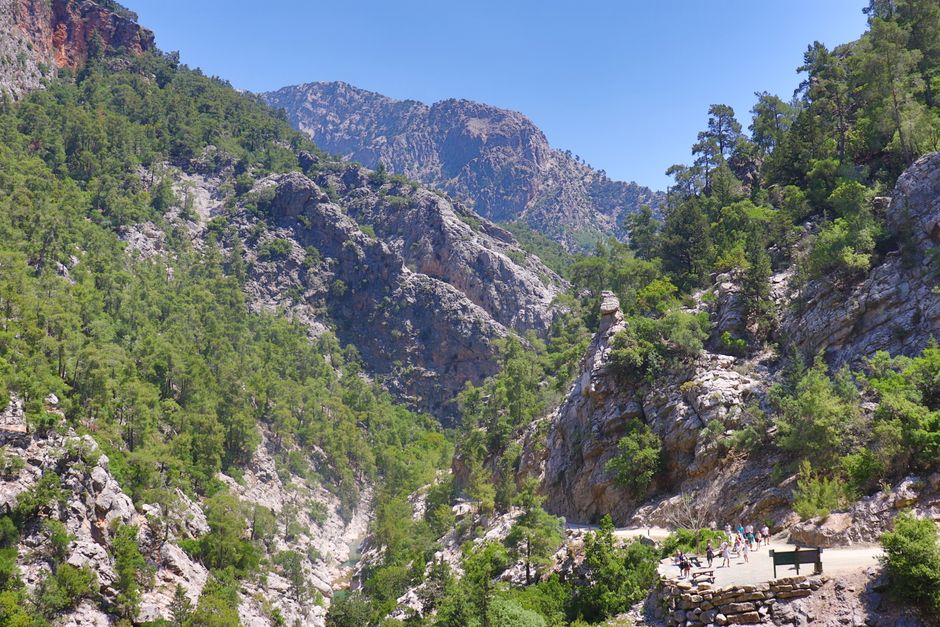
Carved through southwest Crete’s White Mountains (Lefka Ori), the 16-kilometer fissure of Samaria long served as an impenetrable sanctuary for Cretan insurgents defying Ottoman occupation, as well as Allied soldiers escaping the 1941 Nazi invasion alongside Greece’s King George II. At its heart lies the ghost village of Samaria, depopulated in 1962 when the ravine was declared a national park. Here, ruined stone dwellings and ancient olive presses crumble in silence around the 14th-century frescoed chapel of *Osia Maria* (Saint Mary of Egypt), from which the gorge derives its name. The journey begins at the Omalos plateau, plunging 1,230 meters down the *Xyloskalo*, a steep stepped path hewn into sheer rock. Trekkers navigate the riverbed beneath towering Calabrian pines and ancient cypresses, enveloped by the sharp scent of bruised wild mint and sun-baked rock, while watching the high ledges for glimpses of the endangered, agile *kri-kri* (wild Cretan ibex). The route narrows relentlessly toward the "Iron Gates" (*Portes*), a jaw-dropping natural portal where rust-tinted limestone precipices soar 300 meters high, constricting the corridor to a mere three meters wide. In this echoing slot, the sky contracts to a sliver of azure before the trail spills out onto the volcanic black sands of Agia Roumeli on the Libyan Sea.
More in Crete
Photo credits (4)
- Bernard Gagnon, CC BY-SA 3.0, via Wikimedia Commons
- Lapplaender, CC BY-SA 3.0 de, via Wikimedia Commons
- Gleb Simonov, Public domain, via Wikimedia Commons
- Jerzy Strzelecki, CC BY-SA 3.0, via Wikimedia Commons