
 New added
1 / 2
Fira Town
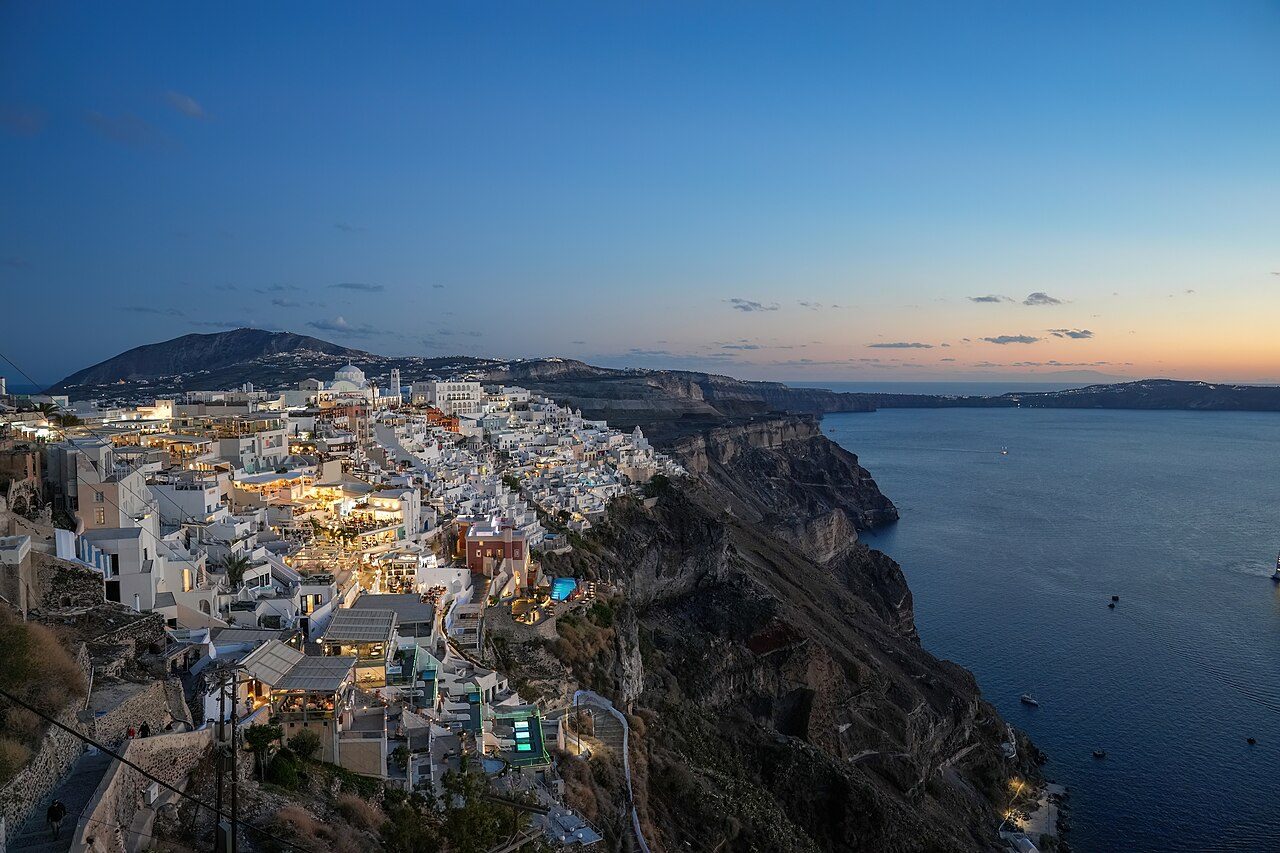
Perched 260 meters above a submerged volcanic caldera, Fira became the capital of Santorini in the late 18th century, when residents permanently abandoned the crumbling, pirate-threatened medieval fortress of Skaros Rock. The town’s architectural fabric fuses traditional Cycladic vernacular with neoclassical Venetian influences, a legacy of the maritime Duchy of Naxos. Subterranean *yposkafa*—curved cave dwellings chiseled directly into pliable volcanic ash to insulate against seismic tremors and gale-force winds—sit beneath elegant pastel mansions rebuilt following the devastating 1956 earthquake. The cliffside skyline is punctuated by the domed roof and baroque bell tower of the 1823 Catholic Cathedral of Saint John the Baptist, contrasted nearby by the grand, whitewashed arcades of the Orthodox Metropolitan Cathedral. Standing on Fira’s paved basalt footpaths, travelers confront a dizzying plunge into the cobalt Aegean, with the scarred, charcoal-hued lava fields of Nea Kameni anchoring the view below. Navigating the town requires ascending stepped, labyrinthine alleyways where radiant lime plaster contrasts with magenta bougainvillea and exposed red pozzolana stone. Far beneath the main promenade, the 588 winding stone steps of the historic Karavolades switchback descend the sheer cliff face to the Old Port. The experience is one of raw geological drama meeting meticulous human engineering: cool sea breezes carry the scent of salt and dry earth over sun-warmed balustrades, while twilight transforms the stark white facades into canvases of ochre, slate, and violet.
More in Santorini
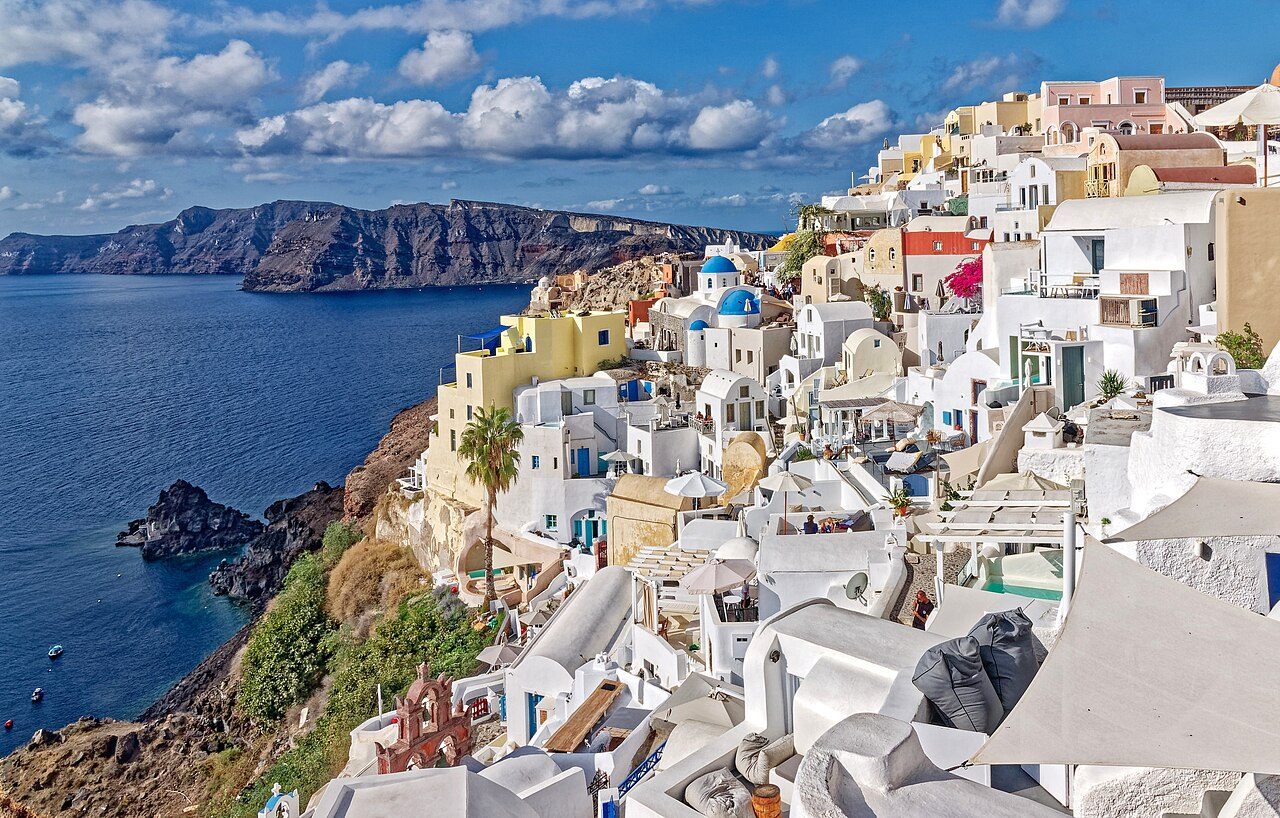
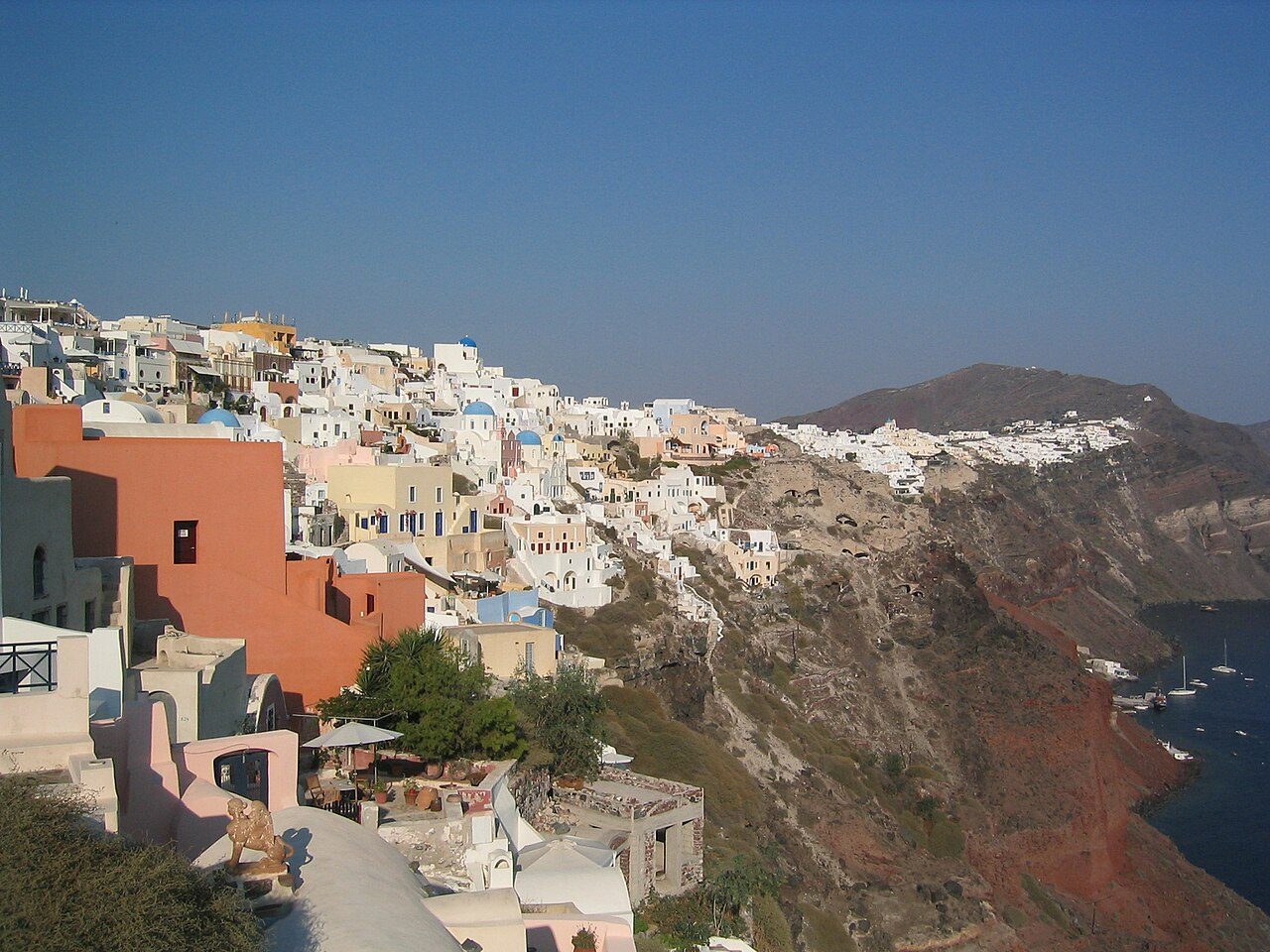
Photo credits (5)
- Giles Laurent, CC BY-SA 4.0, via Wikimedia Commons
- Holger Uwe Schmitt, CC BY-SA 4.0, via Wikimedia Commons
- Jan M, CC BY-SA 3.0, via Wikimedia Commons
- Sidvics, CC BY-SA 4.0, via Wikimedia Commons
- Meersan, CC BY-SA 3.0, via Wikimedia Commons